Institut Pasteur, CNRS UMR3691, Cellular Biology of Microbial Infection, Université Paris Cité, Paris, France; Sorbonne Université, Collège Doctoral, Paris, France.
Institut Pasteur, CNRS UMR3691, Cellular Biology of Microbial Infection, Université Paris Cité, Paris, France.
J Biol Chem. 2022 Sep;298(9):102338. doi: 10.1016/j.jbc.2022.102338. Epub 2022 Aug 2.
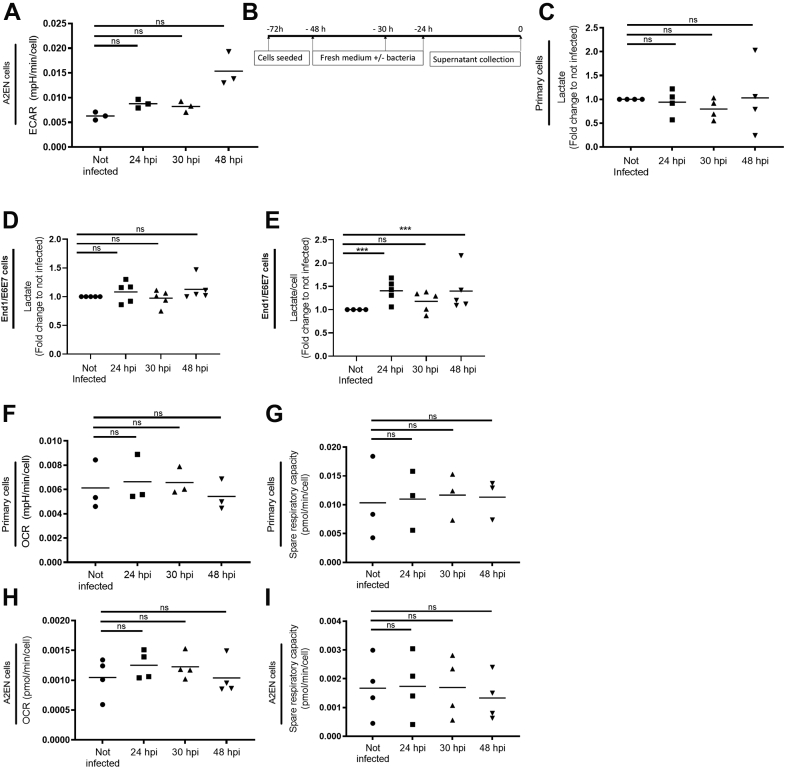
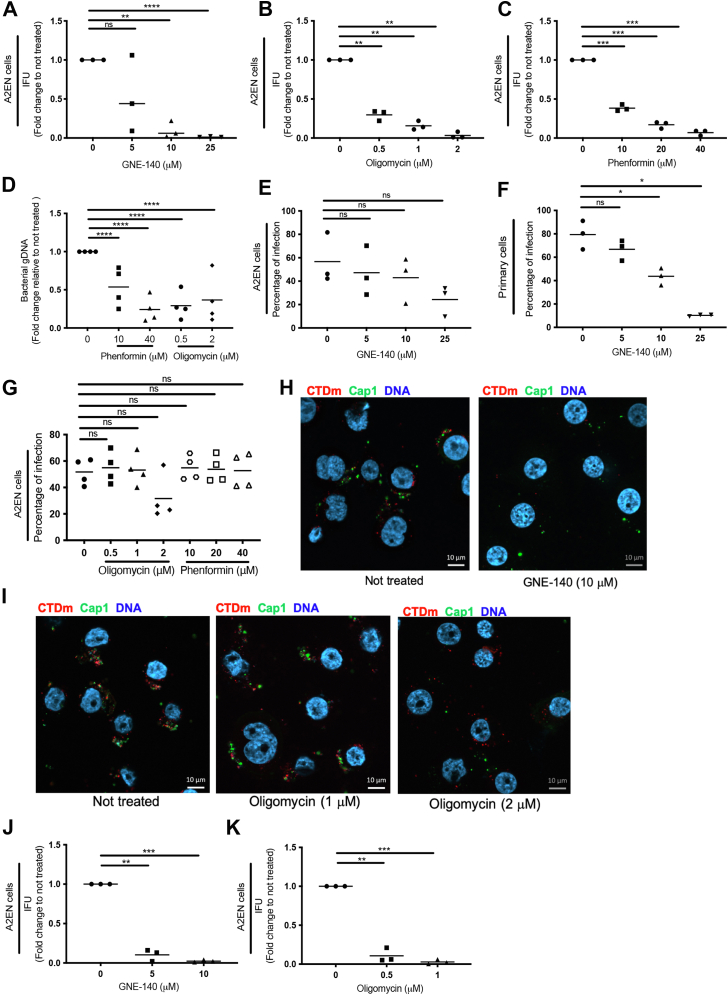
The obligate intracellular bacteria Chlamydia trachomatis obtain all nutrients from the cytoplasm of their epithelial host cells and stimulate glucose uptake by these cells. They even hijack host ATP, exerting a strong metabolic pressure on their host at the peak of the proliferative stage of their developmental cycle. However, it is largely unknown whether infection modulates the metabolism of the host cell. Also, the reliance of the bacteria on host metabolism might change during their progression through their biphasic developmental cycle. Herein, using primary epithelial cells and 2 cell lines of nontumoral origin, we showed that between the 2 main ATP-producing pathways of the host, oxidative phosphorylation (OxPhos) remained stable and glycolysis was slightly increased. Inhibition of either pathway strongly reduced bacterial proliferation, implicating that optimal bacterial growth required both pathways to function at full capacity. While we found C. trachomatis displayed some degree of energetic autonomy in the synthesis of proteins expressed at the onset of infection, functional host glycolysis was necessary for the establishment of early inclusions, whereas OxPhos contributed less. These observations correlated with the relative contributions of the pathways in maintaining ATP levels in epithelial cells, with glycolysis contributing the most. Altogether, this work highlights the dependence of C. trachomatis on both host glycolysis and OxPhos for efficient bacterial replication. However, ATP consumption appears at equilibrium with the normal production capacity of the host and the bacteria, so that no major shift between these pathways is required to meet bacterial needs.
专性细胞内细菌沙眼衣原体从其上皮宿主细胞的细胞质中获取所有营养物质,并刺激这些细胞吸收葡萄糖。它们甚至劫持宿主的 ATP,在其发育周期的增殖阶段达到高峰时,对宿主施加强烈的代谢压力。然而,感染是否会调节宿主细胞的代谢在很大程度上尚不清楚。此外,在它们通过双相发育周期进展的过程中,细菌对宿主代谢的依赖可能会发生变化。在此,我们使用原代上皮细胞和 2 种非肿瘤来源的细胞系表明,在宿主的 2 个主要的 ATP 产生途径中,氧化磷酸化(OxPhos)保持稳定,糖酵解略有增加。抑制任一途径都会强烈抑制细菌的增殖,这表明最佳的细菌生长需要这两个途径都能充分发挥作用。虽然我们发现沙眼衣原体在感染开始时表达的蛋白质的合成中表现出一定程度的能量自主性,但功能性宿主糖酵解对于早期包涵体的建立是必要的,而 OxPhos 的作用较小。这些观察结果与这些途径在维持上皮细胞中 ATP 水平方面的相对贡献相关,其中糖酵解的贡献最大。总的来说,这项工作强调了沙眼衣原体对宿主糖酵解和 OxPhos 的依赖,以实现有效的细菌复制。然而,ATP 的消耗似乎与宿主和细菌的正常产生能力达到平衡,因此不需要在这些途径之间进行重大转变即可满足细菌的需求。