Institute of Global Health, Michigan State University, East Lansing, Michigan, USA.
Department of Neurology and Ophthalmology, College of Osteopathic Medicine, Michigan State University, East Lansing, Michigan, USA.
J Glob Health. 2022 Aug 8;12:05017. doi: 10.7189/jogh.12.05017.
Countries making up the Nordic region - Denmark, Finland, Iceland, Norway, and Sweden - have minimal socioeconomic, cultural, and geographical differences between them, allowing for a fair comparative analysis of the health policy and economy trade-off in their national approaches towards mitigating the impact of the COVID-19 pandemic.
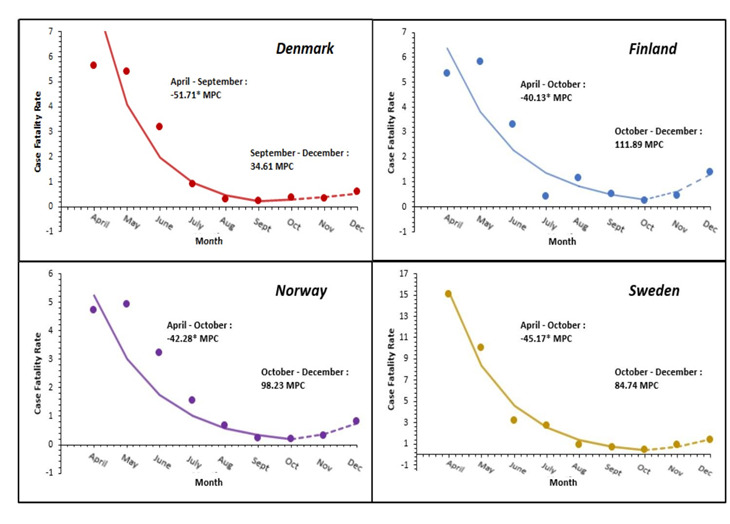
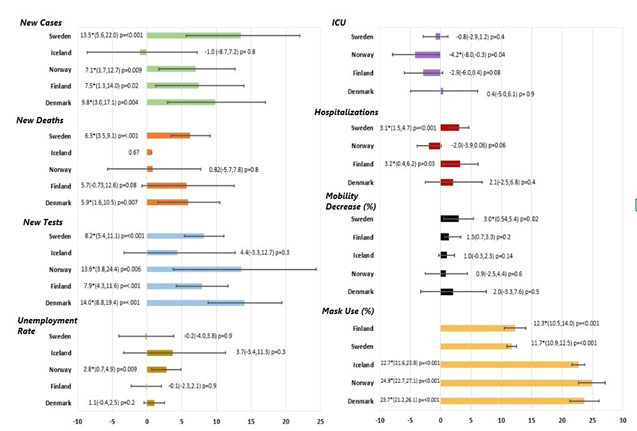
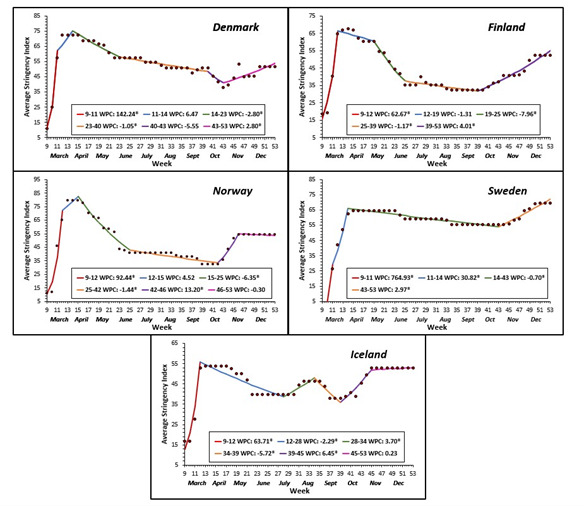
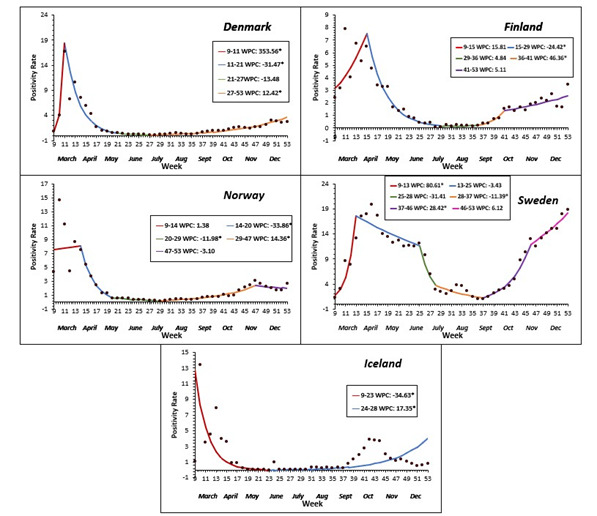
This study utilized publicly available COVID-19 data of the Nordic countries from January 2020 to January 3, 2021. COVID-19 epidemiology, public health and health policy, health system capacity, and macroeconomic data were analysed for each Nordic country. Joinpoint regression analysis was performed to identify changes in temporal trends using average monthly percent change (AMPC) and average weekly percent change (AWPC).
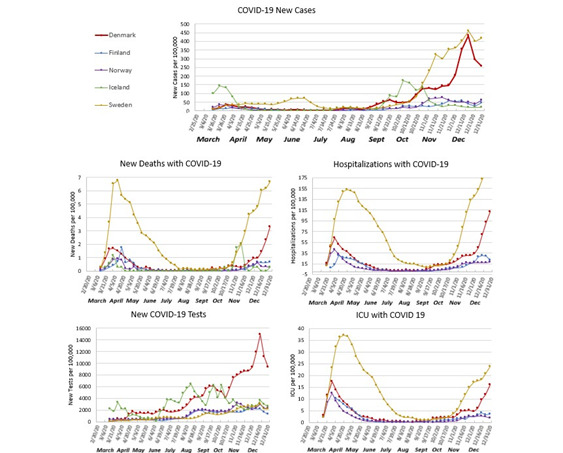
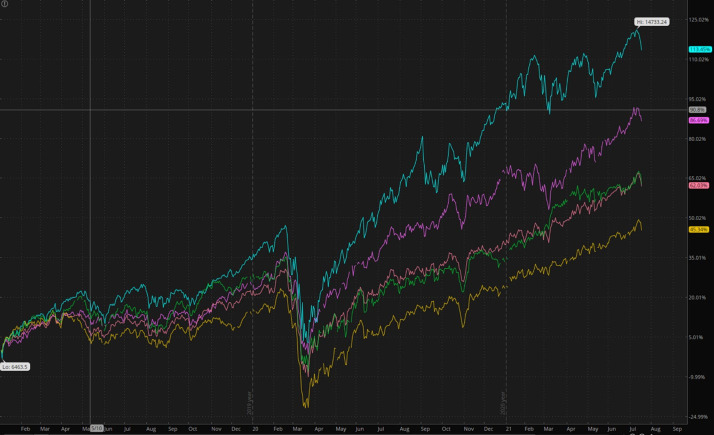
Sweden's health policy, being by far the most relaxed response to COVID-19, was found to have the largest COVID-19 incidence and mortality, and the highest AWPC increases for both indicators (13.5, 95% CI = 5.6, 22.0, P < 0.001; 6.3, 95% CI = 3.5, 9.1, P < 0.001). Denmark had the highest number of COVID-19 tests per capita, consistent with their approach of increased testing as a preventive strategy for disease transmission. Iceland had the second-highest number of tests per capita due to their mass-testing, contact tracing, quarantine and isolation response. Only Norway had a significant increase in unemployment (AMPC = 2.8%, 95% CI = 0.7-4.9, P < 0.009) while the percentage change in real Gross Domestic Product (GDP) was insignificant for all countries.
There was no trade-off between public health policy and economy during the COVID-19 pandemic in the Nordic region. Sweden's relaxed and delayed COVID-19 health policy response did not benefit the economy in the short term, while leading to disproportionate COVID-19 hospitalizations and mortality.
组成北欧地区的国家——丹麦、芬兰、冰岛、挪威和瑞典——在社会经济、文化和地理方面差异极小,这使得人们能够对这些国家在减轻 COVID-19 大流行影响方面的国家方法中对卫生政策和经济进行公平的比较分析。
本研究使用了 2020 年 1 月至 2021 年 1 月 3 日期间北欧国家公开提供的 COVID-19 数据。对每个北欧国家的 COVID-19 流行病学、公共卫生和卫生政策、卫生系统能力以及宏观经济数据进行了分析。使用平均每月百分比变化(AMPC)和平均每周百分比变化(AWPC)进行 Joinpoint 回归分析,以确定时间趋势的变化。
瑞典的卫生政策是对 COVID-19 反应最为宽松的政策,其 COVID-19 发病率和死亡率最高,这两个指标的 AWPC 增长率也最高(分别为 13.5%,95%CI=5.6,22.0,P<0.001;6.3%,95%CI=3.5,9.1,P<0.001)。丹麦的人均 COVID-19 检测数量最多,这与其将增加检测作为疾病传播的预防策略的方法一致。冰岛由于大规模检测、接触者追踪、隔离和检疫反应,人均检测数量位居第二。只有挪威的失业率显著上升(AMPC=2.8%,95%CI=0.7-4.9,P<0.009),而所有国家的实际国内生产总值(GDP)百分比变化均不显著。
在 COVID-19 大流行期间,北欧地区的公共卫生政策和经济之间没有权衡取舍。瑞典宽松且延迟的 COVID-19 卫生政策反应在短期内并未使经济受益,反而导致 COVID-19 住院和死亡率不成比例上升。