Department of Radiology, Thomas Jefferson University, Philadelphia, PA 19107, USA; School of Biomedical Engineering, Science and Heath Systems, Drexel University, Philadelphia, PA 19104, USA.
Department of Pharmaceutical Sciences, Thomas Jefferson University, Philadelphia, PA 19107, USA; Wegmans School of Pharmacy, Department of Pharmaceutical Sciences, St. John Fisher University, Rochester, NY 14618, USA.
Int J Pharm. 2022 Sep 25;625:122072. doi: 10.1016/j.ijpharm.2022.122072. Epub 2022 Aug 3.
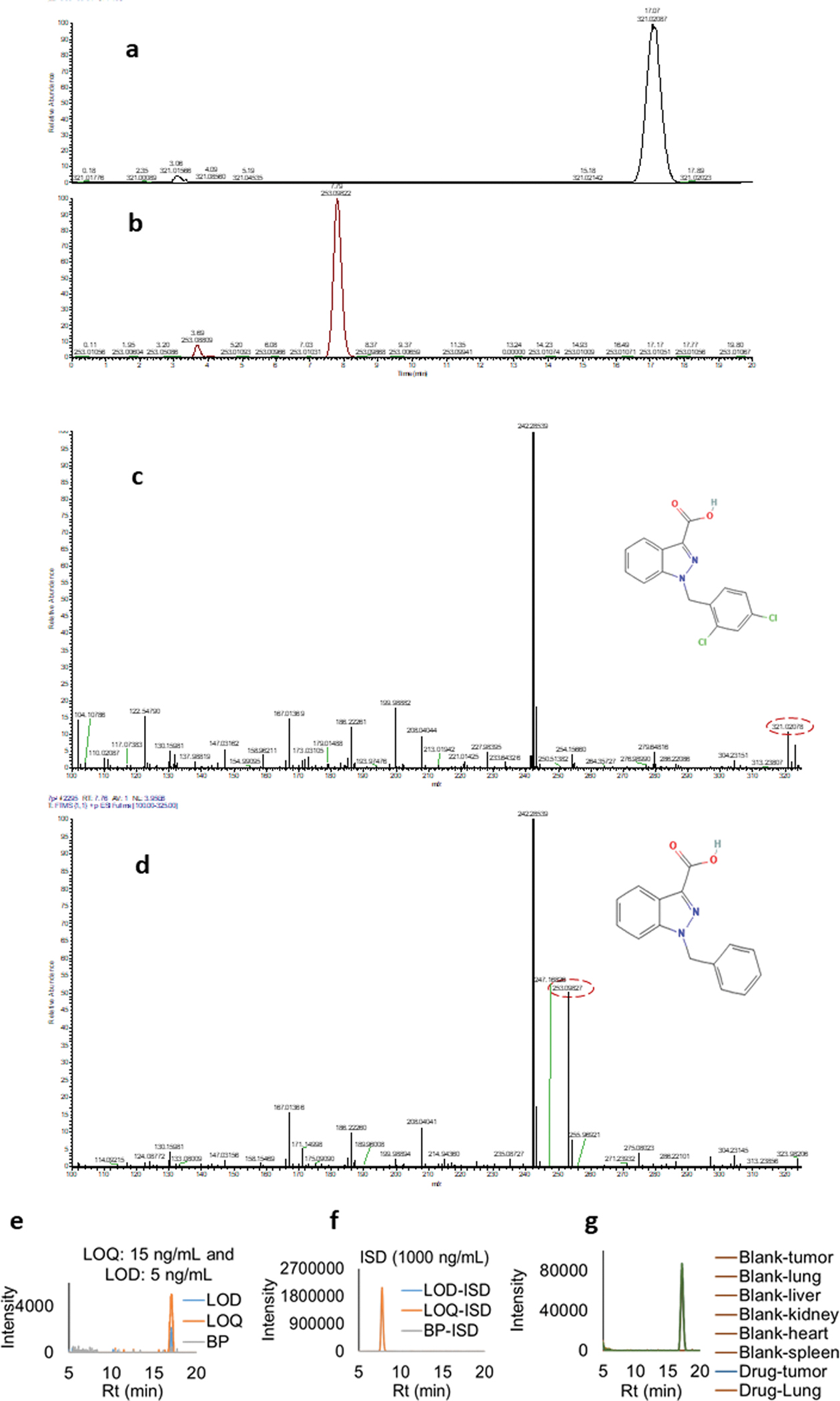
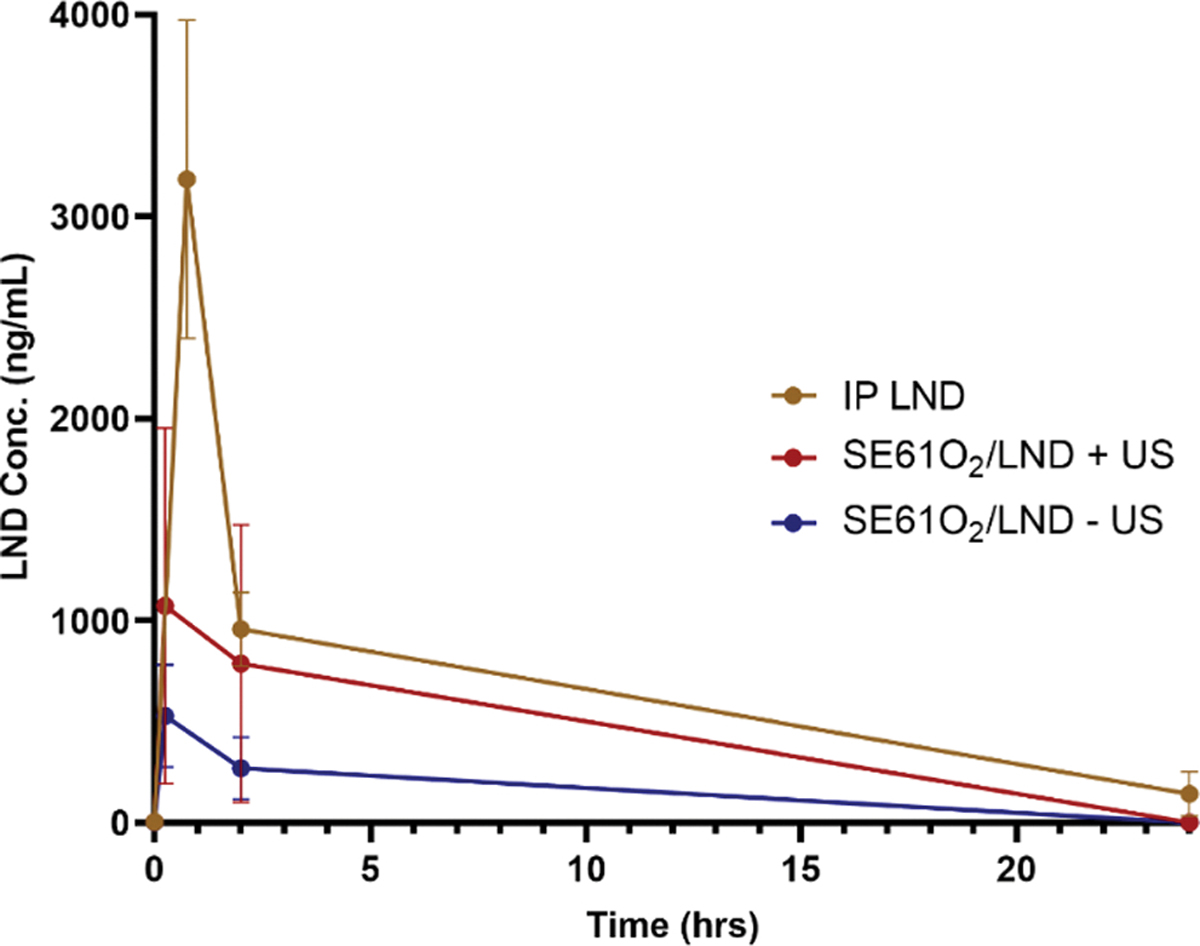
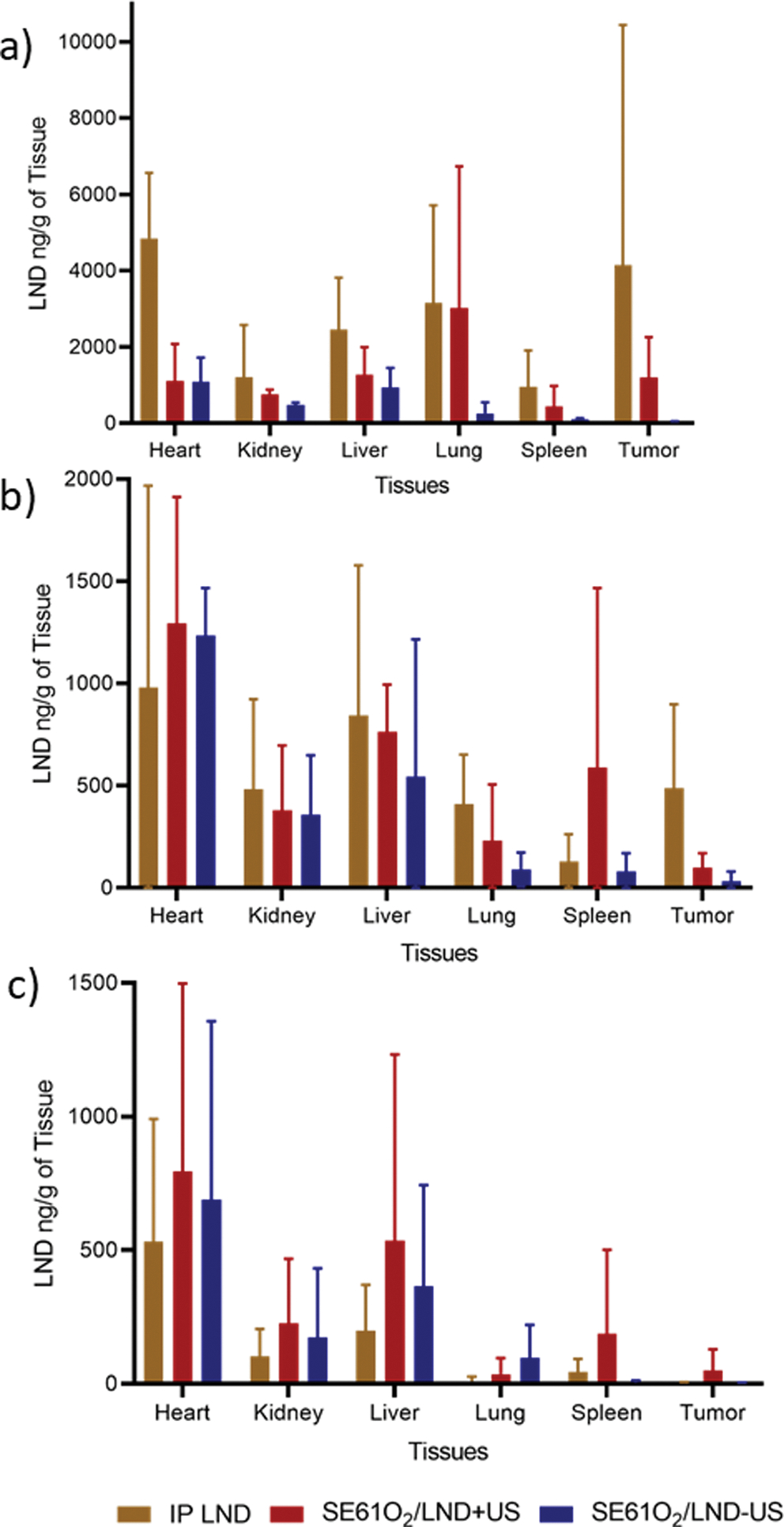
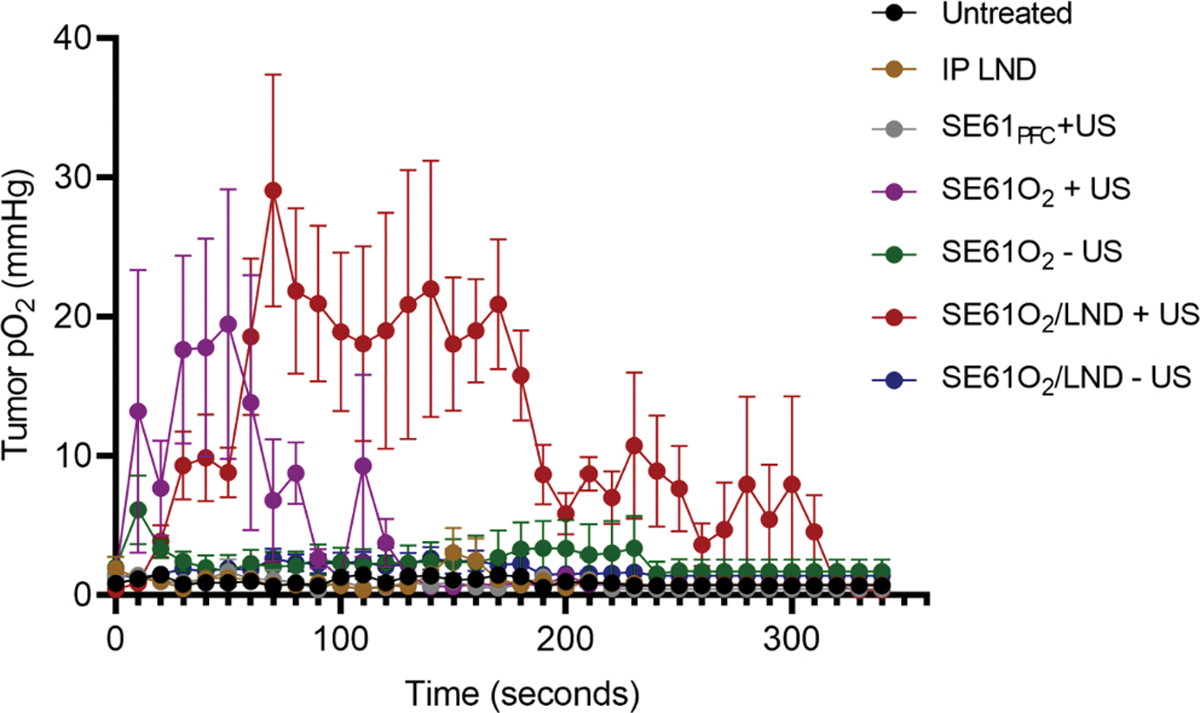
Prior work has shown that microbubble-assisted delivery of oxygen improves tumor oxygenation and radiosensitivity, albeit over a limited duration. Lonidamine (LND) has been investigated because of its ability to stimulate glycolysis, lactate production, inhibit mitochondrial respiration, and inhibit oxygen consumption rates in tumors but suffers from poor bioavailability. The goal of this work was to characterize LND-loaded oxygen microbubbles and assess their ability to oxygenate a human head and neck squamous cell carcinoma (HNSCC) tumor model, while also assessing LND biodistribution. In tumors treated with surfactant-shelled microbubbles with oxygen core (SE61O) and ultrasound, pO levels increased to a peak 19.5 ± 9.7 mmHg, 50 s after injection and returning to baseline after 120 s. In comparison, in tumors treated with SE61O/LND and ultrasound, pO levels showed a peak increase of 29.0 ± 8.3 mmHg, which was achieved 70 s after injection returning to baseline after 300 s (p < 0.001). The co-delivery of OandLNDvia SE61 also showed an improvement of LND biodistribution in both plasma and tumor tissues (p < 0.001). In summary, ultrasound-sensitive microbubbles loaded with O and LND provided prolonged oxygenation relative to oxygenated microbubbles alone, as well as provided an ability to locally deliver LND, making them more appropriate for clinical translation.
先前的工作表明,微泡辅助输送氧气可以改善肿瘤的氧合和放射敏感性,尽管作用时间有限。Lonidamine(LND)因其能够刺激糖酵解、乳酸生成、抑制线粒体呼吸和抑制肿瘤中的耗氧量而受到研究,但它的生物利用度较差。这项工作的目的是描述负载 LND 的氧气微泡,并评估它们在含氧状态下为人类头颈部鳞状细胞癌(HNSCC)肿瘤模型供氧的能力,同时评估 LND 的生物分布。在用含有氧核心的表面活性剂壳微泡(SE61O)和超声处理的肿瘤中,pO 水平在注射后 50s 时增加到峰值 19.5±9.7mmHg,并在 120s 后恢复基线。相比之下,在用 SE61O/LND 和超声处理的肿瘤中,pO 水平显示出 29.0±8.3mmHg 的峰值增加,这是在注射后 70s 达到的,在 300s 后恢复基线(p<0.001)。通过 SE61 共递送 O 和 LND 也显示出在血浆和肿瘤组织中 LND 生物分布的改善(p<0.001)。总之,负载 O 和 LND 的超声敏感微泡提供了比单独含氧微泡更长时间的氧合作用,并且能够局部递送 LND,使其更适合临床转化。