Department of Mechanical Engineering, University of Colorado, Boulder, CO, USA.
Department of Bioengineering, University of Colorado Anschutz Medical Campus, Aurora, CO, USA.
Nanotheranostics. 2020 Feb 28;4(2):83-90. doi: 10.7150/ntno.43808. eCollection 2020.
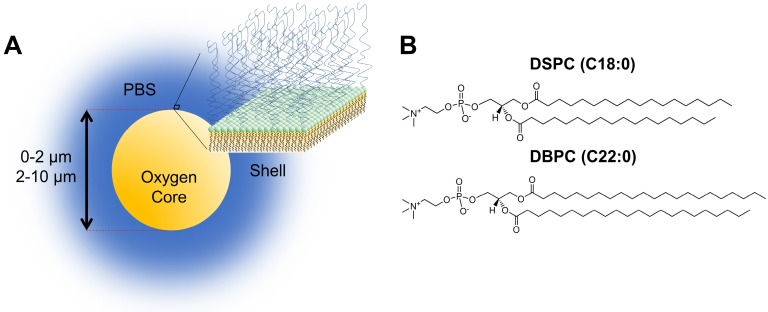
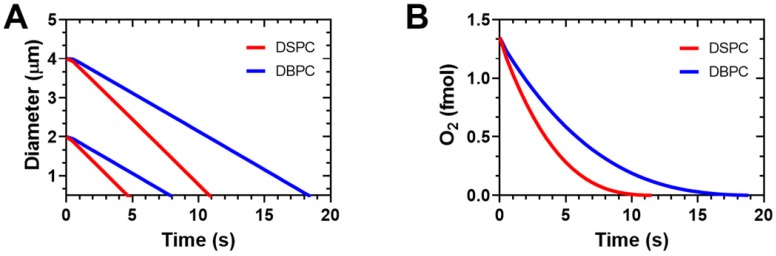
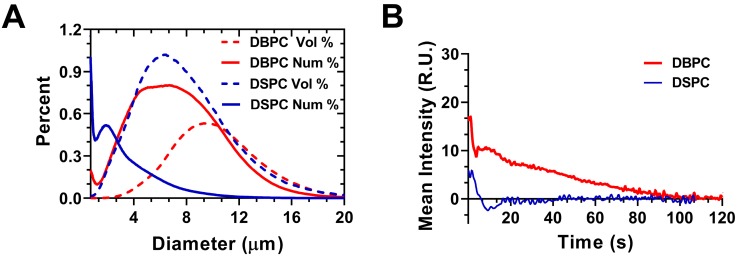
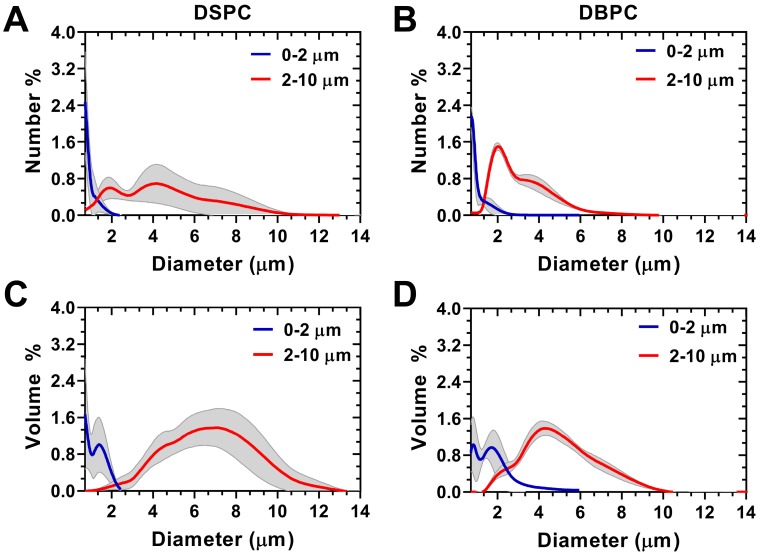
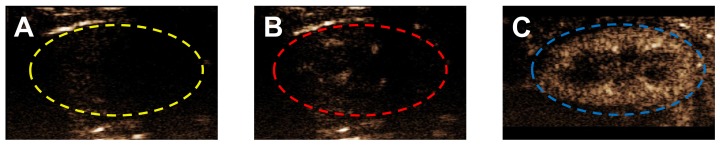
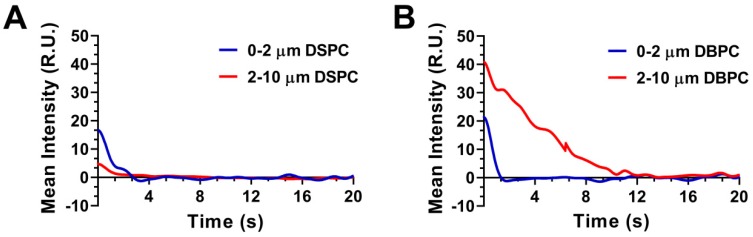
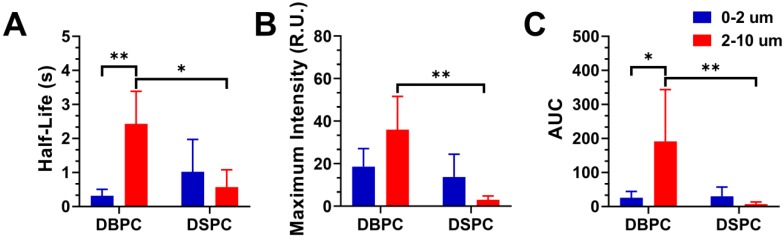
In recent work, oxygen microbubbles (OMB) have been shown to oxygenate hypoxic tumors, increase radio-sensitivity and improve tumor control by radiation therapy. Compared to intra-tumoral injection, intravenous delivery of adjuvant agents such as OMBs for radiotherapy offers an attractive means of achieving true theranostic function in a minimally invasive manner via contrast-enhanced ultrasound (CEUS), while reducing the risk of injury, infection or displacing tumor cells. However, short intravascular circulation times with conventional DSPC-lipid OMBs may lead to premature off-target dissolution of OMBs with an associated reduction in tumoral oxygen delivery. Prior work on microbubble stability and gas exchange suggests that increasing phospholipid acyl-chain length of the encapsulating shell and OMB size may increase circulation persistence, delivery and dissolved oxygen content. In the following studies, we investigate the effect of two phospholipid shell compositions, DSPC (C18:0) and DBPC (C22:0), as well as three size distributions (0.5-2 µm, 2-10 µm and polydisperse) on OMB circulation persistence utilizing CEUS in the kidneys of live C57B1/6 male and female mice, six weeks of age. DBPC OMB formulations demonstrated increased circulation half-lives versus DSPC formulations (2.4 ± 1.0 0.6 ± 0.5 s, p<0.01 for 2-10 µm), as well as an increased maximum intensity by over tenfold (p<0.01). Size-dependent effects remained consistent across both formulations with larger 2-10 µm microbubbles demonstrating significantly increased half-lives (2.4 ± 1.0 . 0.3 ± 0.2 s, p < 0.01) compared to smaller 0.5-2 µm formulations of DBPC. These studies indicate that DBPC 2-10 µm OMBs may be improved adjuvant agents for radiotherapy with significant potential for CEUS interrogation.
在最近的工作中,已经证明氧气微泡(OMB)可以使缺氧肿瘤充氧,增加放射敏感性,并通过放射治疗改善肿瘤控制。与肿瘤内注射相比,通过对比增强超声(CEUS)以静脉内递送来辅助剂(如 OMB)进行放射治疗,提供了一种以微创方式实现真正治疗诊断功能的有吸引力的方法,同时降低了损伤、感染或肿瘤细胞移位的风险。然而,常规 DSPC-脂质 OMB 的短血管内循环时间可能导致 OMB 过早脱离靶点,从而降低肿瘤的氧气输送。关于微泡稳定性和气体交换的先前工作表明,增加包封壳的磷脂酰基链长度和 OMB 大小可能会增加循环持久性、输送和溶解氧含量。在以下研究中,我们研究了两种磷脂壳组成(DSPC(C18:0)和 DBPC(C22:0))以及三种大小分布(0.5-2 µm、2-10 µm 和多分散性)对利用活 C57B1/6 雄性和雌性小鼠肾脏中的 CEUS 评估的 OMB 循环持久性的影响,这些小鼠的年龄为六周。DBPC OMB 制剂的循环半衰期比 DSPC 制剂长(2.4 ± 1.0 vs. 0.6 ± 0.5 s,p<0.01),最大强度也增加了十倍以上(p<0.01)。两种制剂的大小依赖性效应保持一致,较大的 2-10 µm 微泡的半衰期明显延长(2.4 ± 1.0 vs. 0.3 ± 0.2 s,p < 0.01),与 DBPC 的较小的 0.5-2 µm 制剂相比。这些研究表明,DBPC 2-10 µm OMB 可能是放射治疗的改良辅助剂,具有 CEUS 询问的巨大潜力。