School of Rehabilitation Medicine, Capital Medical University, Beijing, 100068, China.
Beijing Bo'ai Hospital, China Rehabilitation Research Center, No.10 JiaoMen North Road, Fengtai District, Beijing, 100068, China.
J Transl Med. 2022 Aug 6;20(1):352. doi: 10.1186/s12967-022-03546-w.
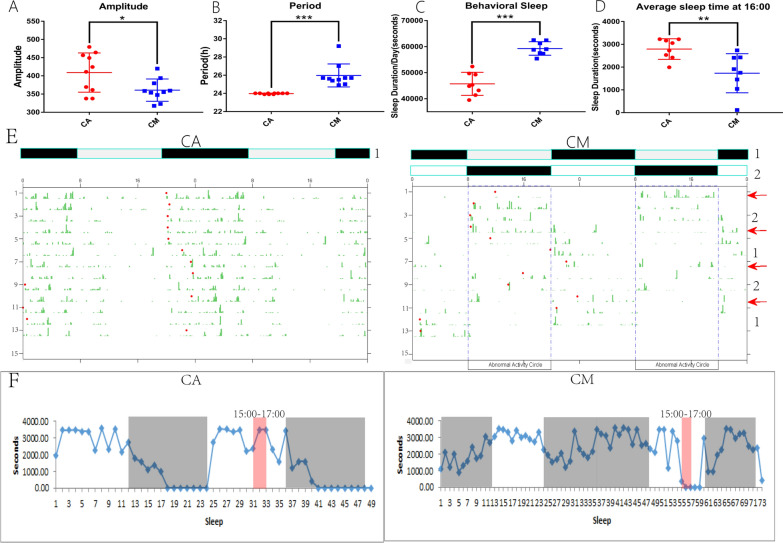
The purpose of this study was to observe the harm of circadian misalignment (CM), caused by an inverted photoperiod (IP), on the hearts of the adolescent Wistar rats, and to explore the mechanisms leading to harm.
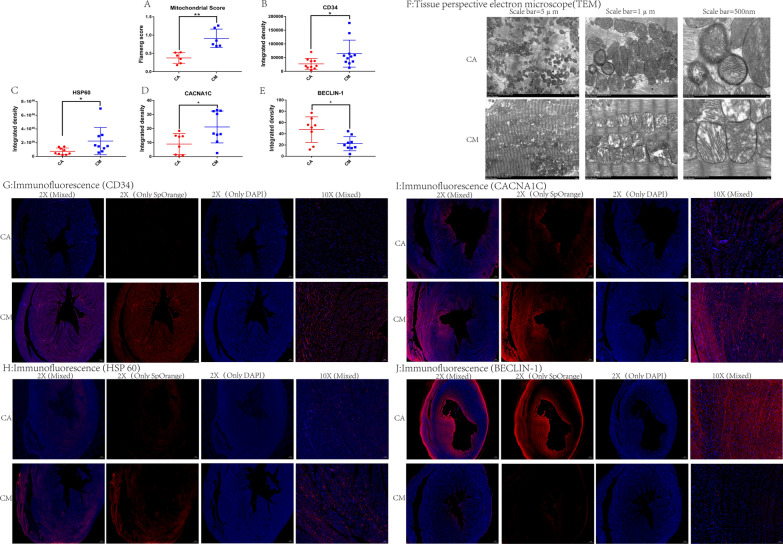
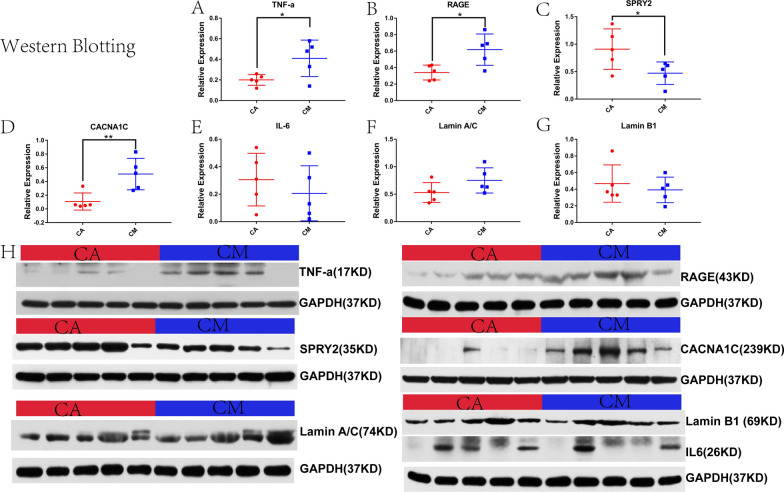
An IP was used to create a CM model. A total of 174 Wistar rats were randomly divided into circadian alignment (CA) and CM groups (87 rats per group). The different activity rhythms of the two groups of rats were adjusted through different light/dark cycles for 90 days. We recorded the rhythmic activity trajectory and sleep time of the rats. After 90 days of modeling, we performed various analyses (i.e., blood pressure, weight, cardiac ultrasound tests, serological tests, cardiac tissue immunofluorescence, immunohistochemistry, transmission electron microscopy on myocardial mitochondria, western blotting, and quantitative polymerase chain reactions).
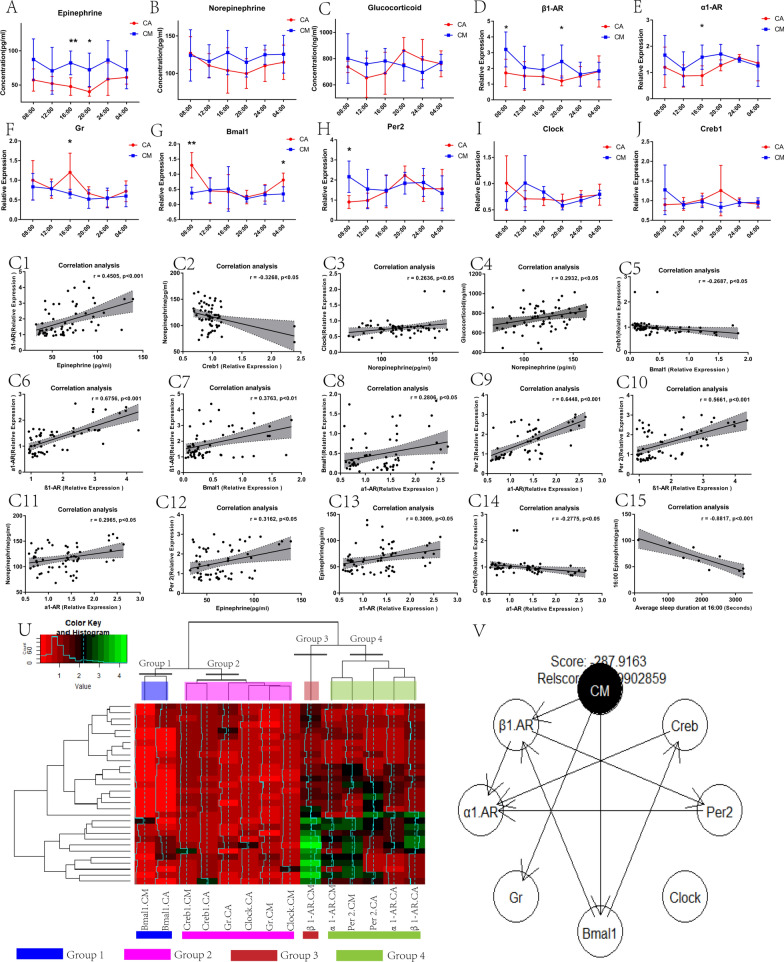
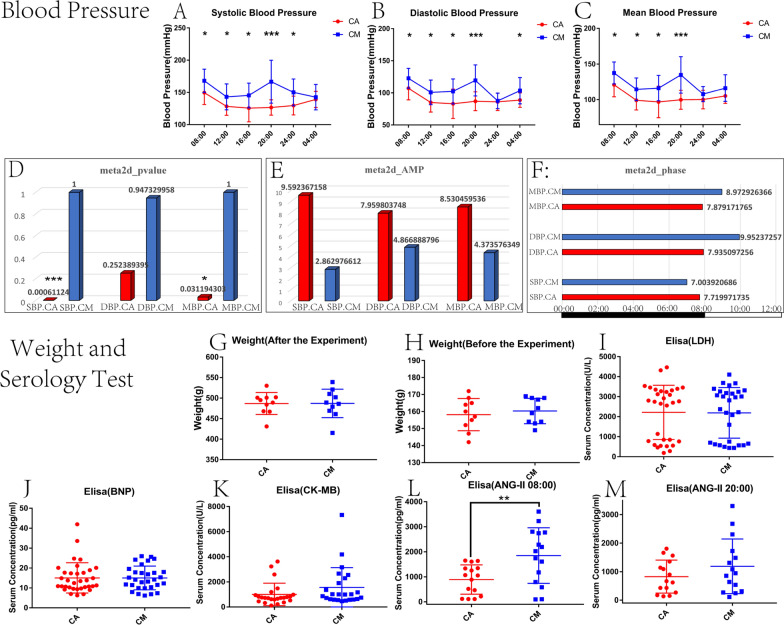
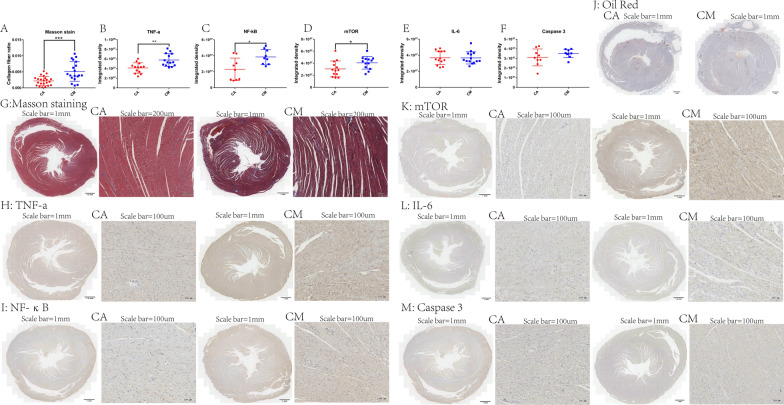
(1) The IP protocol caused CM in rats. (2) CM rats showed significantly higher blood pressure during the day (resting phase). They also showed significantly higher serum levels of angiotensin II and epinephrine during the day compared to the CA rats. (3) CM caused up-regulation of gene expression of adrenergic receptors α1 (α1-AR) and β1 (β1-AR) and down-regulation of the glucocorticoid receptor (Gr) gene expression in rat hearts. It also caused downregulation of Bmal1 expression. In addition, the changes in Bmal1 and Per2 correlated with the changes in β1-AR and α1-AR. (4) CM had adverse effects on multiple molecular proteins of the heart. (5) CM increased the collagen fibers in the rat heart and increased the destruction of mitochondria. (6) Eventually, CM caused a decrease in the pumping function of the heart and decreased the coronary blood flow rate.
(1) CM significantly affected the cardiac structure and function in the adolescent rats through a variety of mechanisms. (2) CM can regulate the expression of myocardial clock genes, and it is likely to have an impact on the heart through this pathway.
本研究旨在观察由颠倒的光周期(IP)引起的昼夜节律失调(CM)对青春期 Wistar 大鼠心脏的危害,并探讨导致危害的机制。
使用 IP 创建 CM 模型。将 174 只 Wistar 大鼠随机分为昼夜对齐(CA)和 CM 组(每组 87 只)。通过不同的明暗周期调整两组大鼠的不同活动节律,共 90 天。记录大鼠的节律性活动轨迹和睡眠时间。建模 90 天后,进行各种分析(即血压、体重、心脏超声检查、血清学检查、心脏组织免疫荧光、免疫组织化学、心肌线粒体透射电镜、western blot 和定量聚合酶链反应)。
(1)IP 方案导致大鼠出现 CM。(2)CM 大鼠白天(静息期)血压明显升高,与 CA 大鼠相比,白天血清血管紧张素 II 和肾上腺素水平明显升高。(3)CM 导致大鼠心脏中肾上腺素能受体α1(α1-AR)和β1(β1-AR)的基因表达上调,糖皮质激素受体(Gr)基因表达下调,Bmal1 表达下调。此外,Bmal1 和 Per2 的变化与β1-AR 和α1-AR 的变化相关。(4)CM 对心脏的多个分子蛋白产生不良影响。(5)CM 增加了大鼠心脏中的胶原纤维,并增加了线粒体的破坏。(6)最终,CM 导致心脏泵功能下降,冠状动脉血流速度降低。
(1)CM 通过多种机制显著影响青春期大鼠的心脏结构和功能。(2)CM 可以调节心肌时钟基因的表达,并且很可能通过这种途径对心脏产生影响。