Ganson Kyle T, Cunningham Mitchell L, Pila Eva, Rodgers Rachel F, Murray Stuart B, Nagata Jason M
Factor-Inwentash Faculty of Social Work, University of Toronto, 246 Bloor Street W, Toronto, ON, M5S 1V4, Canada.
School of Psychology, The University of Sydney, Sydney, NSW, Australia.
J Eat Disord. 2022 Aug 6;10(1):113. doi: 10.1186/s40337-022-00642-6.
"Cheat meals", described as brief eating episodes that depart from established dietary practices to consume prohibited foods, represent a novel and increasingly common eating behavior with particular salience in adolescence and young adulthood. However, knowledge gaps remain regarding the frequency and characterization of foods and calories consumed during cheat meals, and their associations with eating disorder behaviors and psychopathology. Thus, the aims of this study were to delineate engagement in cheat meals among a large, national sample of Canadian adolescents and young adults.
Participants (N = 2,717) were from the Canadian Study of Adolescent Health Behaviors. Frequencies of engagement in cheat meals, and associated foods and calories consumed, in the past 12 months and 30 days were determined. The associations between engagement in cheat meals and eating disorder behaviors and psychopathology were determined using modified Poisson regression analyses.
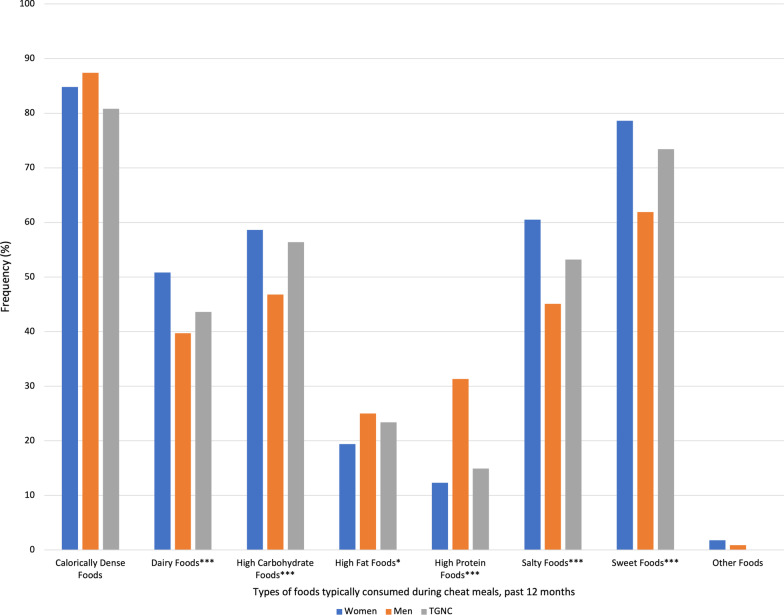
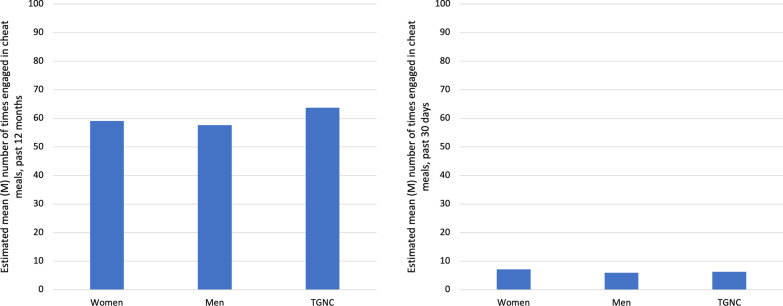
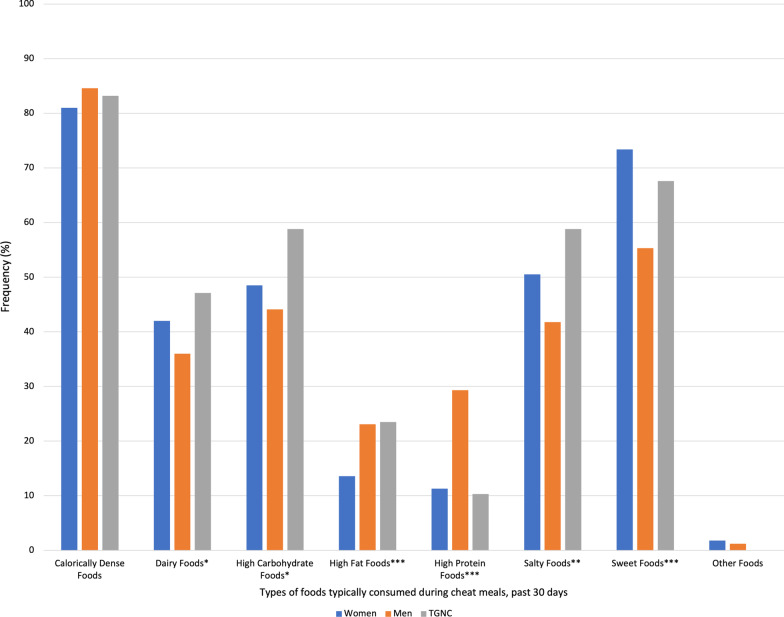
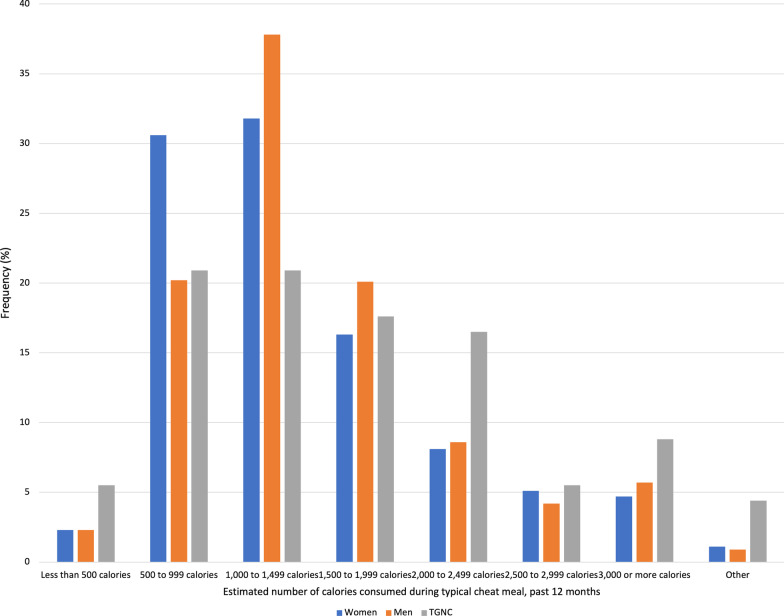
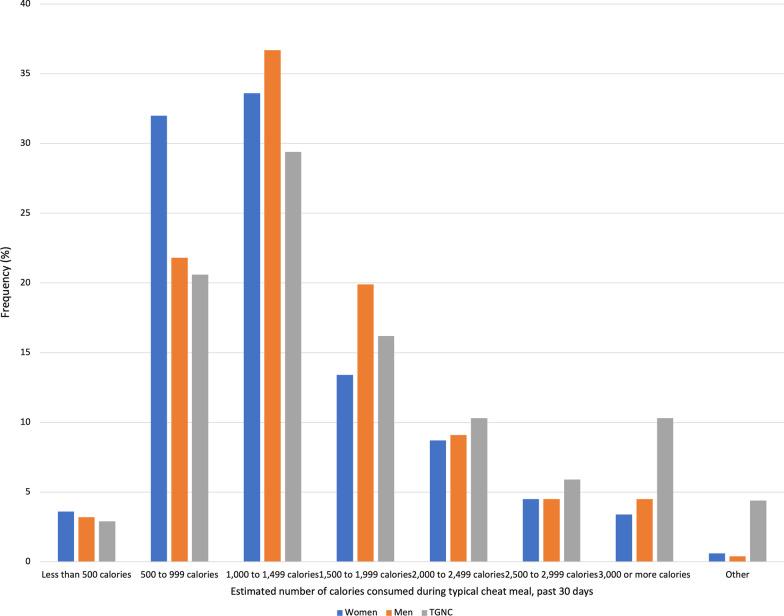
Engagement in cheat meals in the past 12 months was highest among men (60.9%) compared to women (53.7%) and transgender/gender non-conforming (TGNC; 52.5%) participants. Cheat meals consisting between 1,000 and 1,499 cal were those most frequently reported among all participants. Mean number of cheat meals in the past 12 months was equivalent to > 1 per week, which was similar to engagement in the past 30 days. Finally, engagement in cheat meals in the past 12 months and 30 days was associated with patterns of eating disorder behaviors and psychopathology among all participants, including binge-eating-related behaviors.
This study further characterized and extended knowledge of cheat meal engagement across genders, aligning with prior research by demonstrating that engagement is associated with greater eating disorder psychopathology. Findings from this study add to the growing characterization of the novel behavioral phenomenon of cheat meals. Specifically, over half of adolescents and young adults across all 13 provinces and territories in Canada reported engaging in > 1 cal dense cheat meal per week, over the past 12 months. Despite the normalization and promotion of cheat meal engagement among the general public and unique fitness communities, engagement in this behavior is linked to greater eating disorder behaviors and psychopathology, including binge-eating episodes. Our findings emphasize the need for further research, public awareness, and clinical interventions aimed at addressing this potentially harmful eating behavior.
“欺骗餐”被描述为偏离既定饮食习惯去食用禁食的短暂饮食行为,是一种在青少年和青年中出现的新颖且日益普遍的饮食行为,具有特殊的显著性。然而,关于欺骗餐期间所摄入食物的频率、特征以及卡路里含量,及其与饮食失调行为和精神病理学之间的关联,仍存在知识空白。因此,本研究的目的是在加拿大青少年和青年的全国性大样本中描绘欺骗餐的参与情况。
参与者(N = 2717)来自加拿大青少年健康行为研究。确定了过去12个月和30天内参与欺骗餐的频率,以及相关的食物和卡路里摄入量。使用修正的泊松回归分析确定欺骗餐参与情况与饮食失调行为和精神病理学之间的关联。
在过去12个月中,男性(60.9%)参与欺骗餐的比例高于女性(53.7%)和跨性别/性别不一致(TGNC;52.5%)的参与者。所有参与者中最常报告的欺骗餐所含热量在1000至1499卡路里之间。过去12个月中欺骗餐的平均次数相当于每周超过1次,这与过去30天的参与情况相似。最后,在过去12个月和30天内参与欺骗餐与所有参与者的饮食失调行为模式和精神病理学有关,包括与暴饮暴食相关的行为。
本研究进一步描述并扩展了不同性别人群中欺骗餐参与情况的知识,与先前的研究一致,表明这种参与与更严重的饮食失调精神病理学有关。本研究的结果增加了对欺骗餐这一新颖行为现象的认识。具体而言,在过去12个月中,加拿大所有13个省和地区超过一半的青少年和青年报告每周参与超过1次高热量的欺骗餐。尽管欺骗餐在普通公众和独特的健身群体中已经常态化并得到推广,但这种行为与更严重的饮食失调行为和精神病理学有关,包括暴饮暴食发作。我们的研究结果强调需要进一步研究、提高公众意识以及进行临床干预,以应对这种潜在有害的饮食行为。