Plant Protection Research Institute, Guangxi Academy of Agricultural Science/ Key Laboratory of Green Prevention and Control on Fruits and Vegetables in South China Ministry of Agriculture and Rural Affairs/Guangxi Key Laboratory of Biology for Crop Diseases and Insect Pests, Nanning, 530007, China.
Biotechnology Research Institute, Guangxi Academy of Agricultural Sciences, Nanning, 530007, China.
BMC Plant Biol. 2022 Aug 8;22(1):393. doi: 10.1186/s12870-022-03773-9.
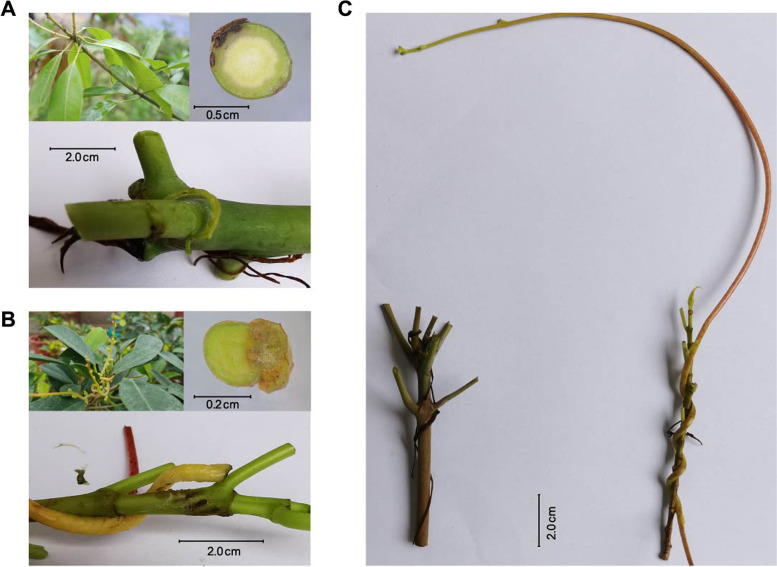
Cuscuta japonica Choisy (Japanese dodder) is a parasitic weed that damages many plants and affects agricultural production. The haustorium of C. japonica plays a key role during parasitism in host plants; in contrast, some non-host plants effectively inhibit its formation. However, the metabolic differences between normal dodder in host plants and dodder inhibition in non-host plants are largely unknown. Here, we utilized an integrative analysis of transcriptomes and metabolomes to compare the differential regulatory mechanisms between C. japonica interacting with the host plant Ficus microcarpa and the non-host plant Mangifera indica.
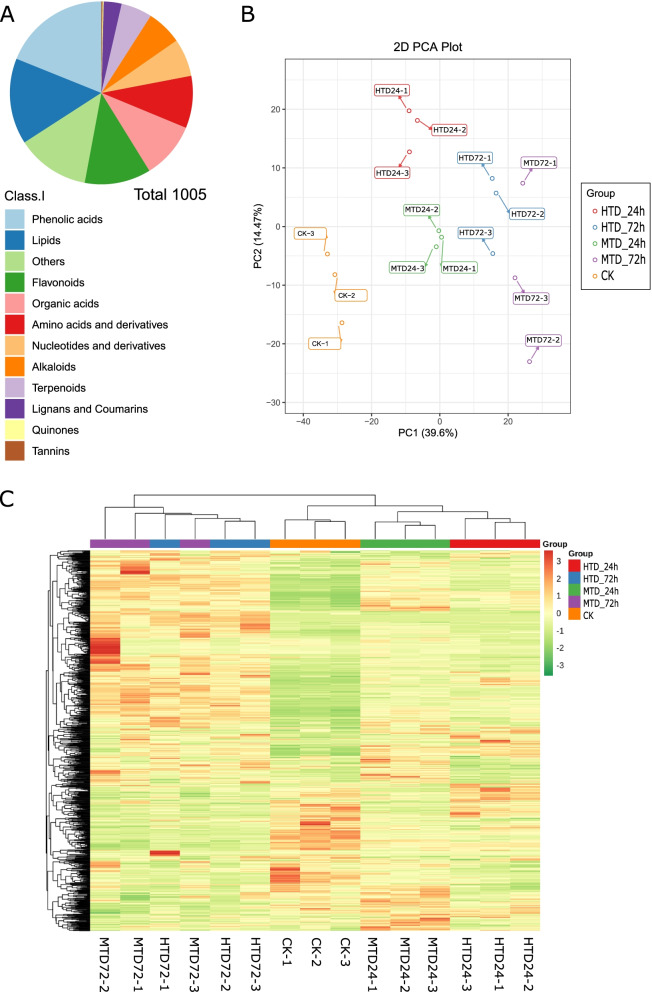
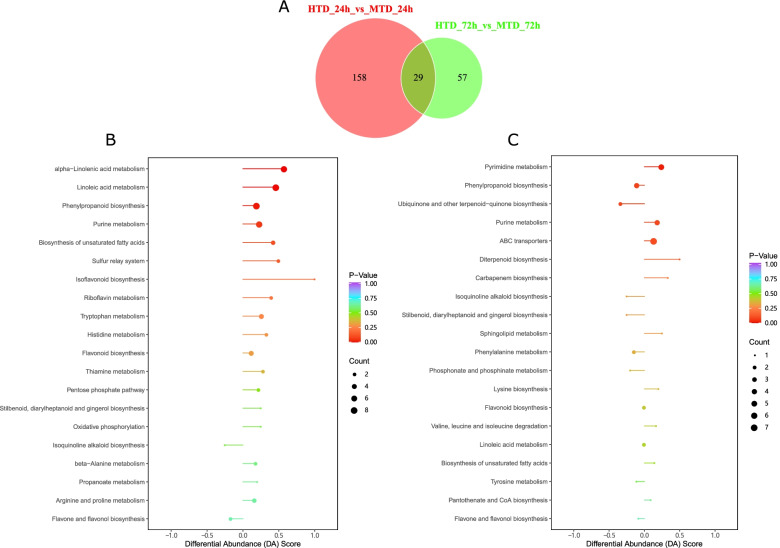
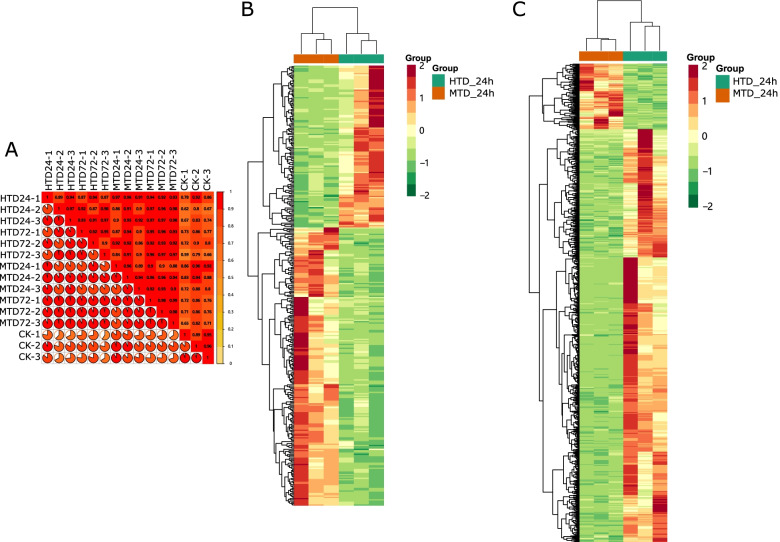
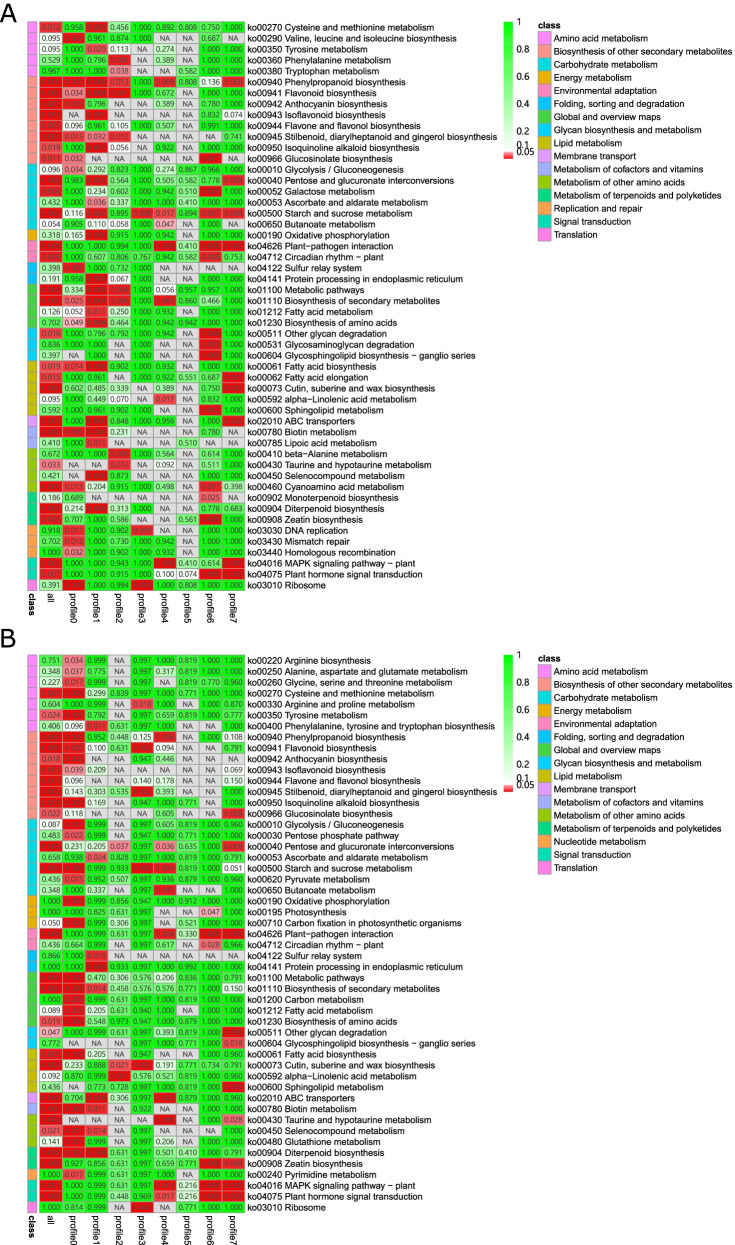
After parasitization for 24 h and 72 h, the differentially abundant metabolites between these two treatments were enriched in pathways associated with α-linolenic acid metabolism, linoleic acid metabolism, phenylpropanoid biosynthesis, and pyrimidine metabolism. At the transcriptome level, the flavor biosynthesis pathway was significantly enriched at 24 h, whereas the plant-pathogen interaction, arginine and proline metabolism, and MARK signaling-plant pathways were significantly enriched at 72 h, based on the differentially expressed genes between these two treatments. Subsequent temporal analyses identified multiple genes and metabolites that showed different trends in dodder interactions between the host and non-host plants. In particular, the phenylpropanoid biosynthesis pathway showed significant differential regulation between C. japonica in host and non-host plants.
These results provide insights into the metabolic mechanisms of dodder-host interactions, which will facilitate future plant protection from C. japonica parasitism.
菟丝子(Japanese dodder)是一种寄生杂草,会损害许多植物并影响农业生产。菟丝子的吸器在寄生宿主植物过程中起着关键作用;相比之下,一些非宿主植物则能有效地抑制其形成。然而,宿主植物中正常菟丝子与非宿主植物中菟丝子抑制的代谢差异在很大程度上尚未可知。在这里,我们利用转录组学和代谢组学的综合分析来比较菟丝子与宿主植物榕属和非宿主植物芒果之间相互作用的差异调控机制。
寄生 24 小时和 72 小时后,这两种处理之间差异丰度的代谢物富集在与α-亚麻酸代谢、亚油酸代谢、苯丙烷生物合成和嘧啶代谢相关的途径中。在转录组水平上,基于这两种处理之间差异表达基因,24 小时时风味生物合成途径显著富集,而 72 小时时植物-病原体相互作用、精氨酸和脯氨酸代谢以及 MARK 信号-植物途径显著富集。随后的时间分析确定了多个在宿主和非宿主植物之间的菟丝子相互作用中表现出不同趋势的基因和代谢物。特别是,苯丙烷生物合成途径在宿主和非宿主植物中的菟丝子之间表现出显著的差异调控。
这些结果为菟丝子与宿主植物相互作用的代谢机制提供了深入了解,这将有助于未来对菟丝子寄生的植物保护。