Chen Chen, Wang Zehua, Qin Yanru
Department of Oncology, The First Affiliated Hospital of Zhengzhou University, Zhengzhou, China.
Front Pharmacol. 2022 Jul 22;13:935536. doi: 10.3389/fphar.2022.935536. eCollection 2022.
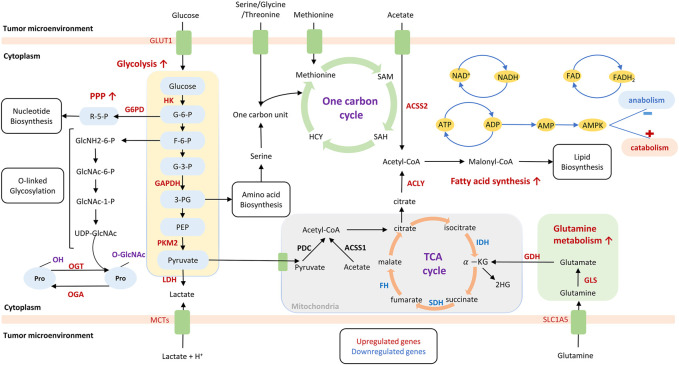
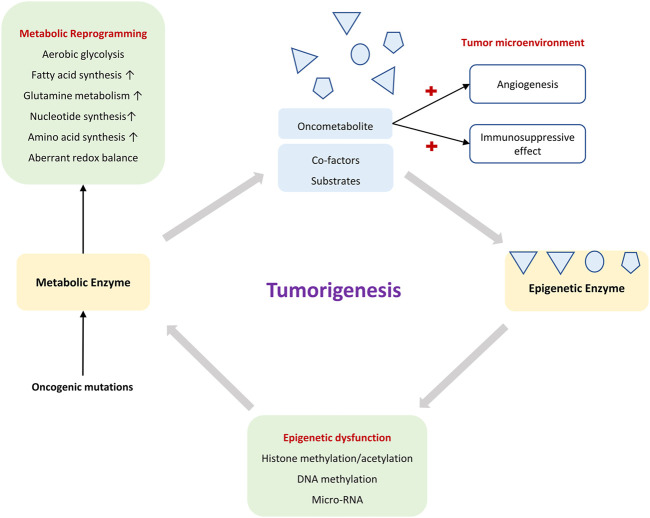
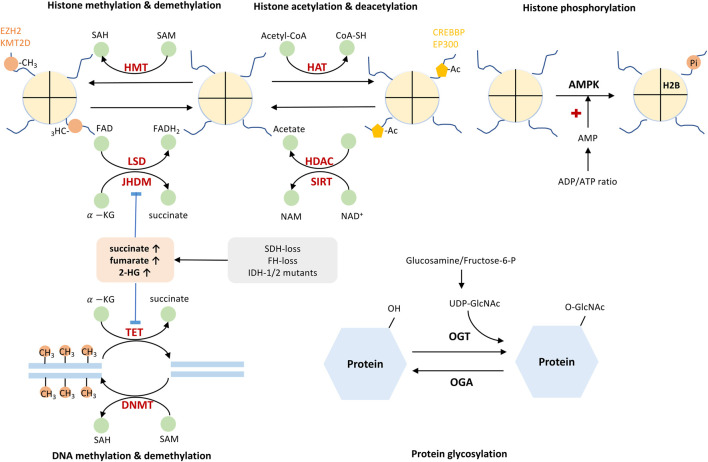
Cancer cells undergo metabolic adaptations to sustain their growth and proliferation under several stress conditions thereby displaying metabolic plasticity. Epigenetic modification is known to occur at the DNA, histone, and RNA level, which can alter chromatin state. For almost a century, our focus in cancer biology is dominated by oncogenic mutations. Until recently, the connection between metabolism and epigenetics in a reciprocal manner was spotlighted. Explicitly, several metabolites serve as substrates and co-factors of epigenetic enzymes to carry out post-translational modifications of DNA and histone. Genetic mutations in metabolic enzymes facilitate the production of oncometabolites that ultimately impact epigenetics. Numerous evidences also indicate epigenome is sensitive to cancer metabolism. Conversely, epigenetic dysfunction is certified to alter metabolic enzymes leading to tumorigenesis. Further, the bidirectional relationship between epigenetics and metabolism can impact directly and indirectly on immune microenvironment, which might create a new avenue for drug discovery. Here we summarize the effects of metabolism reprogramming on epigenetic modification, and vice versa; and the latest advances in targeting metabolism-epigenetic crosstalk. We also discuss the principles linking cancer metabolism, epigenetics and immunity, and seek optimal immunotherapy-based combinations.
癌细胞会发生代谢适应,以便在多种应激条件下维持其生长和增殖,从而表现出代谢可塑性。已知表观遗传修饰发生在DNA、组蛋白和RNA水平,可改变染色质状态。近一个世纪以来,我们在癌症生物学领域的关注点一直由致癌突变主导。直到最近,代谢与表观遗传学之间以相互作用方式存在的联系才受到关注。具体而言,几种代谢物充当表观遗传酶的底物和辅助因子,以进行DNA和组蛋白的翻译后修饰。代谢酶中的基因突变促进了致癌代谢物的产生,最终影响表观遗传学。大量证据还表明表观基因组对癌症代谢敏感。相反,表观遗传功能障碍被证实会改变代谢酶,导致肿瘤发生。此外,表观遗传学与代谢之间的双向关系可直接和间接影响免疫微环境,这可能为药物发现开辟一条新途径。在此,我们总结了代谢重编程对表观遗传修饰的影响,反之亦然;以及靶向代谢-表观遗传相互作用的最新进展。我们还讨论了将癌症代谢、表观遗传学和免疫联系起来的原理,并寻求基于免疫疗法的最佳联合治疗方案。