Department of Rheumatology, Kawasaki Medical School, Kurashiki, Japan.
Department of Dermatology, Okayama University Graduate School of Medicine, Dentistry, and Pharmaceutical Sciences, Okayama, Japan.
Front Immunol. 2022 Jul 22;13:926175. doi: 10.3389/fimmu.2022.926175. eCollection 2022.
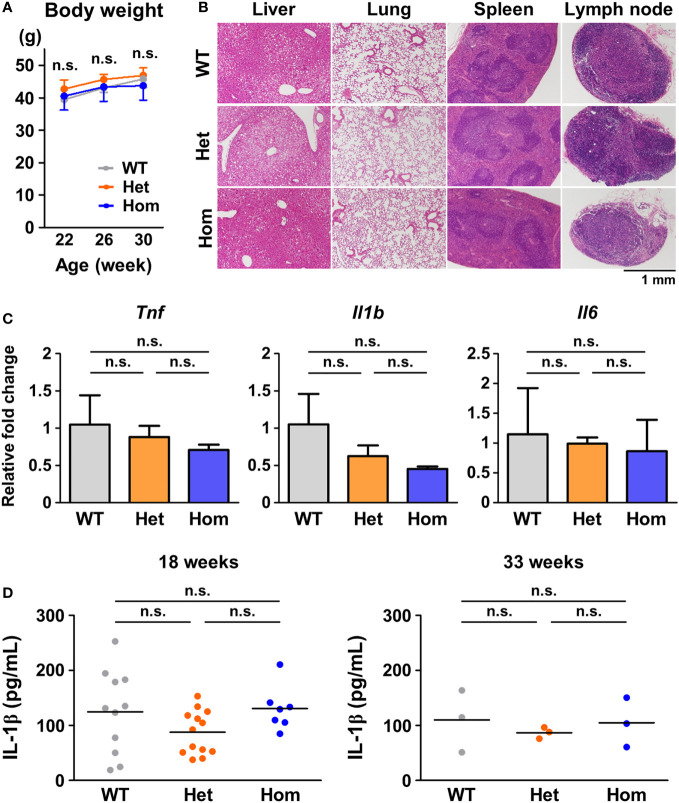
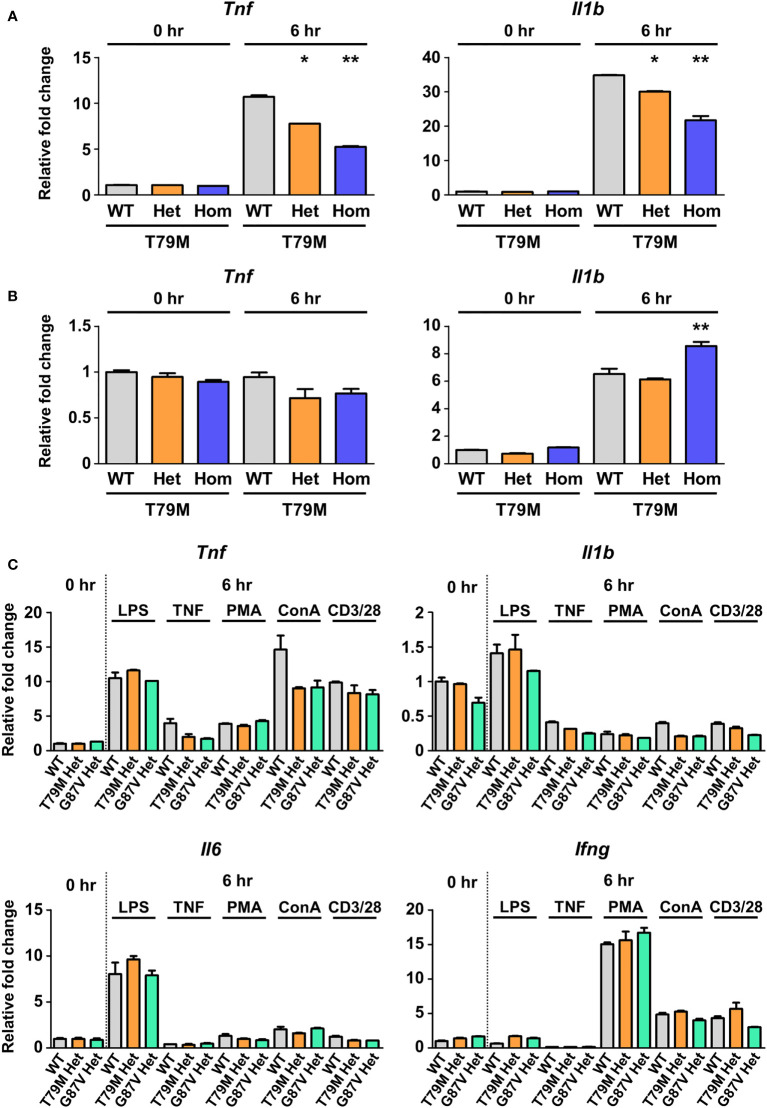
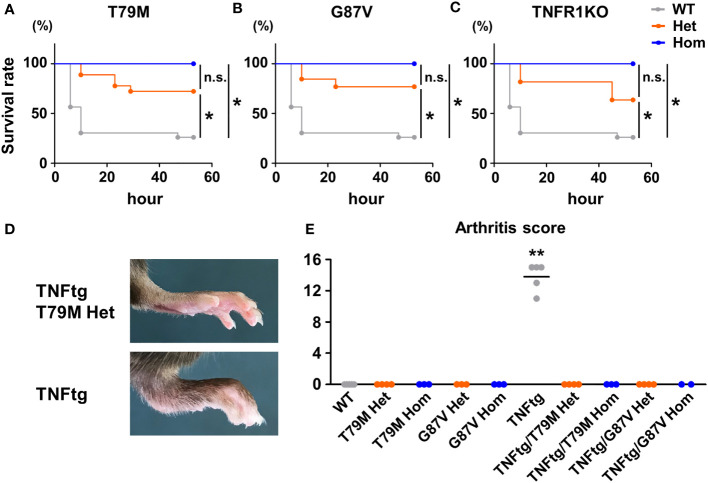
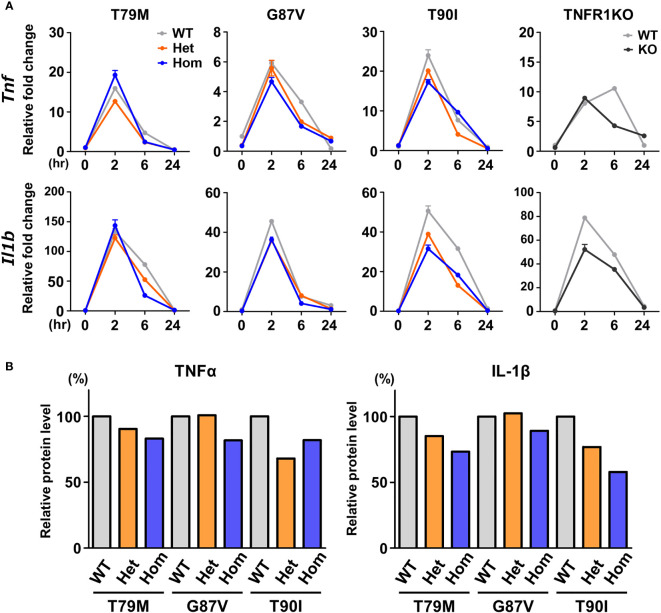
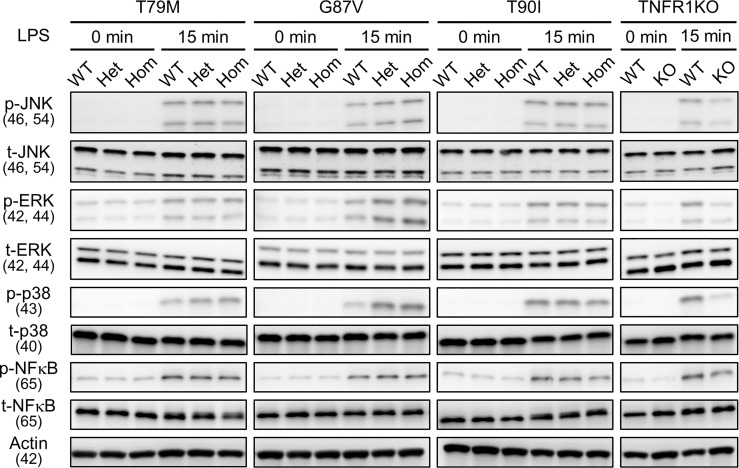
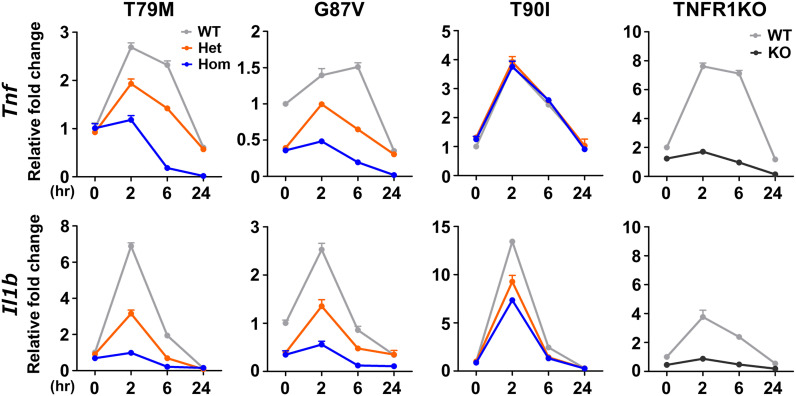
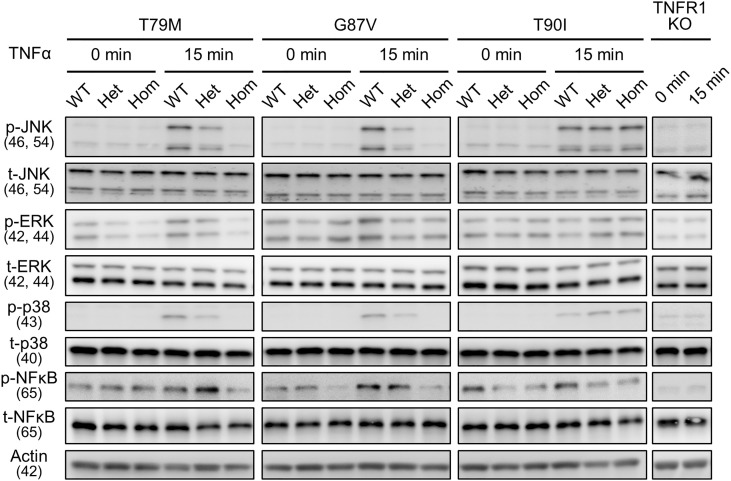
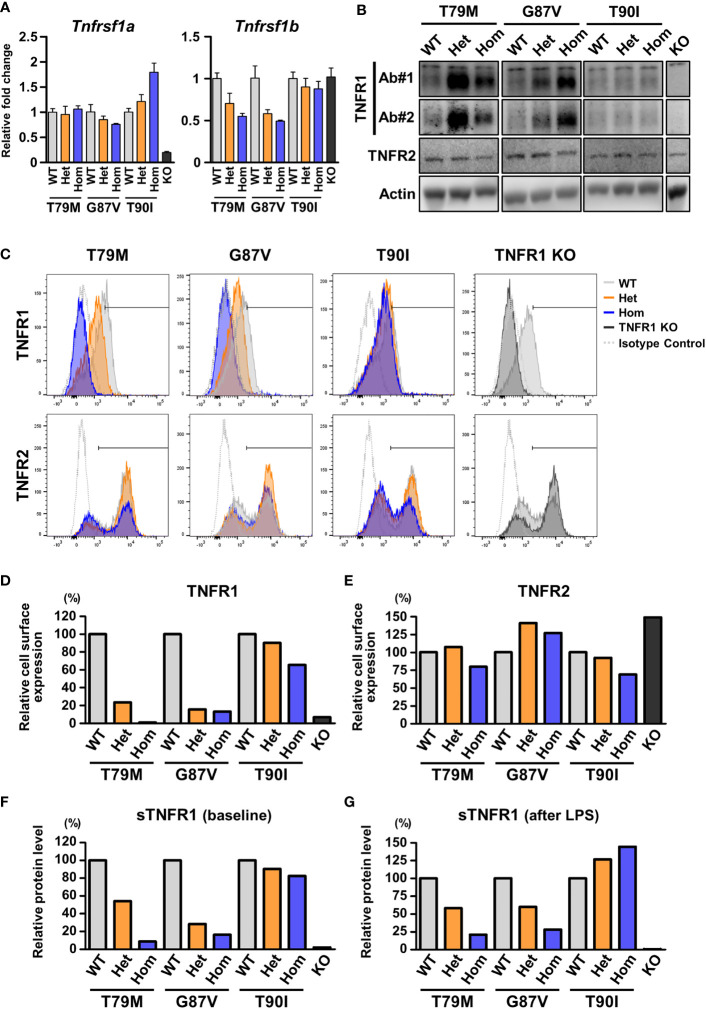
Tumor necrosis factor (TNF) receptor-associated periodic syndrome (TRAPS) is an autoinflammatory periodic fever syndrome associated with heterozygous mutations in , which encodes TNF receptor type I (TNFR1). Although possible proinflammatory mechanisms have been proposed, most previous studies were performed using overexpression models, which could lead to undesirable inflammatory responses due to artificial overexpression. It is crucial to reproduce heterozygous mutations at physiological expression levels; however, such studies remain limited. In this study, we generated TRAPS mutant mice and analyzed their phenotypes. Three mutant strains were generated by introducing T79M, G87V, or T90I mutation. T79M is a known mutation responsible for TRAPS, whereas G87V is a TRAPS mutation that we have reported, and T90I is a variant of unknown significance. Using these murine models, we investigated whether TRAPS mutations could affect the inflammatory responses and . We found that none of the mutant mice exhibited detectable inflammatory phenotypes under standard housing conditions for 1 year. Interestingly, TRAPS mutant (T79M and G87V) mice had reduced mortality rates after the administration of lipopolysaccharide (LPS) and D-galactosamine, which induce TNFα-dependent lethal hepatitis. Moreover, TRAPS mutations strongly suppressed the development of TNFα-mediated arthritis when crossed with human TNFα transgenic mice. In primary bone marrow-derived macrophage cultures, the T79M and G87V mutations attenuated the inflammatory responses to TNFα compared with the wild-type, whereas these mutations did not alter the responsiveness of these cells to LPS. The T90I mutant macrophages behaved similarly to wild type in response to LPS and TNFα. The TNFR1 levels were increased in whole-cell lysates of TRAPS mutant macrophages, whereas the cell surface expression of TNFR1 was significantly decreased in TRAPS mutant macrophages. Taken together, TRAPS mutations did not augment the inflammatory responses to TNFα and LPS; instead, they suppressed the response to TNFα decreased cell surface expression of TNFR1. The stimulation of lymphotoxin-α, adenosine triphosphate, and norepinephrine in primary macrophages or various stimuli in murine splenocytes did not induce detectable inflammatory responses. In conclusion, TRAPS mutations suppressed responsiveness to TNFα, and TRAPS-associated inflammation is likely induced by unconfirmed disease-specific proinflammatory factors.
肿瘤坏死因子(TNF)受体相关周期性综合征(TRAPS)是一种与 TNF 受体 I(TNFR1)编码基因杂合突变相关的自身炎症性周期性发热综合征。尽管已经提出了可能的促炎机制,但大多数先前的研究都是使用 TNFR1 的过表达模型进行的,这可能由于人为的过表达而导致不期望的炎症反应。在生理表达水平上重现杂合突变至关重要;然而,此类研究仍然有限。在这项研究中,我们生成了 TRAPS 突变小鼠并分析了它们的表型。通过引入 T79M、G87V 或 T90I 突变,生成了三种 突变株。T79M 是一种已知的导致 TRAPS 的突变,而 G87V 是我们报道的 TRAPS 突变,T90I 是一种意义不明的变异。使用这些鼠模型,我们研究了 TRAPS 突变是否会影响炎症反应和 。我们发现,在标准饲养条件下,没有一种突变小鼠在 1 年内表现出可检测的炎症表型。有趣的是,TRAPS 突变(T79M 和 G87V)小鼠在给予脂多糖(LPS)和 D-半乳糖胺后死亡率降低,这会诱导 TNFα 依赖性致死性肝炎。此外,TRAPS 突变与人类 TNFα 转基因小鼠交叉时,强烈抑制 TNFα 介导的关节炎的发展。在原代骨髓来源的巨噬细胞培养物中,与野生型相比,T79M 和 G87V 突变削弱了对 TNFα 的炎症反应,而这些突变不改变这些细胞对 LPS 的反应性。T90I 突变巨噬细胞对 LPS 和 TNFα 的反应与野生型相似。TRAPS 突变巨噬细胞的全细胞裂解物中 TNFR1 水平升高,而 TRAPS 突变巨噬细胞表面 TNFR1 的表达显著降低。总之,TRAPS 突变并没有增强对 TNFα 和 LPS 的炎症反应;相反,它们抑制了对 TNFα 的反应并降低了 TNFR1 的细胞表面表达。在原代巨噬细胞中或在鼠脾细胞中用淋巴毒素-α、三磷酸腺苷和去甲肾上腺素刺激或用各种刺激物刺激均未诱导出可检测的炎症反应。总之,TRAPS 突变抑制了对 TNFα 的反应性,TRAPS 相关炎症可能由未确认的疾病特异性促炎因子引起。