Translational Vascular Medicine Branch, National Heart, Lung and Blood Institute, National Institutes of Health, Bethesda, MD 20892, USA.
Inflammatory Disease Section, National Human Genome Research Institute, National Institutes of Health, Bethesda, MD 20892, USA.
Int J Mol Sci. 2020 May 5;21(9):3263. doi: 10.3390/ijms21093263.
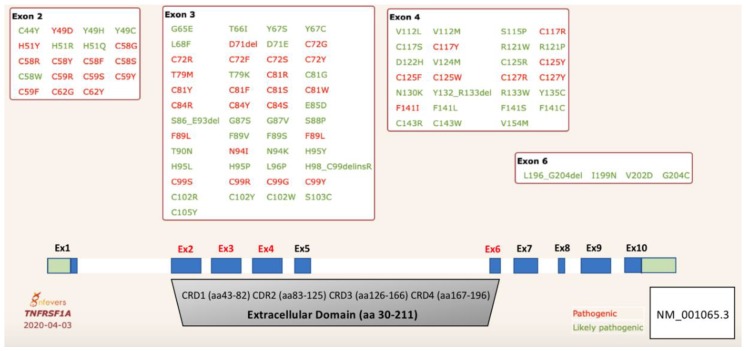
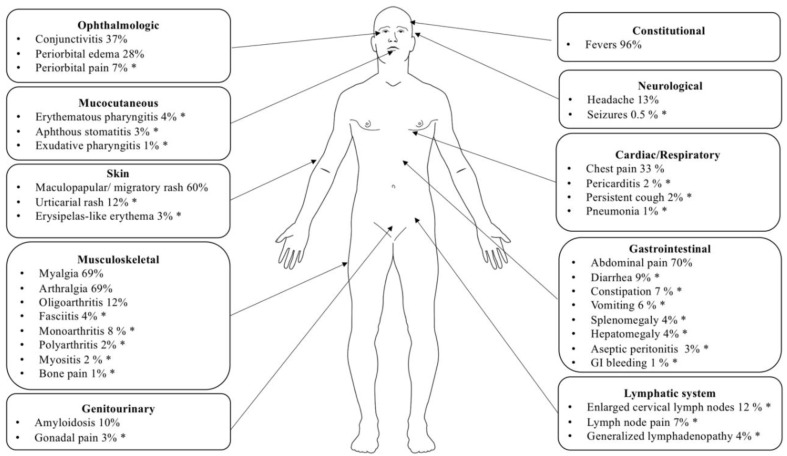
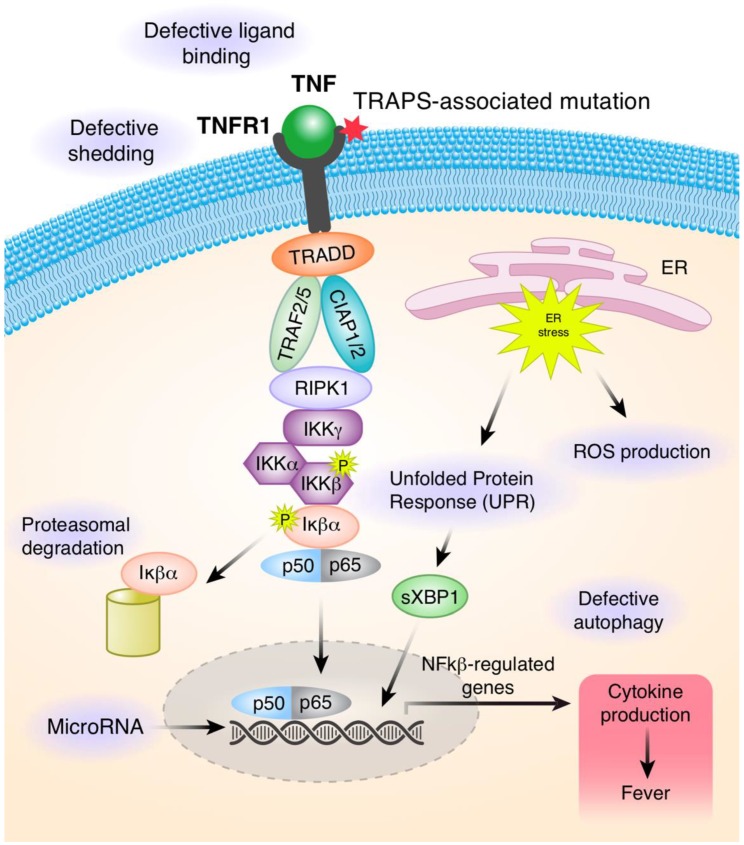
Tumor necrosis factor receptor-associated periodic syndrome (TRAPS) is an autosomal dominant autoinflammatory syndrome characterized by prolonged and recurrent episodes of fever, abdominal and/or chest pain, arthralgia, myalgia, and erythematous rash. TRAPS is associated with heterozygous variants in the gene, which encodes the TNFR1 (tumor necrosis factor receptor 1) receptor. Disease-causing variants are found exclusively in the extracellular domain of TNFR1 and affect receptor structure and binding to the TNF ligand. The precise mechanism of the disease is still unclear, but it is thought that intracellular accumulation of misfolded mutant protein leads to endoplasmic reticulum stress and enhanced inflammatory responses through constitutive activation of various immune pathways. Other possible mechanisms contributing to the disease pathogenesis include defective receptor shedding, TNF-induced cell death, production of reactive oxygen species, and autophagy impairment. Patients' leucocytes are hyperresponsive to stimulation and produce elevated levels of proinflammatory cytokines. Systemic autoimmune (AA) amyloidosis is an important cause of morbidity and mortality in TRAPS. Over the last two decades, new therapies have changed the progression and outcome of the disease. In this review, we summarize clinical data from 209 patients with validated pathogenic variants reported in the literature and discuss TRAPS diagnosis, pathogenesis, and treatment options.
肿瘤坏死因子受体相关周期性综合征(TRAPS)是一种常染色体显性自身炎症综合征,其特征为长时间反复发作的发热、腹痛和/或胸痛、关节炎、肌痛和红斑疹。TRAPS 与 基因的杂合变异有关,该基因编码 TNFR1(肿瘤坏死因子受体 1)受体。致病变异仅存在于 TNFR1 的细胞外结构域,影响受体结构和与 TNF 配体的结合。疾病的确切机制仍不清楚,但据认为,错误折叠的突变蛋白在细胞内的积累会导致内质网应激,并通过各种免疫途径的组成性激活增强炎症反应。其他可能导致疾病发病机制的机制包括受体脱落缺陷、TNF 诱导的细胞死亡、活性氧的产生和自噬损伤。患者的白细胞对刺激反应过度,并产生高水平的促炎细胞因子。全身性自身免疫(AA)淀粉样变性是 TRAPS 发病率和死亡率的重要原因。在过去的二十年中,新的治疗方法改变了疾病的进展和结局。在这篇综述中,我们总结了文献中报道的 209 例经证实的致病性变异患者的临床数据,并讨论了 TRAPS 的诊断、发病机制和治疗选择。