Juan Guillermina R Ramirez-San, Mathijssen Arnold J T M, He Mu, Jan Lily, Marshall Wallace, Prakash Manu
Department of Biophysics and Biochemistry, University of California, San Francisco, CA 94158.
Department of Bioengineering, Stanford University, Stanford, CA 94305.
Nat Phys. 2020 Sep;16(9):958-964. doi: 10.1038/s41567-020-0923-8. Epub 2020 Jun 8.
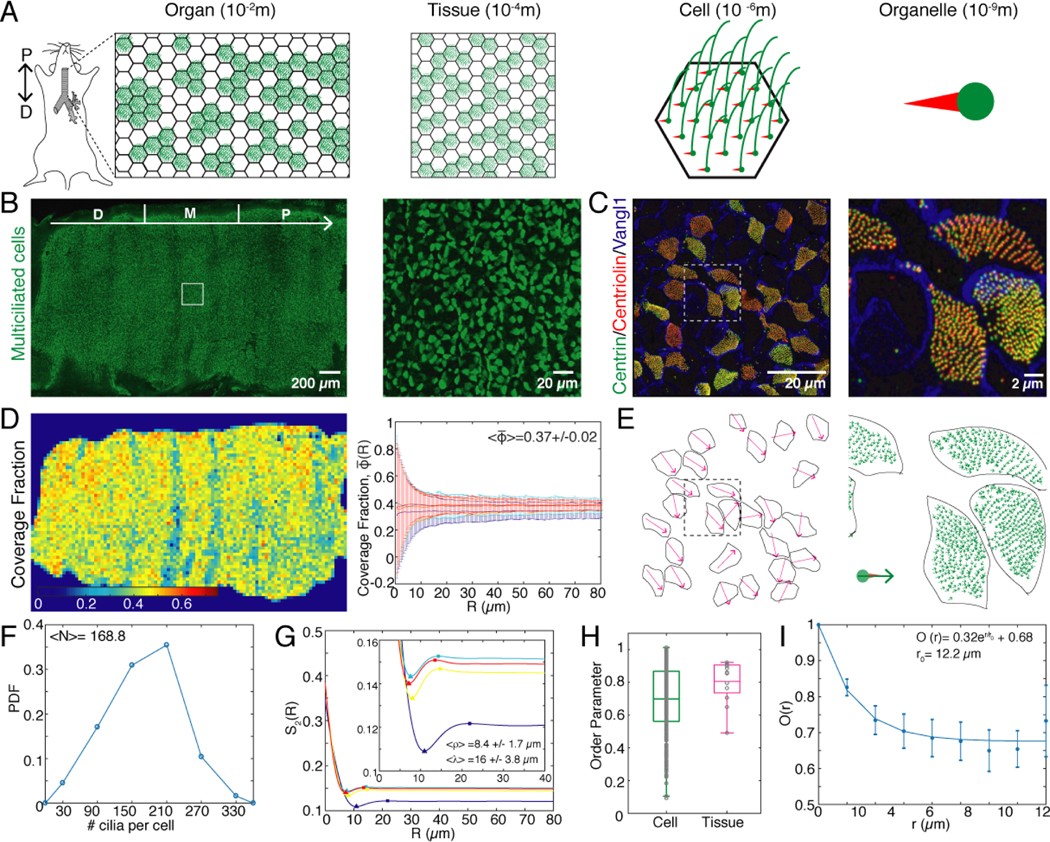
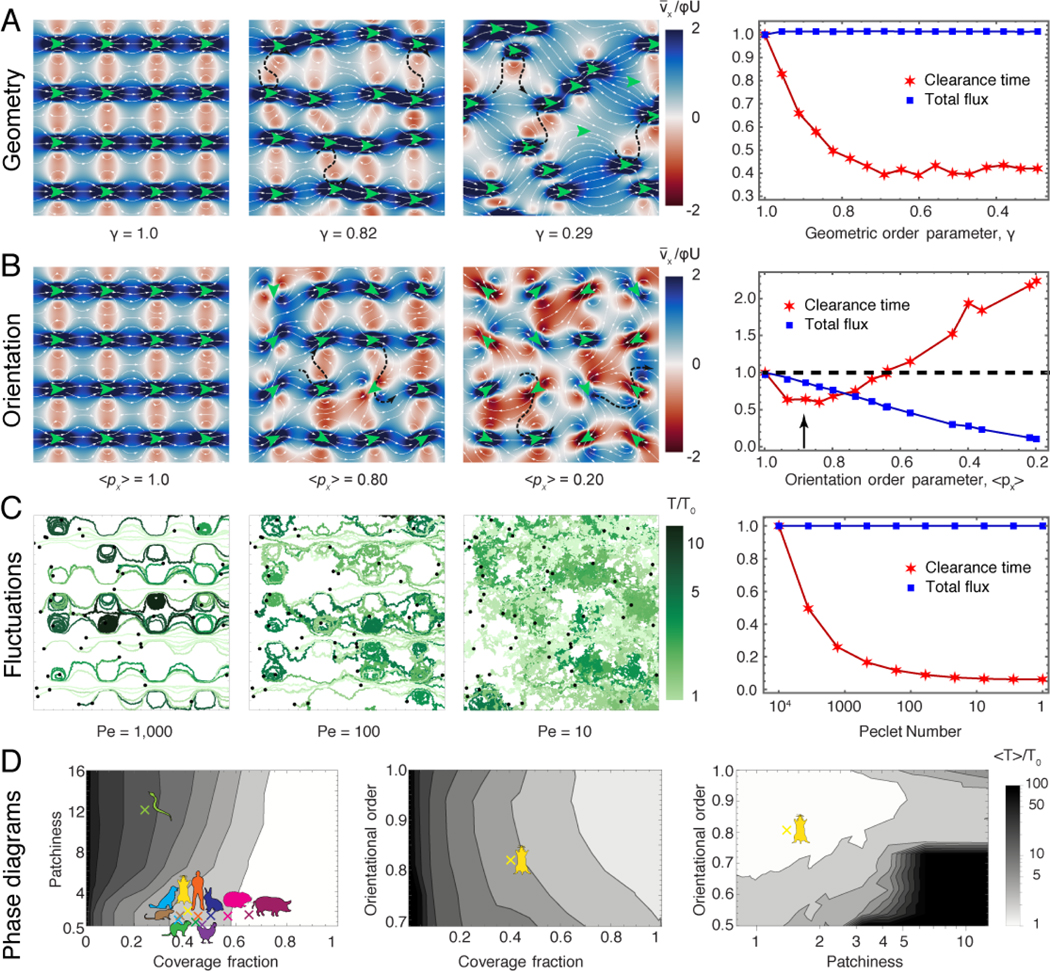
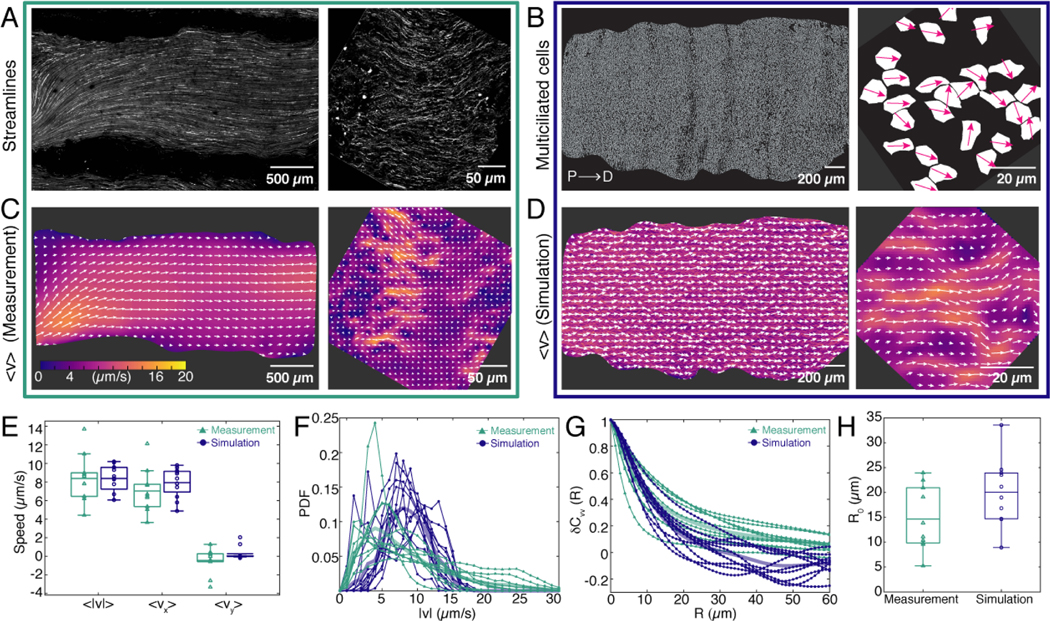
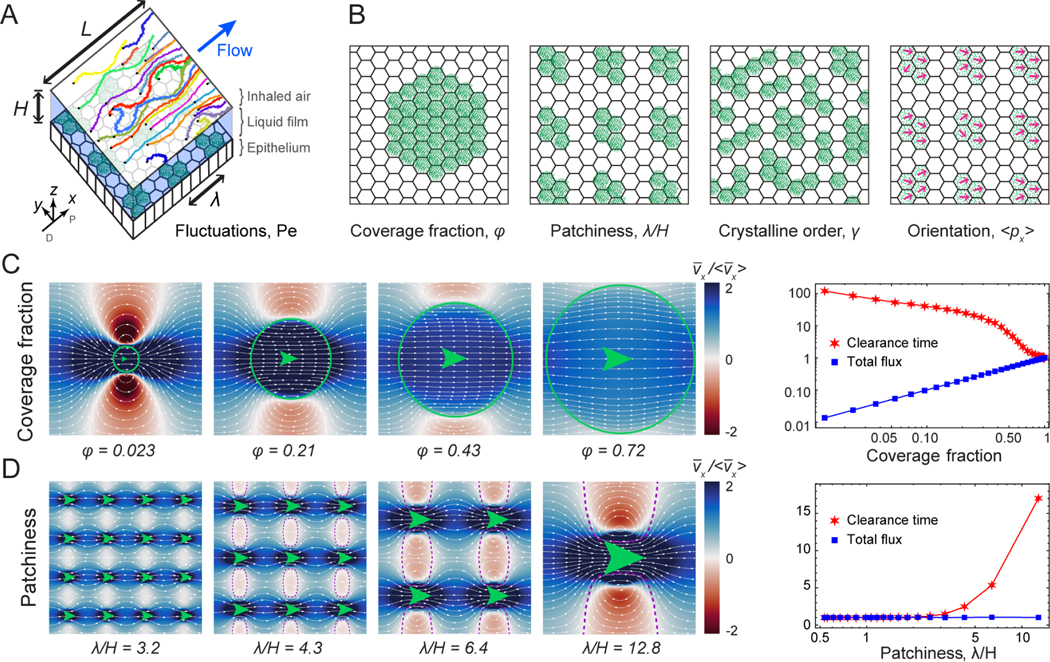
Mucus clearance constitutes the primary defence of the respiratory system against viruses, bacteria and environmental insults [1]. This transport across the entire airway emerges from the integrated activity of thousands of multiciliated cells, each containing hundreds of cilia, which together must coordinate their spatial arrangement, alignment and motility [2, 3]. The mechanisms of fluid transport have been studied extensively at the level of an individual cilium [4, 5], collectively moving metachronal waves [6-10], and more generally the hydrodynamics of active matter [11, 12]. However, the connection between local cilia architecture and the topology of the flows they generate remains largely unexplored. Here, we image the mouse airway from the sub-cellular (nm) to the organ scales (mm), characterising quantitatively its ciliary arrangement and the generated flows. Locally we measure heterogeneity in both cilia organisation and flow structure, but across the trachea fluid transport is coherent. To examine this result, a hydrodynamic model was developed for a systematic exploration of different tissue architectures. Surprisingly, we find that disorder enhances particle clearance, whether it originates from fluctuations, heterogeneity in multiciliated cell arrangement or ciliary misalignment. This resembles elements of 'stochastic resonance' [13-15], in the sense that noise can improve the function of the system. Taken together, our results shed light on how the microstructure of an active carpet [16, 17] determines its emergent dynamics. Furthermore, this work is also directly applicable to human airway pathologies [1], which are the third leading cause of deaths worldwide [18].
黏液清除是呼吸系统抵御病毒、细菌和环境侵害的主要防御机制[1]。这种在整个气道中的运输源于数千个多纤毛细胞的整合活动,每个细胞含有数百根纤毛,它们必须共同协调其空间排列、对齐和运动[2,3]。液体运输机制已在单个纤毛层面[4,5]、集体移动的节律波层面[6-10]以及更广泛的活性物质流体动力学层面[11,12]进行了广泛研究。然而,局部纤毛结构与其产生的流动拓扑之间的联系在很大程度上仍未被探索。在这里,我们对小鼠气道从亚细胞(纳米)尺度到器官尺度(毫米)进行成像,定量表征其纤毛排列和产生的流动。在局部,我们测量了纤毛组织和流动结构的异质性,但在气管中流体运输是连贯的。为了检验这一结果,我们开发了一个流体动力学模型,用于系统探索不同的组织结构。令人惊讶的是,我们发现无序会增强颗粒清除,无论它源于波动、多纤毛细胞排列的异质性还是纤毛排列不齐。从某种意义上说,这类似于“随机共振”的要素[13-15],即噪声可以改善系统功能。综上所述,我们的结果揭示了活性地毯的微观结构[16,17]如何决定其涌现动力学。此外,这项工作也直接适用于人类气道疾病[1],而人类气道疾病是全球第三大死亡原因[18]。