Southern Medical University, Guangzhou, China.
Kabul University of Medical Sciences, Kabul, Afghanistan.
Inquiry. 2022 Jan-Dec;59:469580221117743. doi: 10.1177/00469580221117743.
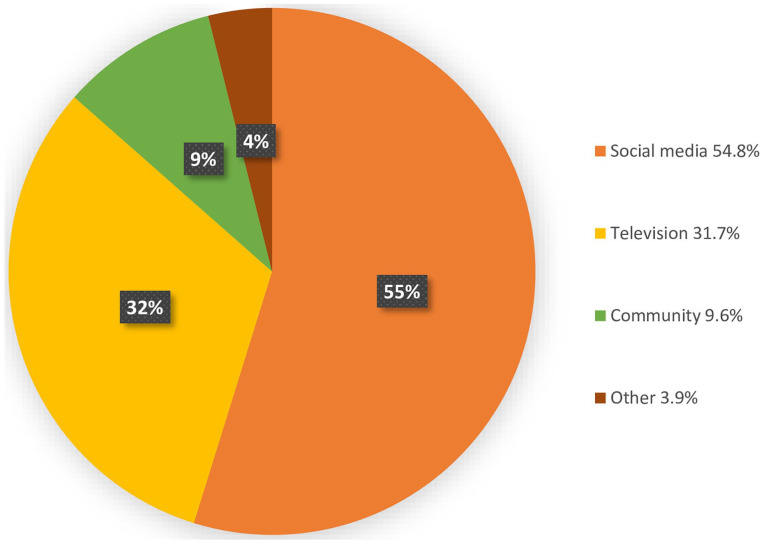
The avalanche of Corona Virus 2019 (COVID-19) cases has placed an unprecedented load on Afghanistan's government and public health authorities, putting the country in jeopardy. The primary goal of this research was to shed light on the country's capital, Kabul, and to examine the existing preparedness and perceptions of its population in the midst of COVID-19's third wave, which could result in decentralization and fragmentation of the already overburdened health-care system. An online, cross-sectional survey was conducted by the lecturers of the Kabul University of Medical Sciences between April 15, 2021 and April 25, 2021, to evaluate the preparedness of the Kabul citizens amidst the third wave of COVID-19. About 1736 citizens from Kabul participated in the survey. Data was analyzed using Statistical Package for Social Sciences (SPSS) version 25. All categorical variables were reported using frequencies and percentages. The findings revealed that the most common source of COVID-19-related information was social media (74.8%). In addition, 34.4% of subjects had previously been infected with COVID-19. It was reassuring to see that 78.4% of residents said they knew more about COVID-19 than they did about prior COVID-19 waves. A majority (81.5%) expressed willingness to resist the third wave, but 89.4% said that the country's government would be unable to develop an effective COVID-19 vaccine within the next 6 months. The findings of this present study indicates that citizens of Kabul are active in obtaining accurate information and disseminating it in the community. The citizens also reported sufficient COVID-19 related knowledge; however, they were more motivated to fight against the third wave of COVID-19. In regards to vaccination, they believed that the government could not vaccinate the public anytime soon. Hence, the enactment of non-pharmaceutical measures is important in the fight against the pandemic.
2019 年冠状病毒病(COVID-19)病例的大量出现给阿富汗政府和公共卫生当局带来了前所未有的负担,使该国处于危险之中。本研究的主要目的是了解该国首都喀布尔的情况,并研究在 COVID-19 第三次浪潮中,该国人口的现有准备情况和认知,这可能导致本已不堪重负的医疗保健系统分散和碎片化。喀布尔医科大学的讲师于 2021 年 4 月 15 日至 2021 年 4 月 25 日期间进行了一项在线横断面调查,以评估喀布尔市民在 COVID-19 第三次浪潮中的准备情况。来自喀布尔的约 1736 名市民参加了这项调查。使用社会科学统计软件包(SPSS)版本 25 对数据进行分析。所有分类变量均以频率和百分比表示。调查结果显示,与 COVID-19 相关信息最常见的来源是社交媒体(74.8%)。此外,34.4%的研究对象以前曾感染过 COVID-19。令人欣慰的是,78.4%的居民表示,他们对 COVID-19 的了解比以前的 COVID-19 浪潮更多。大多数人(81.5%)表示愿意抵抗第三次浪潮,但 89.4%的人表示,该国政府在未来 6 个月内无法开发出有效的 COVID-19 疫苗。本研究的结果表明,喀布尔市民积极获取准确信息并在社区中传播。市民还报告了充足的 COVID-19 相关知识;然而,他们更有动力对抗 COVID-19 的第三次浪潮。至于接种疫苗,他们认为政府不能很快为公众接种疫苗。因此,在对抗大流行方面,采取非药物措施非常重要。