Department of Pharmaceutical Biosciences and the Swedish Drug Delivery Center (SweDeliver), Uppsala University, P.O. Box 580, 751 23 Uppsala, Sweden.
Advanced Drug Delivery, Pharmaceutical Sciences, R&D, AstraZeneca, 43183 Gothenburg, Sweden.
Mol Pharm. 2022 Sep 5;19(9):3114-3124. doi: 10.1021/acs.molpharmaceut.2c00177. Epub 2022 Aug 8.
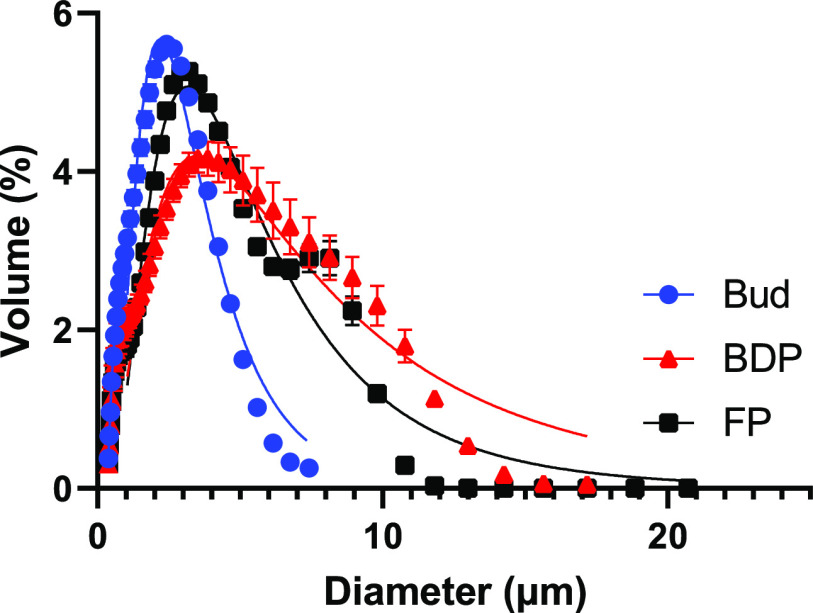
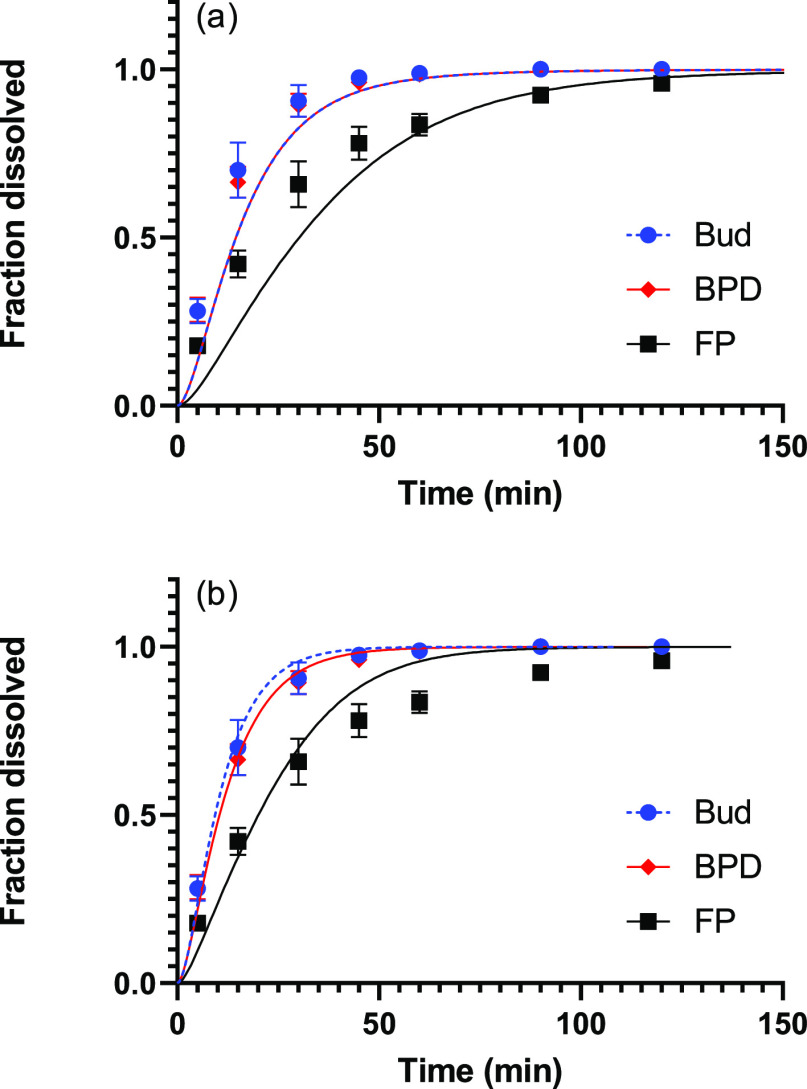
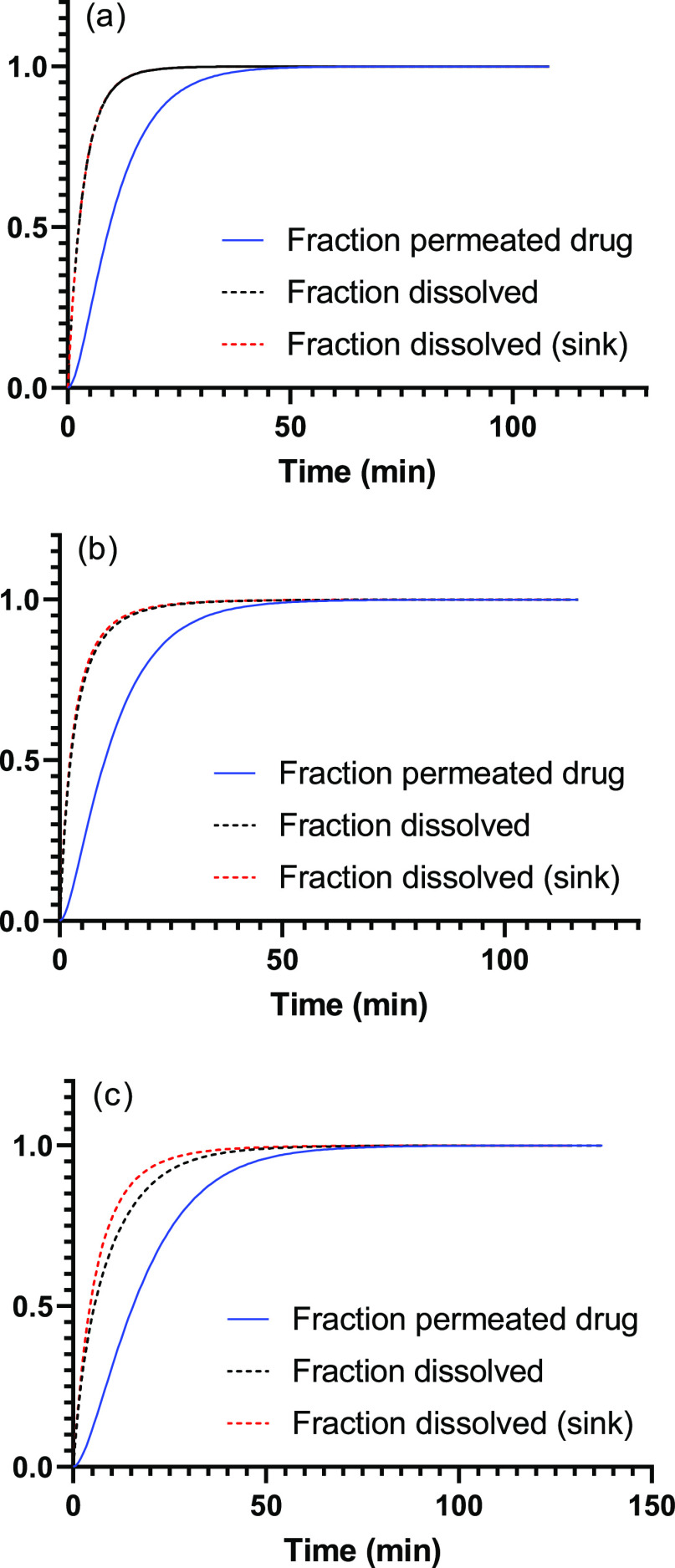
Dissolution rate impacts the absorption rate of poorly soluble inhaled drugs. In vitro dissolution tests that can capture the impact of changes in critical quality attributes of the drug product on in vivo dissolution are important for the development of products containing poorly soluble drugs, as well as modified release formulations. In this study, an extended mathematical model allowing for dissolution of polydisperse powders and subsequent diffusion of dissolved drug across a membrane is described. In vitro dissolution profiles of budesonide, fluticasone propionate, and beclomethasone dipropionate delivered from three commercial drug products were determined using a membrane-type Transwell dissolution test, which consists of a donor and an acceptor compartment separated by a membrane. Subsequently, the profiles were analyzed using the developed mechanistic model and a semi-empirical model based on the Weibull distribution. The two mathematical models provided the same rank order of the performance of the three drug products in terms of dissolution rates, but the rates were significantly different. The faster rate extracted from the mechanistic model is expected to reflect the true dissolution rate of the drug; the Weibull model provides an effective and slower rate that represents not only drug dissolution but also diffusion across the Transwell membrane. In conclusion, the developed extended model provides superior understanding of the dissolution mechanisms in membrane-type (Transwell) dissolution tests.
溶出速率会影响难溶性吸入性药物的吸收速率。对于含有难溶性药物的产品以及缓控释制剂的开发而言,体外溶出度试验非常重要,因为这些试验可以捕捉到药物产品关键质量属性变化对体内溶出度的影响。在本研究中,描述了一种扩展的数学模型,该模型允许多分散粉末的溶出以及随后溶解药物在膜中的扩散。使用由供体和受体隔室组成的膜式 Transwell 溶出度试验,测定了来自三种商业药物产品的布地奈德、丙酸氟替卡松和丙酸倍氯米松的体外溶出度曲线。随后,使用开发的机械模型和基于 Weibull 分布的半经验模型对曲线进行分析。这两个数学模型在溶解速率方面对三种药物产品的性能给出了相同的排序,但速率差异显著。从机械模型中提取的较快速率预计将反映药物的真实溶解速率;Weibull 模型提供了一种有效的较慢速率,不仅代表药物的溶解,还代表药物穿过 Transwell 膜的扩散。总之,所开发的扩展模型提供了对膜型(Transwell)溶出度试验中溶解机制的更好理解。