La Zara Damiano, Sun Feilong, Zhang Fuweng, Franek Frans, Balogh Sivars Kinga, Horndahl Jenny, Bates Stephanie, Brännström Marie, Ewing Pär, Quayle Michael J, Petersson Gunilla, Folestad Staffan, van Ommen J Ruud
Department of Chemical Engineering, Delft University of Technology, Van der Maasweg 9, Delft, 2629HZ, The Netherlands.
Advanced Drug Delivery, Pharmaceutical Sciences, R&D, AstraZeneca, Gothenburg, Sweden.
ACS Nano. 2021 Apr 27;15(4):6684-6698. doi: 10.1021/acsnano.0c10040. Epub 2021 Mar 26.
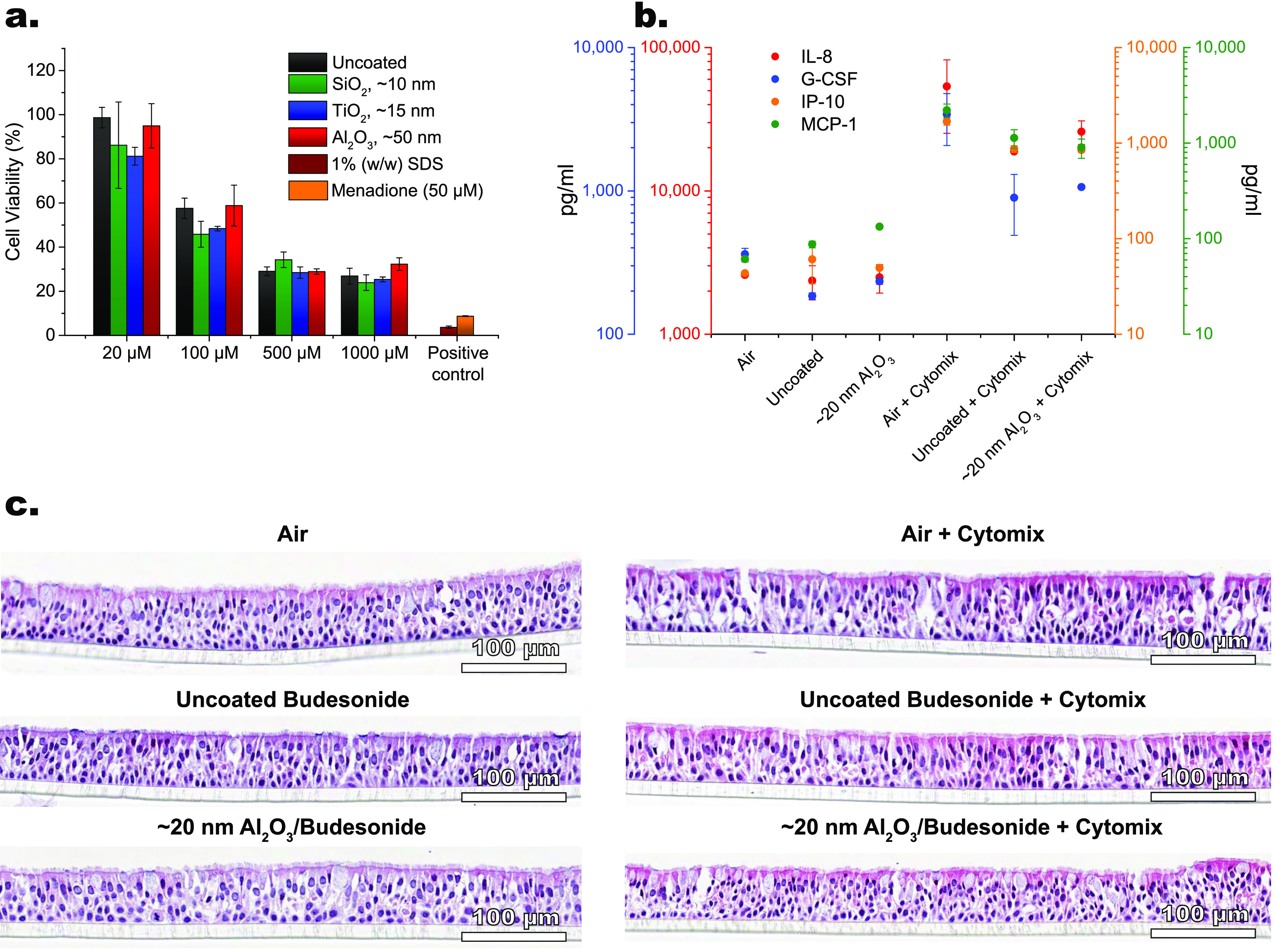
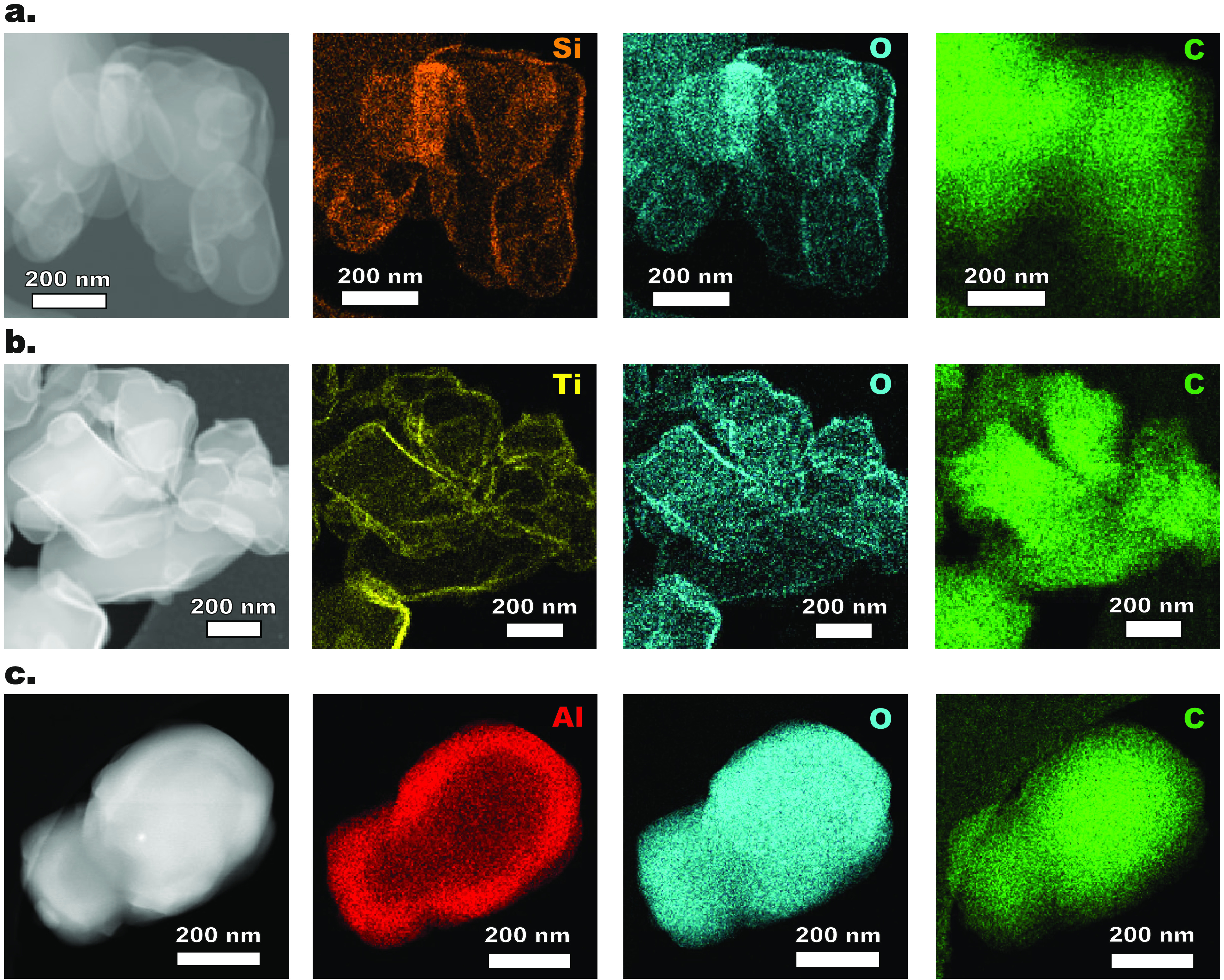
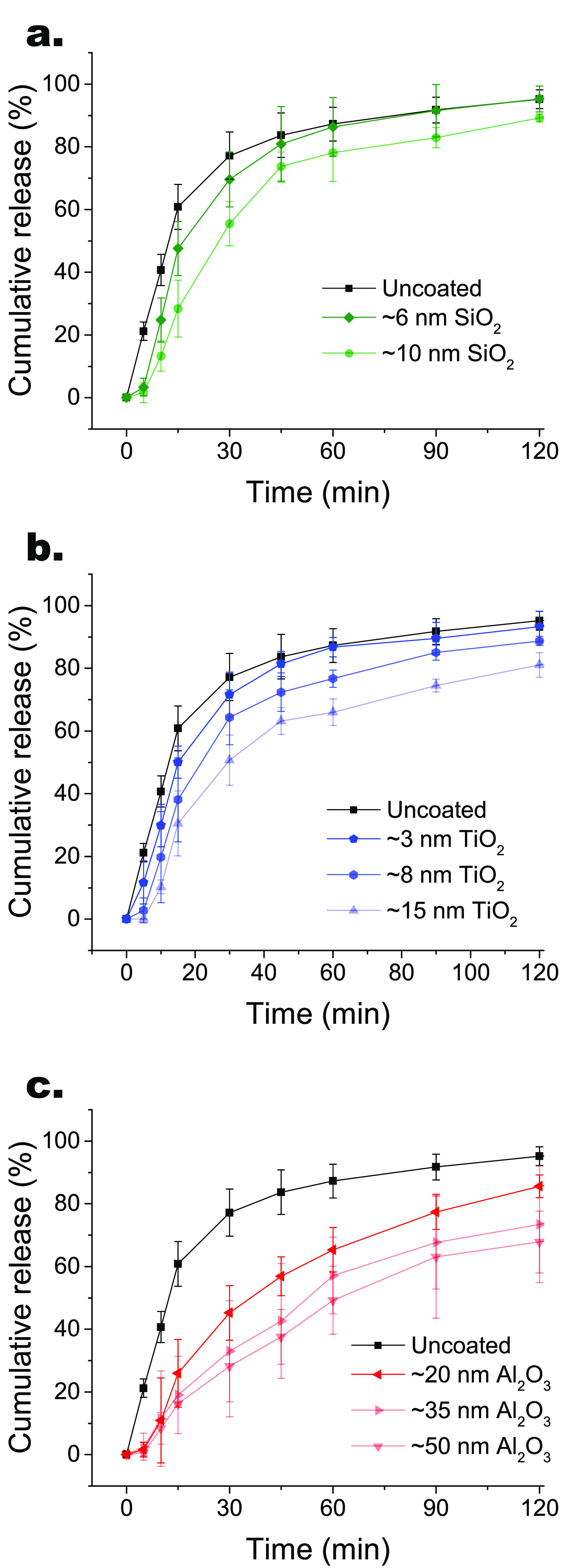
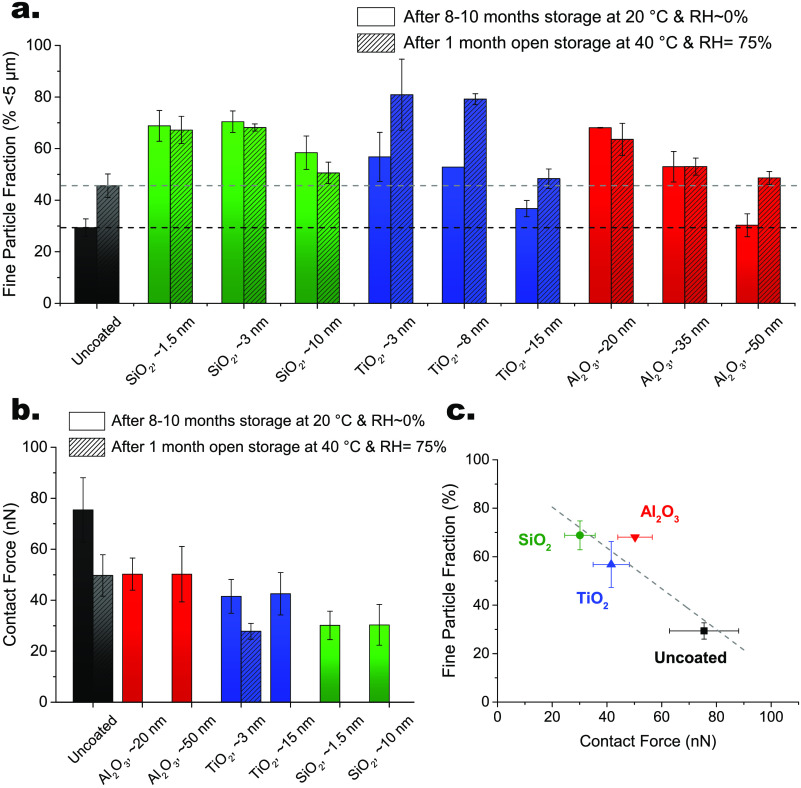
Ideal controlled pulmonary drug delivery systems provide sustained release by retarding lung clearance mechanisms and efficient lung deposition to maintain therapeutic concentrations over prolonged time. Here, we use atomic layer deposition (ALD) to simultaneously tailor the release and aerosolization properties of inhaled drug particles without the need for lactose carrier. In particular, we deposit uniform nanoscale oxide ceramic films, such as AlO, TiO, and SiO, on micronized budesonide particles, a common active pharmaceutical ingredient for the treatment of respiratory diseases. dissolution and isolated perfused rat lung tests demonstrate dramatically slowed release with increasing nanofilm thickness, regardless of the nature of the material. transmission electron microscopy at various stages during dissolution unravels mostly intact nanofilms, suggesting that the release mechanism mainly involves the transport of dissolution media through the ALD films. Furthermore, aerosolization testing by fast screening impactor shows a ∼2-fold increase in fine particle fraction (FPF) for each ALD-coated budesonide formulation after 10 ALD process cycles, also applying very low patient inspiratory pressures. The higher FPFs after the ALD process are attributed to the reduction in the interparticle force arising from the ceramic surfaces, as evidenced by atomic force microscopy measurements. Finally, cell viability, cytokine release, and tissue morphology analyses verify a safe and efficacious use of ALD-coated budesonide particles at the cellular level. Therefore, surface nanoengineering by ALD is highly promising in providing the next generation of inhaled formulations with tailored characteristics of drug release and lung deposition, thereby enhancing controlled pulmonary delivery opportunities.
理想的肺部药物控释系统通过延缓肺部清除机制来实现持续释放,并通过高效的肺部沉积在较长时间内维持治疗浓度。在此,我们使用原子层沉积(ALD)技术,无需乳糖载体即可同时调整吸入药物颗粒的释放和气溶胶化特性。具体而言,我们在微粉化布地奈德颗粒(一种治疗呼吸系统疾病的常见活性药物成分)上沉积均匀的纳米级氧化物陶瓷薄膜,如AlO、TiO和SiO。溶解实验和离体灌注大鼠肺实验表明,无论材料性质如何,随着纳米薄膜厚度的增加,药物释放显著减慢。溶解过程中不同阶段的透射电子显微镜观察发现纳米薄膜大多保持完整,这表明释放机制主要涉及溶解介质通过ALD薄膜的传输。此外,通过快速筛分撞击器进行的气溶胶化测试显示,经过10个ALD工艺循环后,每种ALD包覆的布地奈德制剂的细颗粒分数(FPF)增加了约2倍,且患者吸气压力非常低。ALD处理后较高的FPF归因于陶瓷表面引起的颗粒间力的降低,原子力显微镜测量证明了这一点。最后,细胞活力、细胞因子释放和组织形态分析验证了ALD包覆的布地奈德颗粒在细胞水平上的安全有效使用。因此,通过ALD进行表面纳米工程在提供具有定制药物释放和肺部沉积特性的下一代吸入制剂方面极具前景,从而增加肺部控释的机会。