Division of Geriatric Medicine, School of Medicine, University of North Carolina at Chapel Hill, Chapel Hill, NC, USA.
The Dartmouth Institute for Health Policy and Clinical Practice, Dartmouth College, Hanover, NH, USA; Division of Internal Medicine, School of Medicine, University of North Carolina at Chapel Hill, Chapel Hill, NC, USA.
Clin Nutr. 2022 Sep;41(9):1861-1873. doi: 10.1016/j.clnu.2022.07.002. Epub 2022 Jul 8.
Aging alters biological processes resulting in body fat redistribution, loss of lean muscle mass, and reduced muscle strength, termed sarcopenia. Nutrition is an important modifiable risk factor in the development of sarcopenia. Food insecurity refers to limited or uncertain access to enough food for an active, healthy life, and is prevalent among older adults. The objective of this study was to examine the relationship between food insecurity and probable sarcopenia in older adults.
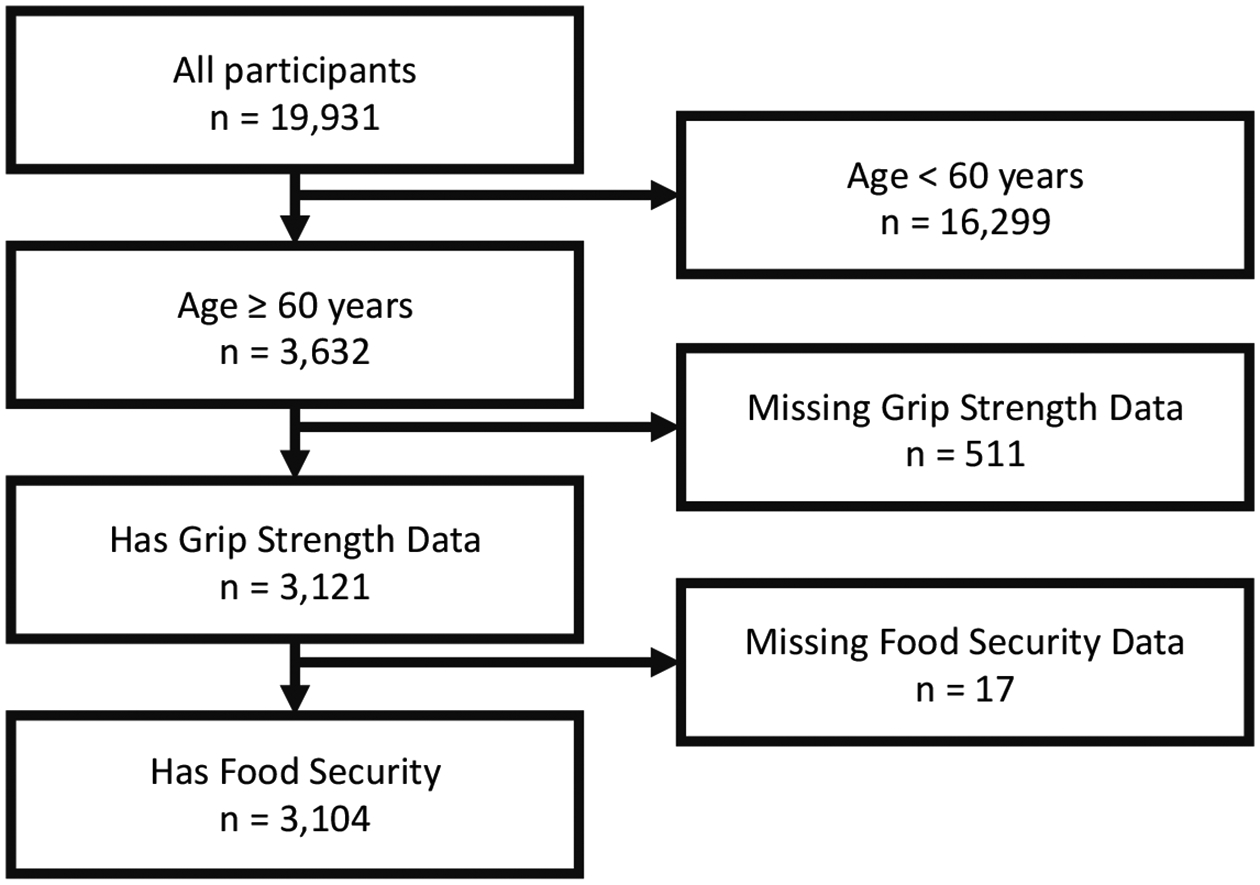
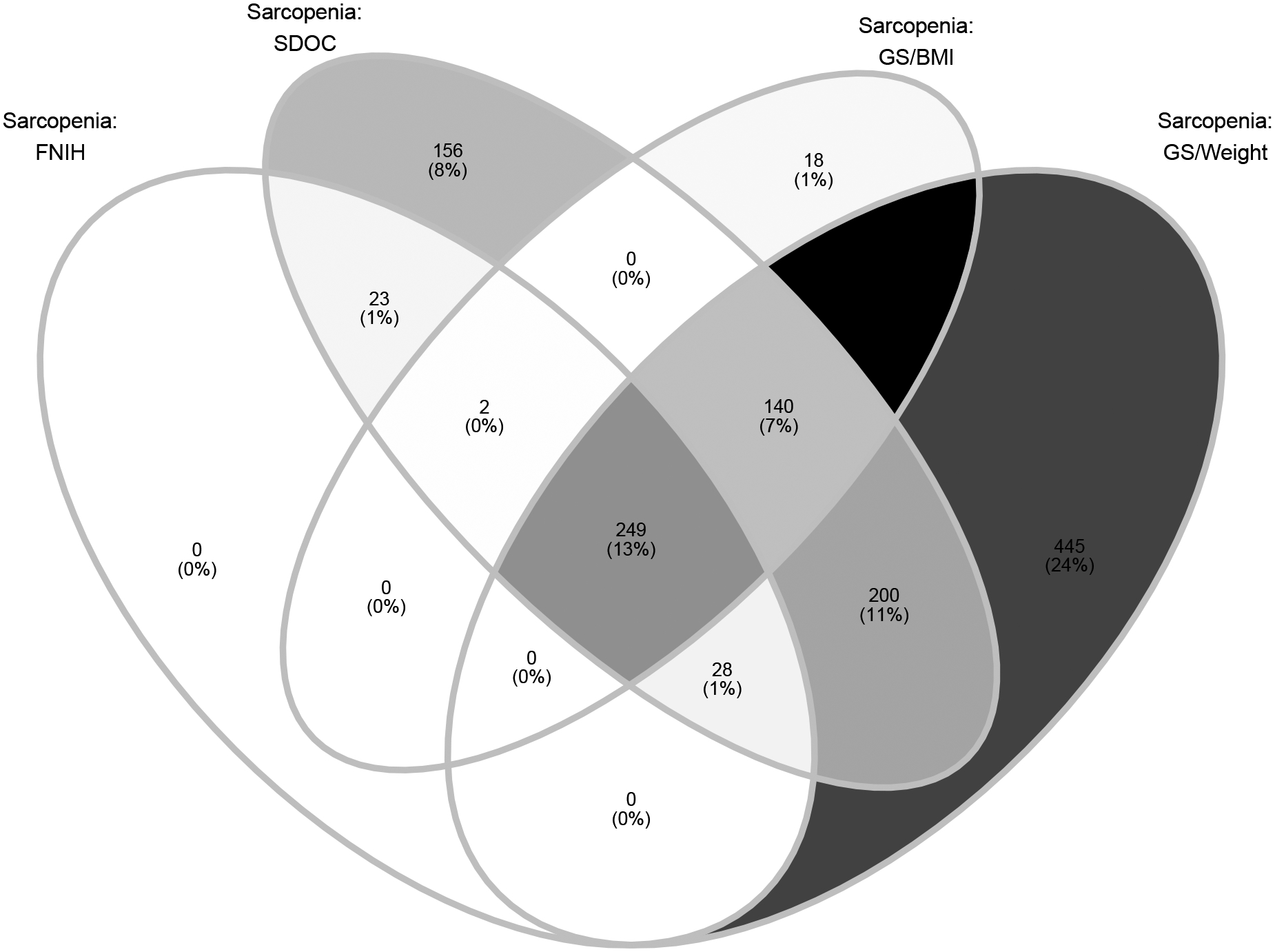
We examined 3632 adults ≥60 years old from the 2011-2014 National Health and Nutrition Examination Surveys (NHANES). For our analysis food insecurity was identified using the Food Security Survey Module (FSSM). The primary outcome was based on the Sarcopenia Definitions and Outcomes consortium (SDOC) definition. Secondary outcomes were based on three other different grip strength cut-offs as there is debate within the field as to the optimal definition of sarcopenia. Consistent with the revised European consensus on the definition and diagnosis of Sarcopenia (EWGSOP2) recommendations, we used the term probable sarcopenia throughout this text as definitions were based on muscle strength alone and did not include an evaluation of muscle quality. Sensitivity analyses were performed using the standard four category definition of food security. We used logistic regression to examine the association between food insecurity and sarcopenia.
Using the Sarcopenia Definitions and Outcomes Consortium definition, 24.7% were classified as having probable sarcopenia (low grip strength); 5.5% had food insecurity and food insecurity was associated with probable sarcopenia (OR 1.51, 95%CI 1.03-2.22). Using three other definitions of probable sarcopenia, food insecurity was significantly associated with probable sarcopenia using the Foundation for the National Institute of Health definition using grip strength alone (OR 1.71, 95%CI 1.08-2.71), but food insecurity was not associated with food insecurity using definitions related to grip strength/BMI (OR 1.16, 95%CI 0.76-1.78) or grip strength/weight (OR 1.14, 95%CI 0.85-1.54).
In this nationally representative cohort study, individuals classified as having food insecurity were more likely to have probable sarcopenia (low grip strength) compared to those with full food security. Future studies should examine whether food insecurity interventions may reduce probable sarcopenia and associated adverse outcomes.
衰老改变了生物过程,导致体脂肪重新分布、去瘦肌肉质量减少和肌肉力量减弱,这被称为肌肉减少症。营养是肌肉减少症发展的一个重要可改变的风险因素。粮食不安全是指难以获得或无法获得足够的食物以维持积极健康的生活,这在老年人中很普遍。本研究的目的是探讨老年人粮食不安全与可能发生的肌肉减少症之间的关系。
我们检查了 2011-2014 年全国健康和营养调查(NHANES)中 3632 名年龄在 60 岁及以上的成年人。我们使用粮食安全调查模块(FSSM)来确定粮食不安全情况。主要结局是基于肌肉减少症定义和结果联合会(SDOC)的定义。次要结局是基于其他三种不同的握力截止值,因为在该领域内,对于肌肉减少症的最佳定义存在争议。根据修订后的欧洲肌肉减少症定义和诊断共识(EWGSOP2)建议,我们在整个文本中使用“可能的肌肉减少症”一词,因为这些定义仅基于肌肉力量,而不包括肌肉质量评估。我们使用逻辑回归来检查粮食不安全与肌肉减少症之间的关联。
使用肌肉减少症定义和结果联合会的定义,24.7%的人被归类为患有可能的肌肉减少症(握力低);5.5%的人存在粮食不安全,并且粮食不安全与可能的肌肉减少症相关(比值比 1.51,95%置信区间 1.03-2.22)。使用其他三种可能的肌肉减少症定义,仅使用握力的国家卫生研究院基金会定义,粮食不安全与可能的肌肉减少症显著相关(比值比 1.71,95%置信区间 1.08-2.71),但与与握力/BMI(比值比 1.16,95%置信区间 0.76-1.78)或握力/体重(比值比 1.14,95%置信区间 0.85-1.54)相关的定义相比,粮食不安全与粮食不安全无关。
在这项具有全国代表性的队列研究中,与完全粮食安全的人相比,被归类为存在粮食不安全的人更有可能患有可能的肌肉减少症(握力低)。未来的研究应探讨粮食不安全干预措施是否可以减少可能的肌肉减少症和相关不良后果。