From the Naval Medical Research Unit SIX, Lima, Peru.
Center for Computational Biology, Flatiron Institute, Simons Foundation, New York, NY.
Epidemiology. 2022 Nov 1;33(6):797-807. doi: 10.1097/EDE.0000000000001523. Epub 2022 Aug 5.
Marine recruits training at Parris Island experienced an unexpectedly high rate of severe acute respiratory syndrome coronavirus 2 (SARS-CoV-2) infection, despite preventive measures including a supervised, 2-week, pre-entry quarantine. We characterize SARS-CoV-2 transmission in this cohort.
Between May and November 2020, we monitored 2,469 unvaccinated, mostly male, Marine recruits prospectively during basic training. If participants tested negative for SARS-CoV-2 by quantitative polymerase chain reaction (qPCR) at the end of quarantine, they were transferred to the training site in segregated companies and underwent biweekly testing for 6 weeks. We assessed the effects of coronavirus disease 2019 (COVID-19) prevention measures on other respiratory infections with passive surveillance data, performed phylogenetic analysis, and modeled transmission dynamics and testing regimens.
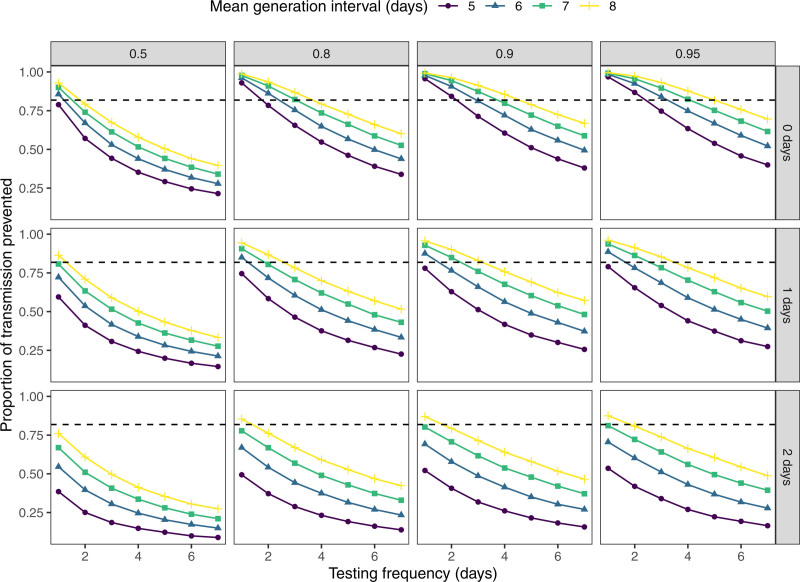
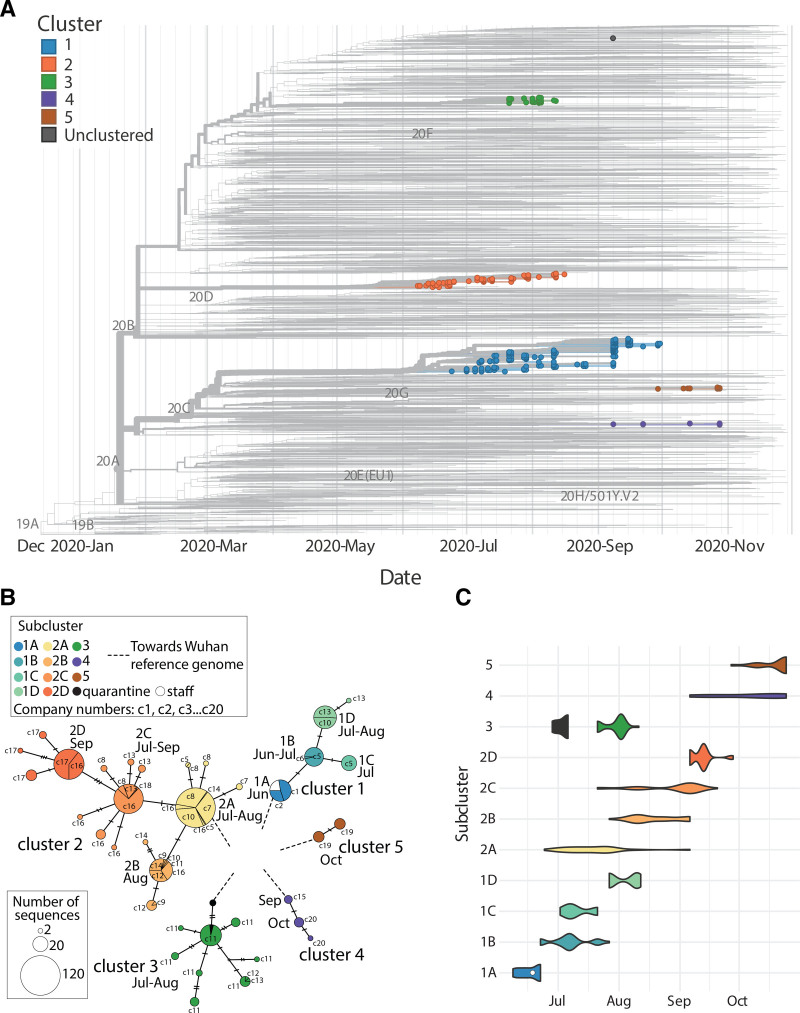
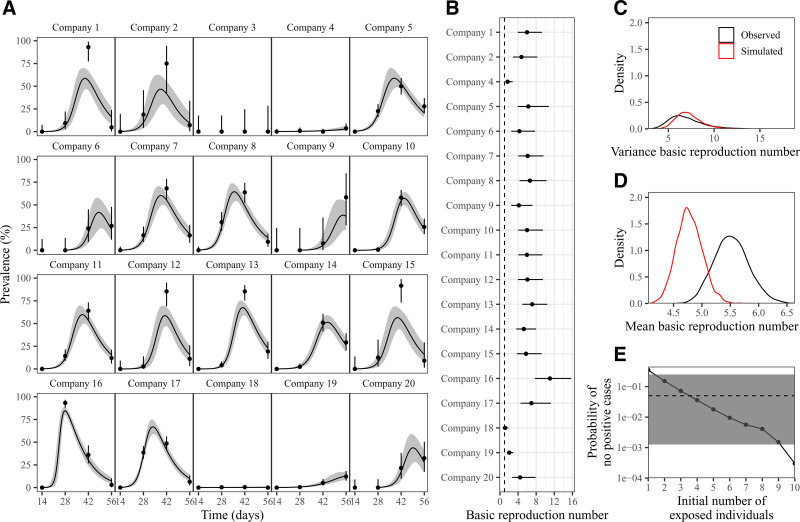
Preventive measures were associated with drastically lower rates of other respiratory illnesses. However, among the trainees, 1,107 (44.8%) tested SARS-CoV-2-positive, with either mild or no symptoms. Phylogenetic analysis of viral genomes from 580 participants revealed that all cases but one were linked to five independent introductions, each characterized by accumulation of mutations across and within companies, and similar viral isolates in individuals from the same company. Variation in company transmission rates (mean reproduction number R 0 ; 5.5 [95% confidence interval [CI], 5.0, 6.1]) could be accounted for by multiple initial cases within a company and superspreader events. Simulations indicate that frequent rapid-report testing with case isolation may minimize outbreaks.
Transmission of wild-type SARS-CoV-2 among Marine recruits was approximately twice that seen in the community. Insights from SARS-CoV-2 outbreak dynamics and mutations spread in a remote, congregate setting may inform effective mitigation strategies.
尽管采取了包括监督、为期两周的入境前隔离在内的预防措施,但在帕里斯岛接受训练的海军新兵中,严重急性呼吸综合征冠状病毒 2(SARS-CoV-2)感染率出人意料地高。我们对该队列中的 SARS-CoV-2 传播进行了特征描述。
在 2020 年 5 月至 11 月期间,我们对 2469 名未接种疫苗的、大多数为男性的海军新兵进行了前瞻性监测,他们在基础训练期间接受监测。如果参与者在隔离结束时通过定量聚合酶链反应(qPCR)检测出 SARS-CoV-2 为阴性,则他们被转移到培训地点的隔离连队,并在接下来的 6 周内每两周进行一次检测。我们利用被动监测数据评估了 2019 年冠状病毒病(COVID-19)预防措施对其他呼吸道感染的影响,进行了系统发育分析,并对传播动力学和检测方案进行了建模。
预防措施与呼吸道疾病发病率的大幅下降有关。然而,在新兵中,有 1107 人(44.8%)检测出 SARS-CoV-2 呈阳性,且症状轻微或无症状。对 580 名参与者的病毒基因组进行的系统发育分析显示,所有病例均与五个独立的传入有关,每个传入都有跨连队和连队内的突变积累,以及同一连队的个体中相似的病毒分离株。各连队的传播率差异(平均繁殖数 R 0 ;5.5[95%置信区间[CI],5.0,6.1])可归因于一个连队内的多个初始病例和超级传播事件。模拟表明,频繁快速报告检测并进行病例隔离,可能会使疫情最小化。
在海军新兵中,野生型 SARS-CoV-2 的传播率大约是社区中的两倍。从远程集中环境中 SARS-CoV-2 爆发动态和突变传播中获得的见解,可能为制定有效的缓解策略提供信息。