Department of Neurology, Children's National Hospital, Washington, DC.
Department of Anesthesiology and Critical Care Medicine, Johns Hopkins University School of Medicine, Baltimore, MD.
J Pediatr. 2023 Jan;252:146-153.e2. doi: 10.1016/j.jpeds.2022.07.046. Epub 2022 Aug 7.
The objective of the study was to evaluate the relationship between a panel of candidate plasma biomarkers and (1) death or severe brain injury on magnetic resonance imaging (MRI) and (2) dysfunctional cerebral pressure autoregulation as a measure of evolving encephalopathy.
Neonates with moderate-to-severe hypoxic-ischemic encephalopathy (HIE) at 2 level IV neonatal intensive care units were enrolled into this observational study. Patients were treated with therapeutic hypothermia (TH) and monitored with continuous blood pressure monitoring and near-infrared spectroscopy. Cerebral pressure autoregulation was measured by the hemoglobin volume phase (HVP) index; a higher HVP index indicates poorer autoregulation. Serial blood samples were collected during TH and assayed for Tau, glial fibrillary acidic protein, and neurogranin. MRIs were assessed using National Institutes of Child Health and Human Development scores. The relationships between the candidate biomarkers and (1) death or severe brain injury on MRI (defined as a National Institutes of Child Health and Human Development score of ≥ 2B) and (2) autoregulation were evaluated using bivariate and adjusted logistic regression models.
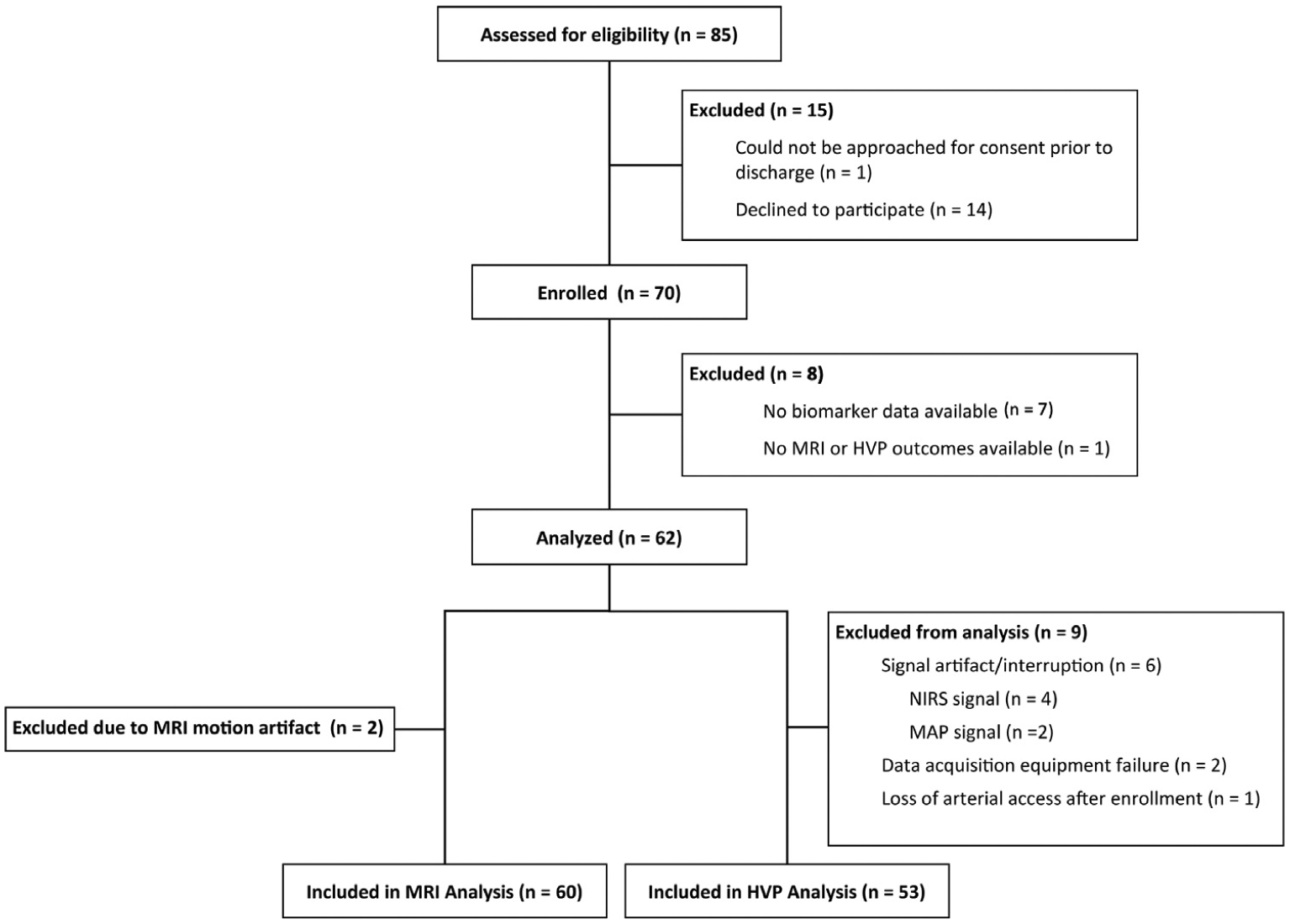
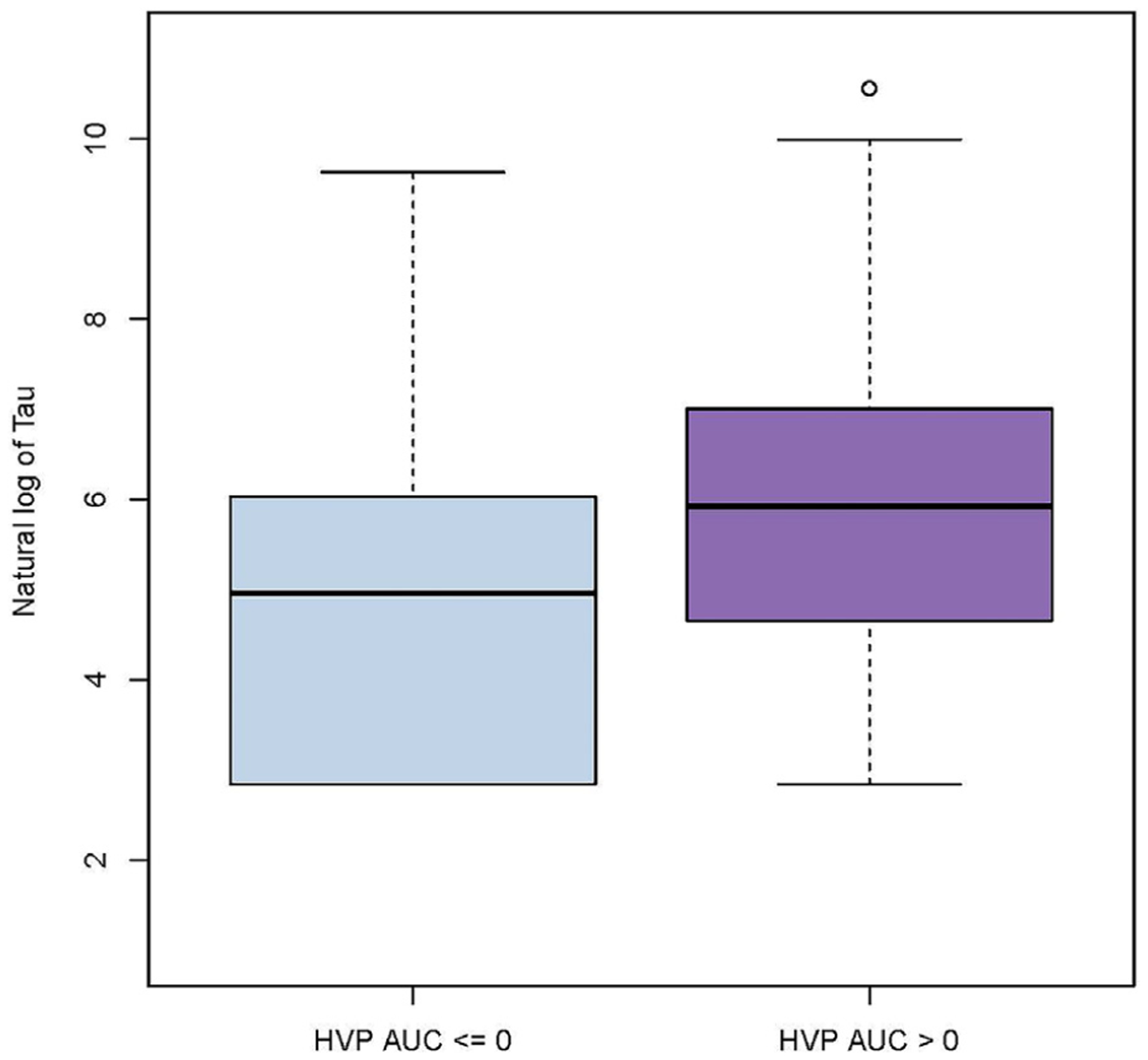
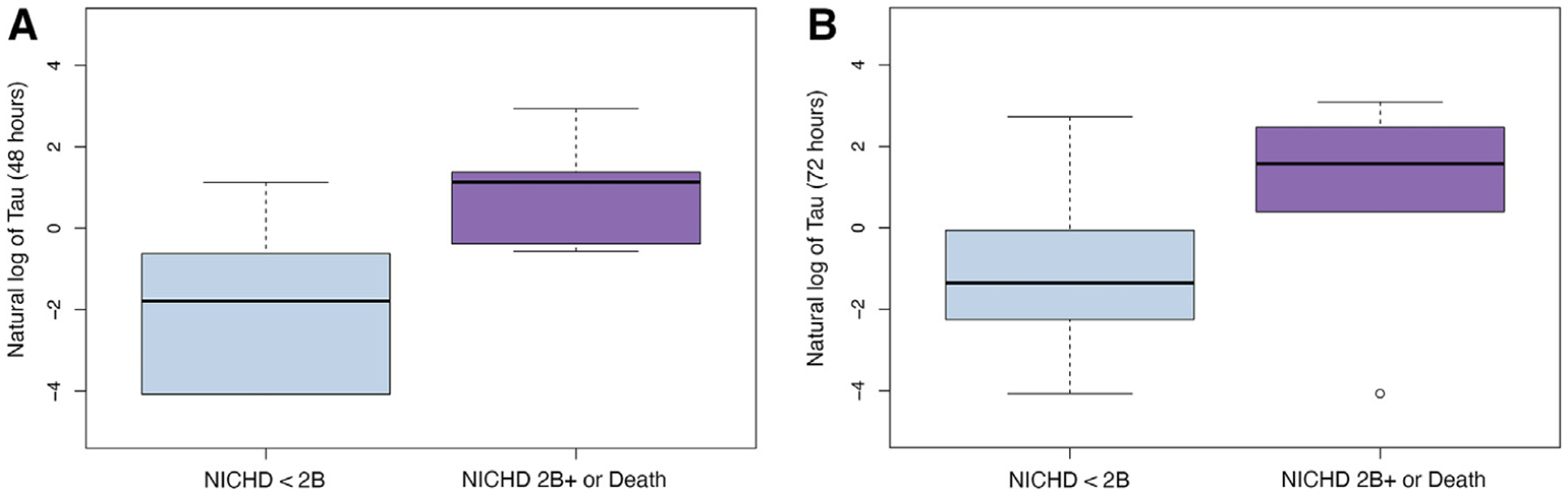
Sixty-two patients were included. Elevated Tau levels on days 2-3 of TH were associated with death or severe injury on MRI (aOR: 1.06, 95% CI: 1.03-1.09; aOR: 1.04, 95% CI: 1.01-1.06, respectively). Higher Tau was also associated with poorer autoregulation (higher HVP index) on the same day (P = .022).
Elevated plasma levels of Tau are associated with death or severe brain injury by MRI and dysfunctional cerebral autoregulation in neonates with HIE. Larger-scale validation of Tau as a biomarker of brain injury in neonates with HIE is warranted.
本研究旨在评估候选血浆生物标志物与(1)磁共振成像(MRI)上的死亡或严重脑损伤,以及(2)作为进行性脑病指标的功能性脑压力自动调节障碍之间的关系。
本观察性研究纳入了 2 家 4 级新生儿重症监护病房中患有中重度缺氧缺血性脑病(HIE)的新生儿。患者接受亚低温治疗(TH),并通过连续血压监测和近红外光谱进行监测。脑压力自动调节通过血红蛋白体积相位(HVP)指数进行测量;较高的 HVP 指数表示自动调节功能较差。在 TH 期间采集连续的血液样本,并测定 Tau、胶质纤维酸性蛋白和神经颗粒蛋白。使用国立儿童健康与人类发展研究院(NICHD)评分评估 MRI。使用双变量和调整后的逻辑回归模型评估候选生物标志物与(1)MRI 上的死亡或严重脑损伤(定义为 NICHD 评分≥2B),以及(2)自动调节之间的关系。
共纳入 62 例患者。TH 第 2-3 天 Tau 水平升高与 MRI 上的死亡或严重损伤相关(OR:1.06,95%CI:1.03-1.09;OR:1.04,95%CI:1.01-1.06)。同一天 Tau 水平升高也与自动调节障碍(较高的 HVP 指数)相关(P=0.022)。
HIE 新生儿 Tau 血浆水平升高与 MRI 上的死亡或严重脑损伤以及脑自动调节功能障碍相关。需要更大规模的验证 Tau 是否可作为 HIE 新生儿脑损伤的生物标志物。