Interdisciplinary Medical Intensive Care, Medical Center-University of Freiburg, Faculty of Medicine, University of Freiburg, Freiburg, Germany.
Heidelberg Institute of Global Health, University of Heidelberg, Heidelberg, Germany.
Intensive Care Med. 2022 Oct;48(10):1326-1337. doi: 10.1007/s00134-022-06815-w. Epub 2022 Aug 9.
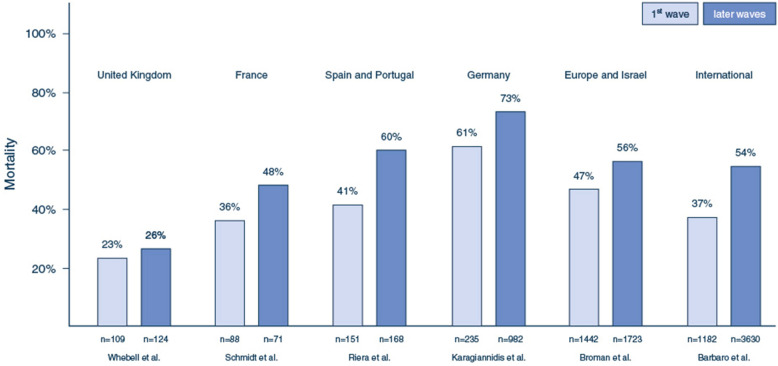
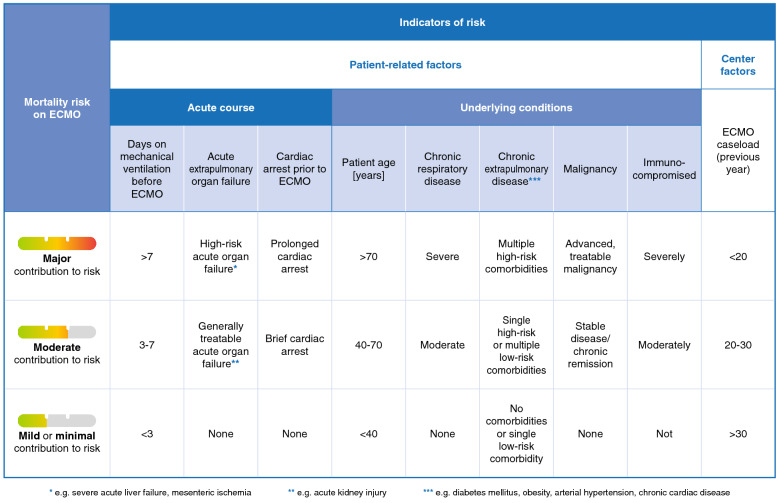
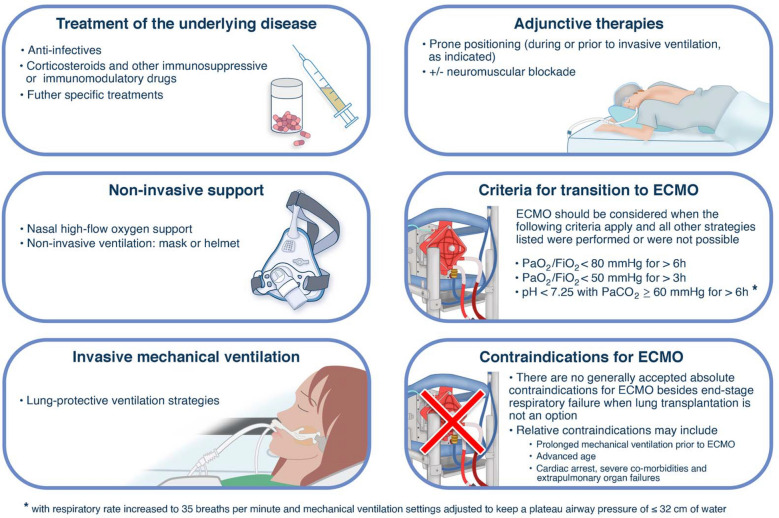
Extracorporeal membrane oxygenation (ECMO) is increasingly being used for patients with severe respiratory failure and has received particular attention during the coronavirus disease 2019 (COVID-19) pandemic. Evidence from two key randomized controlled trials, a subsequent post hoc Bayesian analysis, and meta-analyses support the interpretation of a benefit of ECMO in combination with ultra-lung-protective ventilation for select patients with very severe forms of acute respiratory distress syndrome (ARDS). During the pandemic, new evidence has emerged helping to better define the role of ECMO for patients with COVID-19. Results from large cohorts suggest outcomes during the first wave of the pandemic were similar to those in non-COVID-19 cohorts. As the pandemic continued, mortality of patients supported with ECMO has increased. However, the precise reasons for this observation are unclear. Known risk factors for mortality in COVID-19 and non-COVID-19 patients are higher patient age, concomitant extra-pulmonary organ failures or malignancies, prolonged mechanical ventilation before ECMO, less experienced treatment teams and lower ECMO caseloads in the treating center. ECMO is a high resource-dependent support option; therefore, it should be used judiciously, and its availability may need to be constrained when resources are scarce. More evidence from high-quality research is required to better define the role and limitations of ECMO in patients with severe COVID-19.
体外膜肺氧合(ECMO)越来越多地被用于治疗严重呼吸衰竭的患者,在 2019 年冠状病毒病(COVID-19)大流行期间受到特别关注。两项关键的随机对照试验的证据、随后的事后贝叶斯分析以及荟萃分析支持 ECMO 联合超肺保护性通气对特定的极重度急性呼吸窘迫综合征(ARDS)患者有益的解释。在大流行期间,出现了新的证据,有助于更好地定义 ECMO 在 COVID-19 患者中的作用。来自大型队列的结果表明,大流行第一波期间的结果与非 COVID-19 队列相似。随着大流行的继续,接受 ECMO 支持的患者的死亡率有所增加。然而,这种观察结果的确切原因尚不清楚。COVID-19 和非 COVID-19 患者死亡的已知危险因素包括年龄较大、伴有肺外器官衰竭或恶性肿瘤、在接受 ECMO 前机械通气时间延长、治疗团队经验较少以及治疗中心的 ECMO 病例数较少。ECMO 是一种高度依赖资源的支持选择;因此,应谨慎使用,当资源稀缺时,可能需要限制其可用性。需要更多高质量研究的证据来更好地定义 ECMO 在严重 COVID-19 患者中的作用和局限性。