UQ Business School, University of Queensland, Brisbane, QLD, Australia.
Smith School of Enterprise and the Environment, University of Oxford, Oxford, UK.
Nat Commun. 2022 Aug 10;13(1):4441. doi: 10.1038/s41467-022-31143-4.
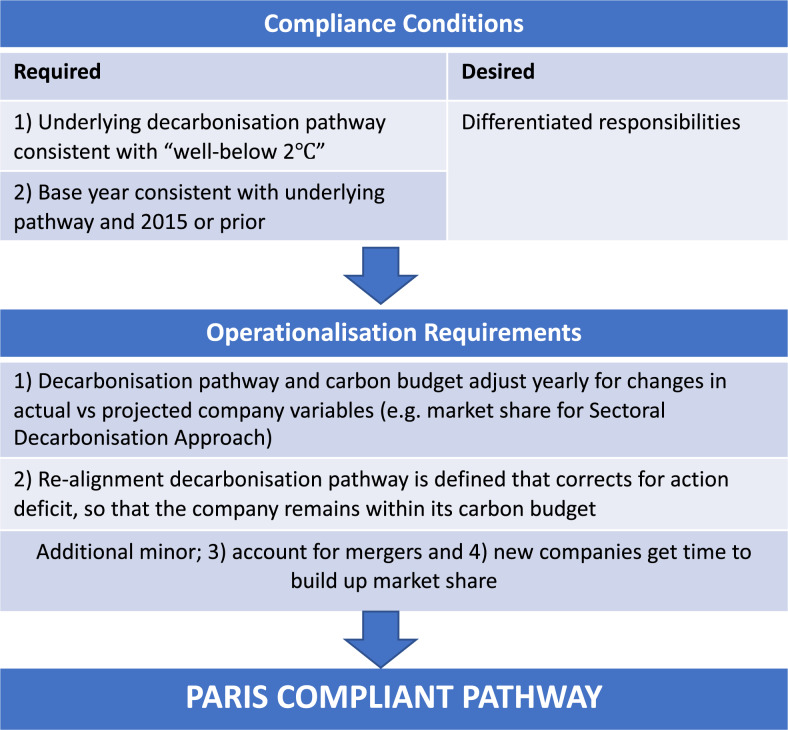
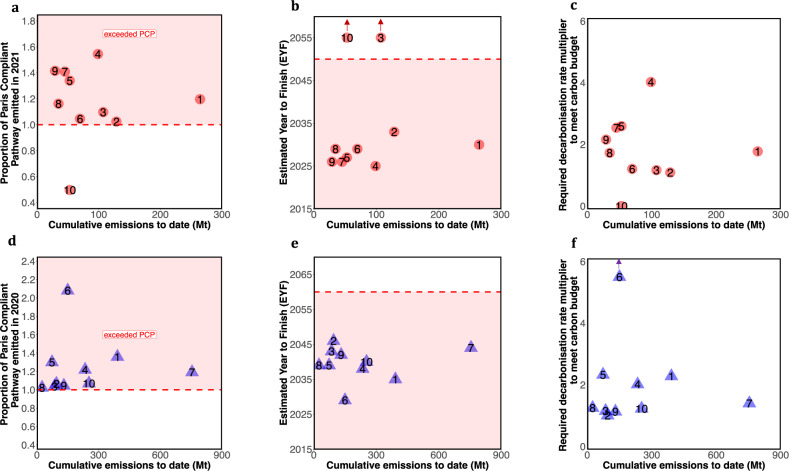
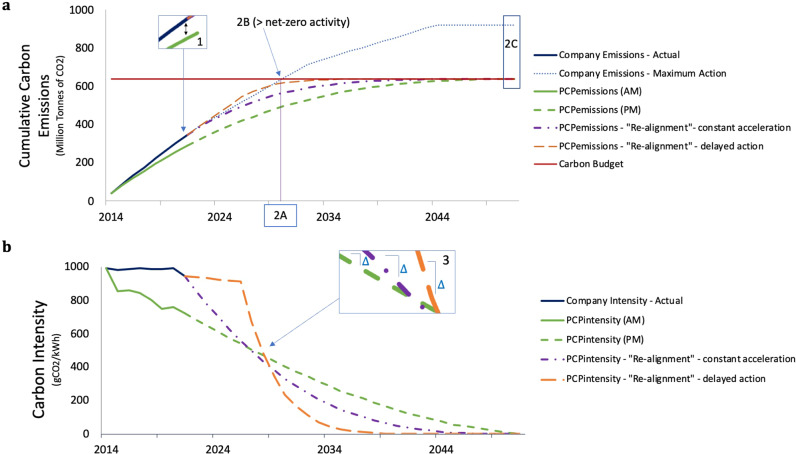
The achievement of the Paris Agreement climate goals of well-below 2 degrees of warming requires companies to align their greenhouse gas emission reductions with this goal. To measure whether companies are compliant with the Paris targets we propose several strict conditions that any emissions allocation methodology must meet before it can be classified as Paris-Compliant. Our conditions focus on the need for a common, and early as practicable, base year for all companies and consistency with an underlying Paris-aligned decarbonisation pathway. Additionally, we propose four operationalisation requirements to ensure companies can declare they are on a Paris Compliant Pathway including calculations of their carbon budgets and re-alignment pathways. Applying example Paris-Compliant Pathways and associated metrics to ten high emission electric utility companies and ten cement companies, we find that all but one of these companies are not currently Paris-compliant, with every year of delayed action increasing their required rate of decarbonisation and hence the exposure of billions of investment dollars to transition risk. Applying this proposed method will ensure the Paris carbon budget is met and that progress can be tracked accurately - an imperative for any companies and stakeholders seeking to align their decision-making with the Paris Agreement.
要实现《巴黎协定》将升温控制在 2 摄氏度以下的气候目标,就要求各公司的温室气体减排行动与之保持一致。为了衡量各公司是否符合《巴黎协定》目标,我们提出了若干严格的条件,任何排放分配方法若要被归类为符合《巴黎协定》,都必须满足这些条件。我们的条件重点关注所有公司需要使用共同的、尽可能早的基准年,以及与基础的《巴黎协定》脱碳路径保持一致。此外,我们还提出了四项实施要求,以确保公司能够宣布其处于符合《巴黎协定》的路径上,包括计算其碳预算和重新调整路径。我们将符合《巴黎协定》的路径和相关指标应用于十家高排放电力公用事业公司和十家水泥公司,发现除一家公司外,其余公司目前均不符合《巴黎协定》,而每推迟一年采取行动,就会增加其所需的脱碳速度,从而使数亿美元的投资面临转型风险。采用这一建议方法将确保实现《巴黎协定》的碳预算,并能准确跟踪进展——这对于任何寻求将决策与《巴黎协定》保持一致的公司和利益相关者来说都是至关重要的。