Witold Stefański Institute of Parasitology, Polish Academy of Sciences, Twarda, Warsaw, Poland.
Laboratory of Analysis of Natural Compounds, Department of Environmental Analysis, Faculty of Chemistry, University of Gdańsk, ul. Wita Stwosza 63, 80-308, Gdańsk, Poland.
Sci Rep. 2022 Aug 10;12(1):13641. doi: 10.1038/s41598-022-17960-z.
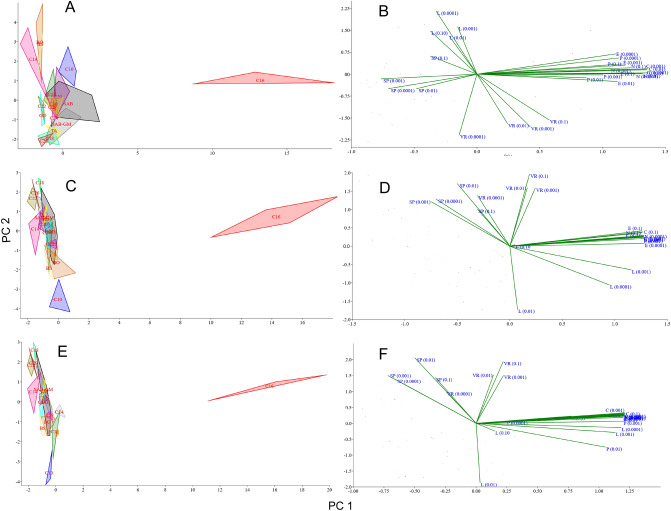
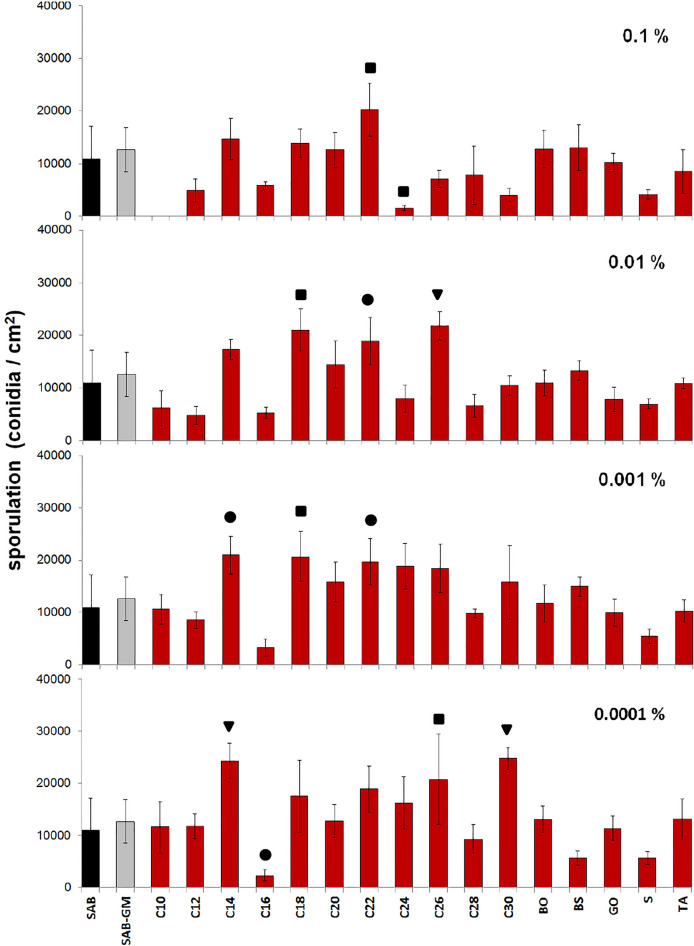
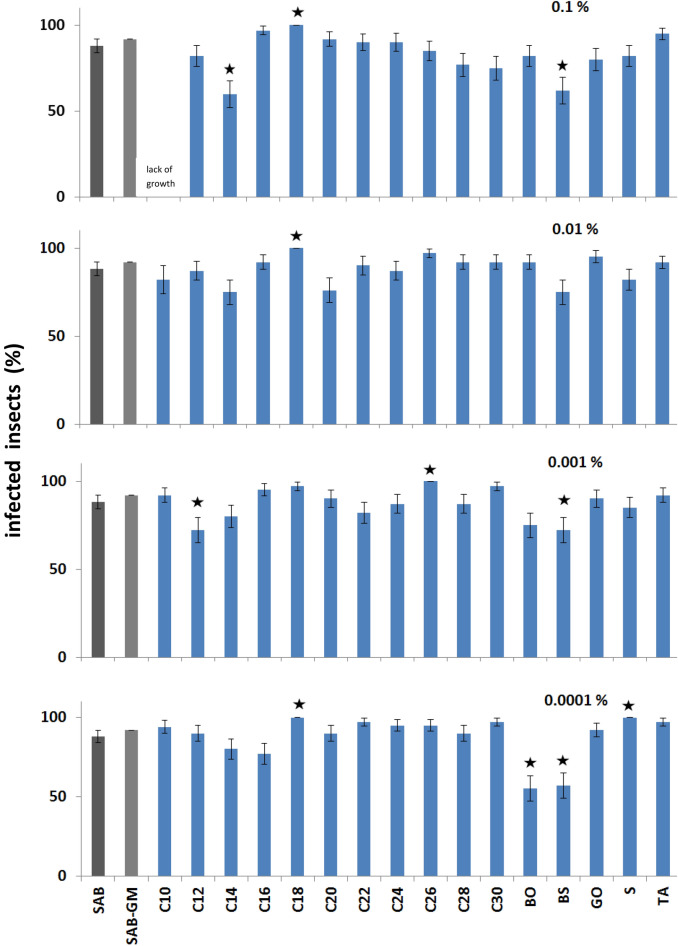
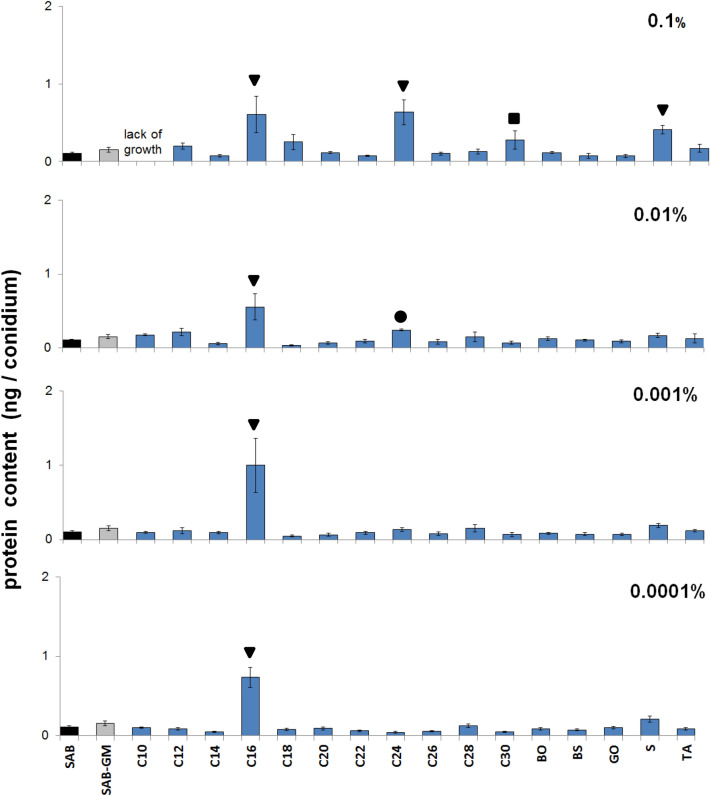
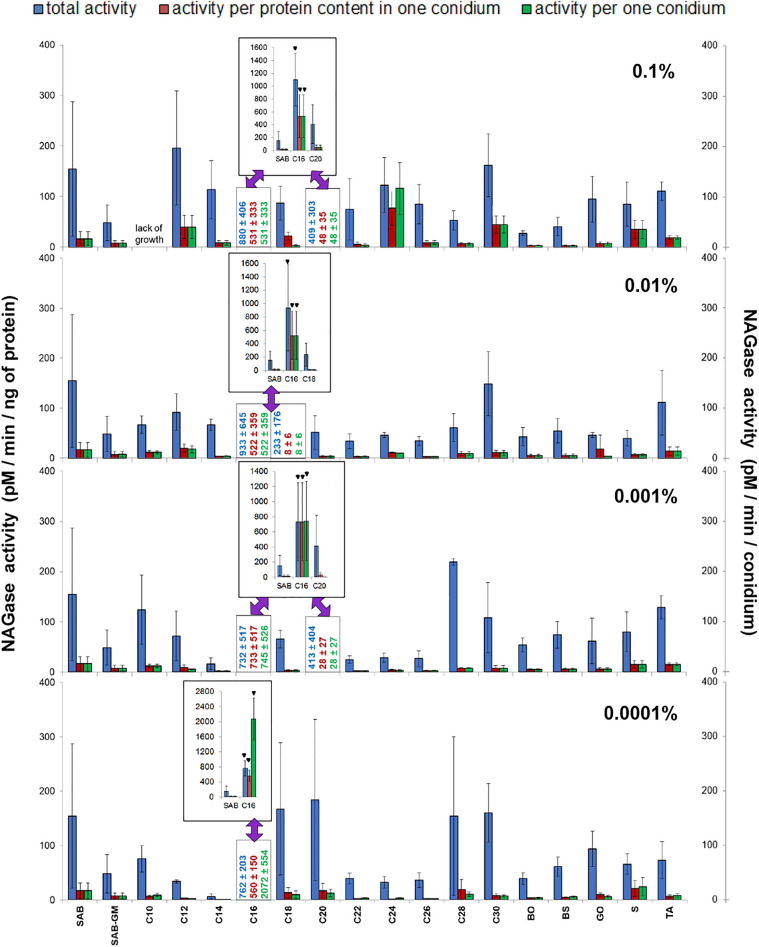
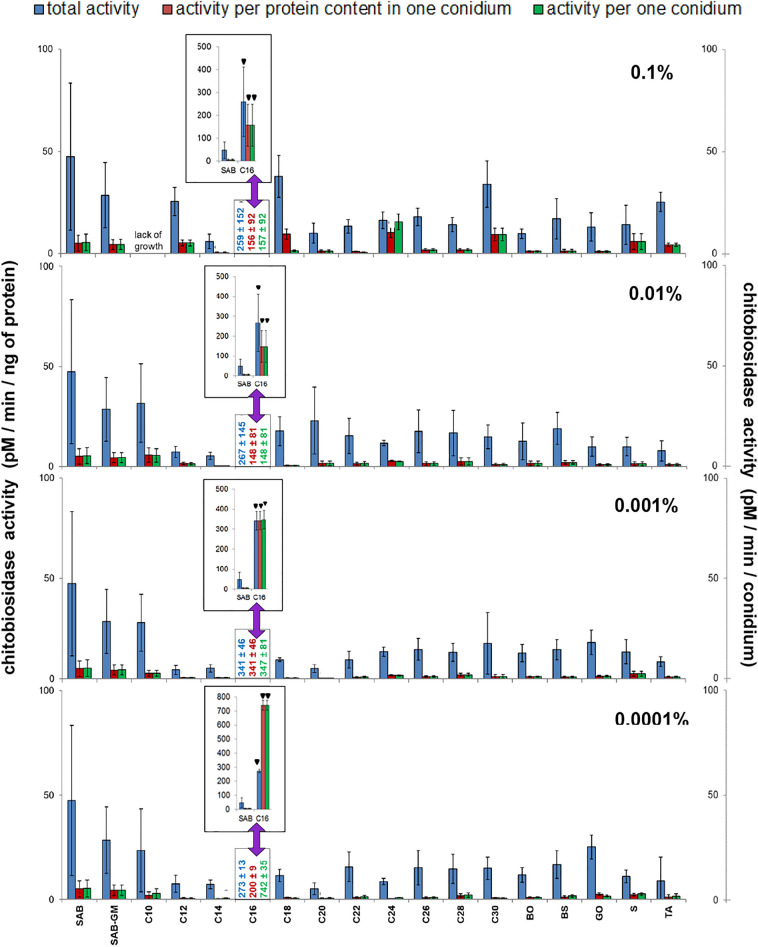
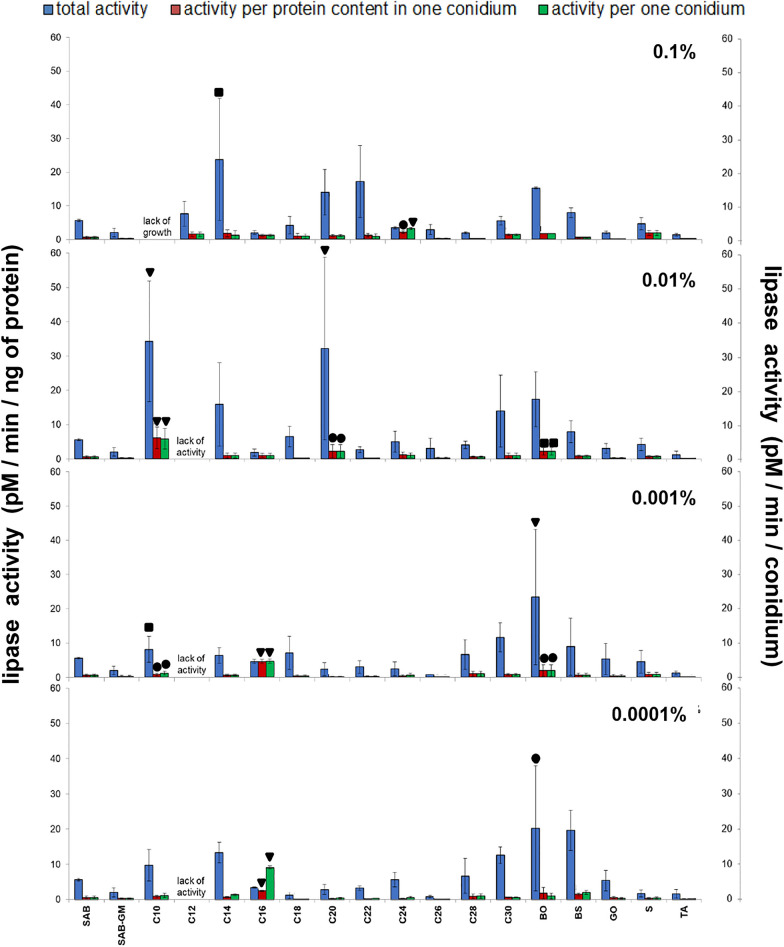
Mycoses are a global problem that affects humans and animals. In the present study, the entomopathogenic soil fungus Conidiobolus coronatus (Entomophthorales), infecting in tropics also humans, sheep and horses, was cultivated with the addition of insect cuticular compounds (CCs) previously detected in the cuticle of C. coronatus-resistant fly species (C10-C30 fatty alcohols, butyl oleate, butyl stearate, glycerol oleate, squalene, tocopherol acetate). Our findings indicate that CCs have diversified and complex effects on the growth and sporulation of C. coronatus and its ability to infect the larvae of Galleria mellonella (Lepidoptera). The CCs affected protein content and cuticle-degrading enzymes (CDEs) activity in the conidia. Some CCs inhibited fungal growth (0.1% C10), decreased sporulation (C12, C16, C24, C28, C30, butyl stearate, squalene), virulence (C12, C14, butyl oleate, butyl stearate) and protein content (C18). They also reduced conidial CDE activity: elastase (C24, butyl oleate, butyl stearate, squalene, tocopherol acetate), chitobiosidase (C12, C14, C20) and lipase (C12, C18, C26, squalene, tocopherol acetate). Several CCs enhanced sporulation (C14, C18, C22, C26, C30), virulence (C18, C26, squalene), conidial protein content (C16, C24, C30, squalene) and CDE activity: elastase (C10, C16, C18), NAGase (C16, C20), chitobiosidase (C16) and lipase (C10, C14, C16, C20, butyl oleate). Our findings indicate that C. coronatus colonies grown on media supplemented with CCs employ various compensation strategies: colonies grown with C16 alcohol demonstrated reduced sporulation but greater conidial protein accumulation and increased elastase, NAGase, chitobiosidase and lipase activity, thus preserving high virulence. Also, colonies supplemented with C18 alcohol demonstrated high virulence and enhanced sporulation and elastase activity but slightly decreased conidial protein content. CCs that inhibit the activity of lipases and proteases show promise in the fight against conidiobolomycosis.
真菌病是一个全球性问题,影响人类和动物。在本研究中,研究了具有侵染性的土壤真菌,即能够感染热带地区的人类、绵羊和马匹的节丛孢菌(Entomophthorales),该真菌在添加昆虫表皮化合物(CCs)的情况下进行培养,这些 CCs 是先前在节丛孢菌抗蝇种的表皮中检测到的化合物(C10-C30 脂肪醇、油酸丁酯、硬脂酸丁酯、油醇、角鲨烯、生育酚乙酸酯)。我们的研究结果表明,CCs 对节丛孢菌的生长和孢子形成及其感染地中海实蝇幼虫(鳞翅目)的能力有多样化和复杂的影响。CCs 影响了分生孢子中的蛋白质含量和角质层降解酶(CDEs)的活性。一些 CCs 抑制真菌生长(0.1% C10),降低孢子形成(C12、C16、C24、C28、C30、硬脂酸丁酯、角鲨烯)、毒力(C12、C14、油酸丁酯、硬脂酸丁酯)和蛋白质含量(C18)。它们还降低了分生孢子的 CDE 活性:弹性蛋白酶(C24、油酸丁酯、硬脂酸丁酯、角鲨烯、生育酚乙酸酯)、壳二糖酶(C12、C14、C20)和脂肪酶(C12、C18、C26、角鲨烯、生育酚乙酸酯)。几种 CCs 增强了孢子形成(C14、C18、C22、C26、C30)、毒力(C18、C26、角鲨烯)、分生孢子蛋白质含量(C16、C24、C30、角鲨烯)和 CDE 活性:弹性蛋白酶(C10、C16、C18)、NAGase(C16、C20)、壳二糖酶(C16)和脂肪酶(C10、C14、C16、C20、油酸丁酯)。我们的研究结果表明,在添加 CCs 的培养基上生长的节丛孢菌菌落采用了各种补偿策略:用 C16 酒精培养的菌落显示出孢子形成减少,但分生孢子的蛋白质积累增加,弹性蛋白酶、NAGase、壳二糖酶和脂肪酶的活性增加,从而保持高毒力。此外,用 C18 酒精培养的菌落表现出高毒力和增强的孢子形成和弹性蛋白酶活性,但分生孢子的蛋白质含量略有下降。抑制脂肪酶和蛋白酶活性的 CCs 在对抗节丛孢菌病方面具有很大的潜力。