Department of Psychology and Logopedics, Faculty of Medicine, University of Helsinki, Helsinki, Finland.
National Institute for Health and Welfare, Helsinki, Finland.
Mol Psychiatry. 2022 Nov;27(11):4653-4661. doi: 10.1038/s41380-022-01723-3. Epub 2022 Aug 10.
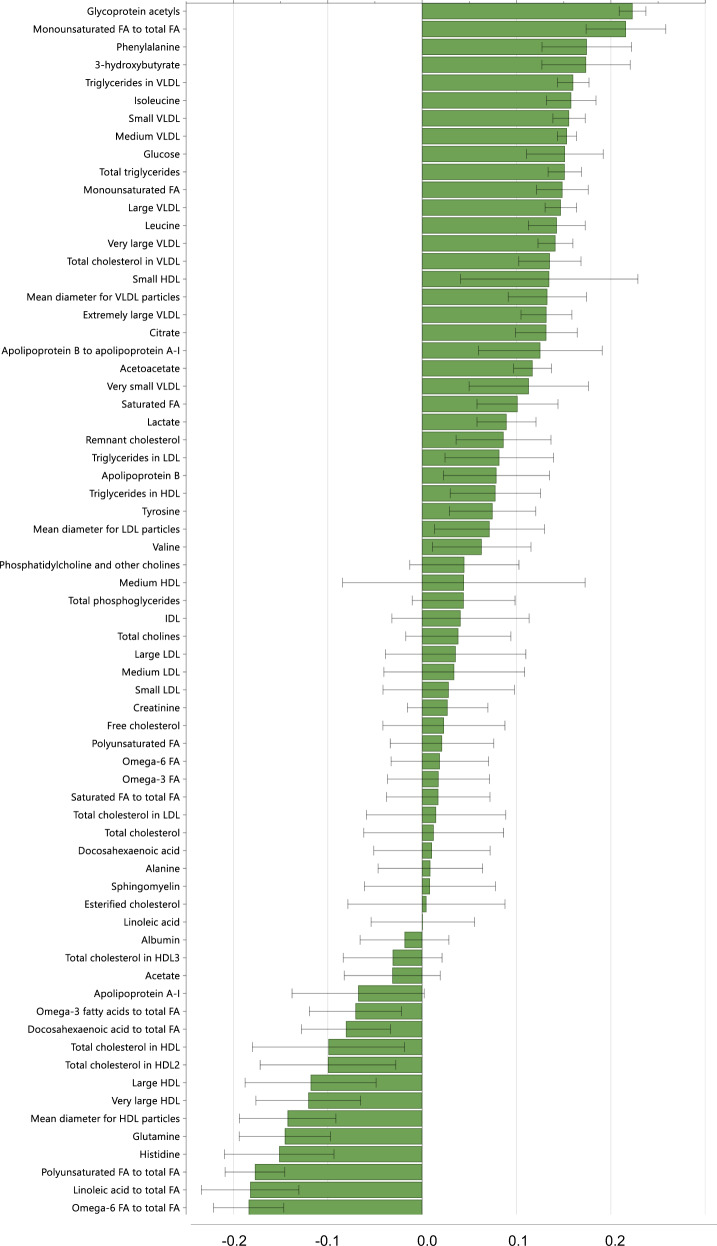
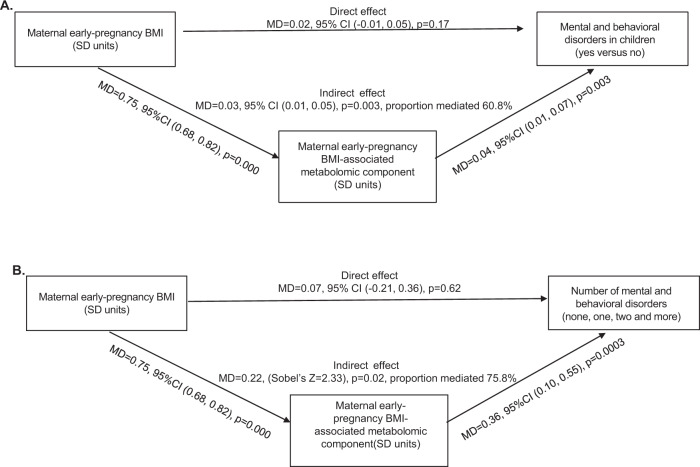
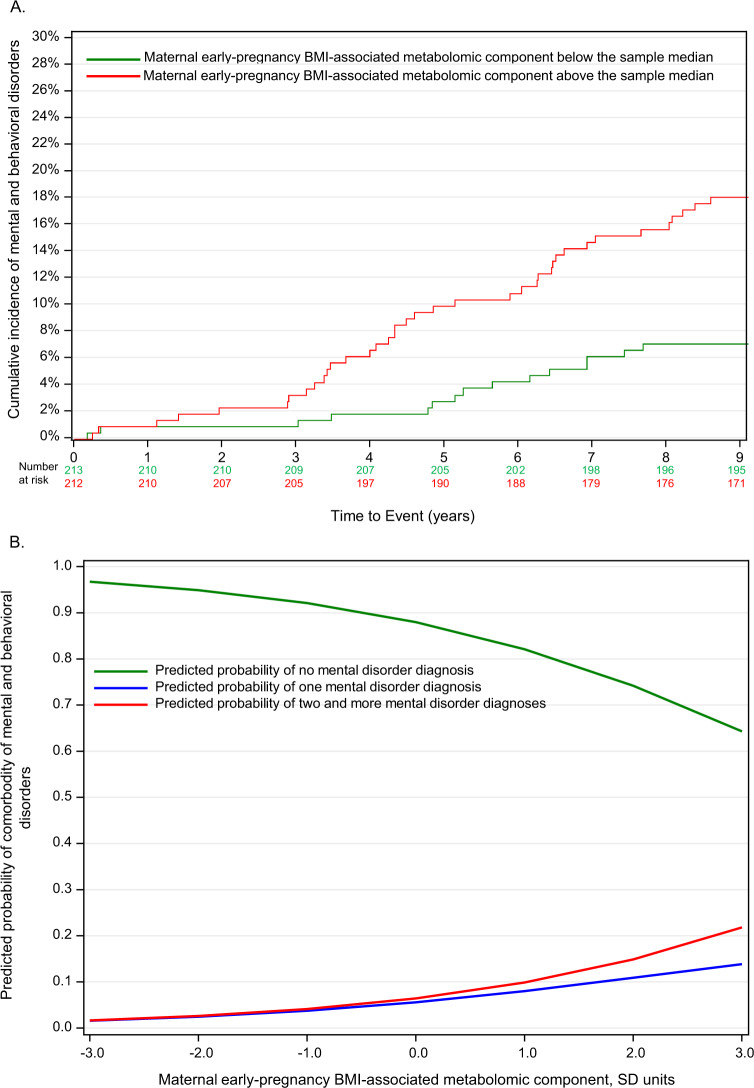
Maternal pre-pregnancy obesity and/or higher body mass index (BMI) have been associated with neurodevelopmental and mental health adversities in children. While maternal metabolomic perturbations during pregnancy may underpin these associations, the existing evidence is limited to studying individual metabolites, not capturing metabolic variation specific to maternal BMI, and not accounting for the correlated nature of the metabolomic measures. By using multivariate supervised analytical methods, we first identified maternal early-pregnancy BMI-associated metabolomic component during pregnancy. We then examined whether this component was associated with mental and behavioral disorders in children, improved the prediction of the child outcomes over maternal BMI, and what proportion of the effect of maternal BMI on the child outcomes this component mediated. Early-pregnancy BMI of 425 mothers participating in the PREDO study was extracted from the national Medical Birth Register. During pregnancy, mothers donated up to three blood samples, from which a targeted panel of 68 metabolites were measured. Mental and behavioral disorders in children followed-up from birth until 8.4-12.8 years came from the Care Register for Health Care. Of the 68 metabolites averaged across the three sampling points, 43 associated significantly with maternal early-pregnancy BMI yielding a maternal early-pregnancy BMI-associated metabolomic component (total variance explained, 55.4%; predictive ability, 52.0%). This metabolomic component was significantly associated with higher hazard of any mental and behavioral disorder [HR 1.45, 95%CI(1.15, 1.84)] and relative risk of having a higher number of co-morbid disorders [RR 1.43, 95%CI(1.12, 1.69)] in children. It improved the goodness-of-model-fit over maternal BMI by 37.7-65.6%, and hence the predictive significance of the model, and mediated 60.8-75.8% of the effect of maternal BMI on the child outcomes. Maternal BMI-related metabolomic perturbations during pregnancy are associated with a higher risk of mental and behavioral disorders in children. These findings may allow identifying metabolomic targets for personalized interventions.
母亲孕前肥胖和/或更高的体重指数(BMI)与儿童的神经发育和心理健康障碍有关。虽然孕期母体代谢组学的改变可能是这些关联的基础,但现有证据仅限于研究单个代谢物,不能捕捉到特定于母体 BMI 的代谢变化,也没有考虑到代谢组学测量的相关性。我们首先使用多变量监督分析方法,鉴定了母亲孕早期 BMI 相关的代谢组学成分,然后研究了该成分是否与儿童的精神和行为障碍有关,是否能提高对儿童结局的预测能力,以及该成分在多大程度上介导了母亲 BMI 对儿童结局的影响。参与 PREDO 研究的 425 名母亲的孕早期 BMI 从全国医疗出生登记处提取。在怀孕期间,母亲最多捐献了 3 份血样,从中测量了 68 种靶向代谢物。从保健登记处随访了从出生到 8.4-12.8 岁的儿童的精神和行为障碍。在三个采样点平均的 68 种代谢物中,有 43 种与母亲的孕早期 BMI 显著相关,产生了一个母亲孕早期 BMI 相关的代谢组学成分(总方差解释率为 55.4%;预测能力为 52.0%)。该代谢组学成分与儿童任何精神和行为障碍的更高发病风险显著相关[HR 1.45,95%CI(1.15,1.84)]和共病障碍数量更高的相对风险[RR 1.43,95%CI(1.12,1.69)]。它使模型的拟合优度提高了 37.7-65.6%,从而提高了模型的预测意义,并介导了母亲 BMI 对儿童结局影响的 60.8-75.8%。孕期与母体 BMI 相关的代谢组学改变与儿童精神和行为障碍的风险增加有关。这些发现可能有助于确定针对个体的干预的代谢组学靶点。