Genuv Inc., Seoul, 04520, Republic of Korea.
College of Pharmacy, Hanyang University ERICA, Gyeonggi-do, 15588, Republic of Korea.
Mol Psychiatry. 2022 Nov;27(11):4770-4780. doi: 10.1038/s41380-022-01713-5. Epub 2022 Aug 10.
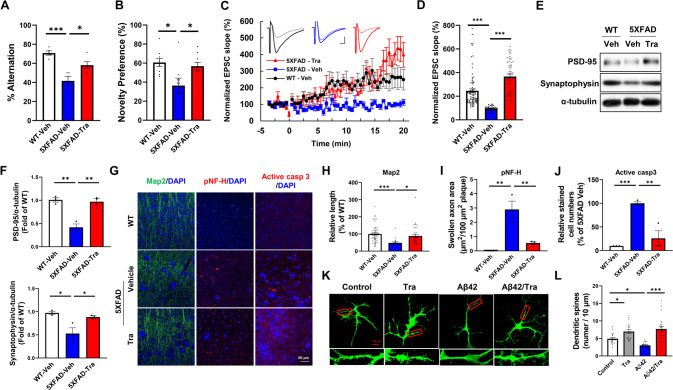
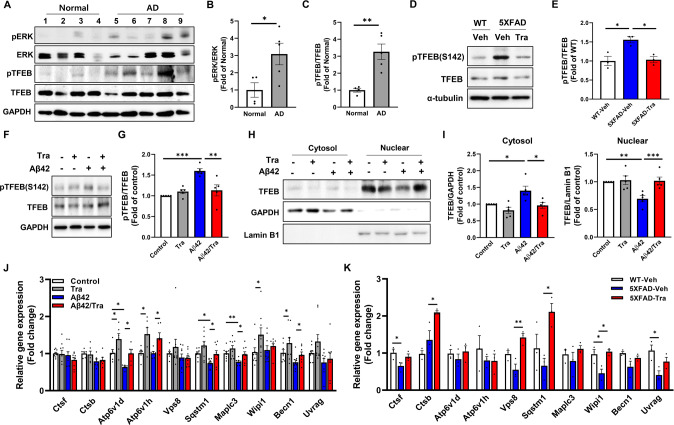
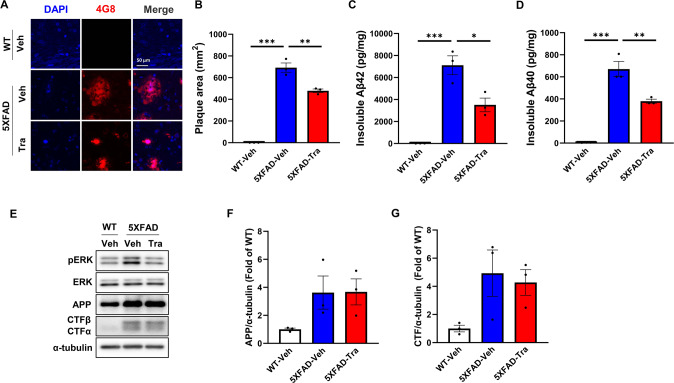
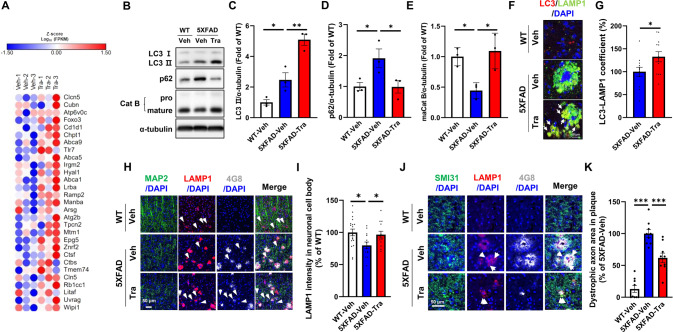
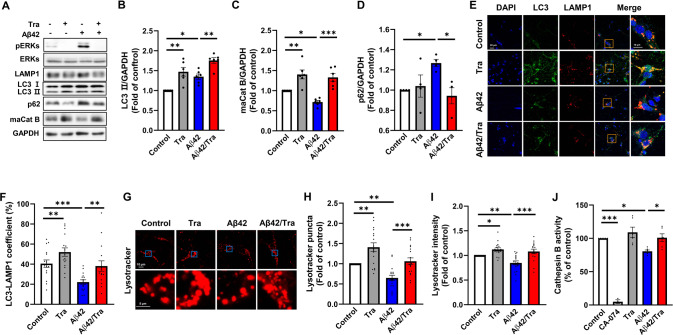
Alzheimer's Disease (AD) is a progressive neurodegenerative disorder, which is characterized by cognitive deficit due to synaptic loss and neuronal death. Extracellular amyloid β plaques are one of the pathological hallmarks of AD. The autophagic lysosomal pathway is the essential mechanism to maintain cellular homeostasis by driving clearance of protein aggregates and is dysfunctional in AD. Here, we showed that inhibiting MEK/ERK signaling using a clinically available MEK1/2 inhibitor, trametinib (GSK1120212, SNR1611), induces the protection of neurons through autophagic lysosomal activation mediated by transcription factor EB (TFEB) in a model of AD. Orally administered trametinib recovered impaired neural structures, cognitive functions, and hippocampal long-term potentiation (LTP) in 5XFAD mice. Trametinib also reduced Aβ deposition via induction of autophagic lysosomal activation. RNA-sequencing analysis revealed upregulation of autophagic lysosomal genes by trametinib administration. In addition, trametinib inhibited TFEB phosphorylation at Ser142 and promoted its nuclear translocation, which in turn induced autophagic lysosomal related genes, indicating that trametinib activates the autophagic lysosomal process through TFEB activation. From these observations, we concluded that MEK inhibition provides neuronal protection from the Aβ burden by increasing autophagic lysosomal activity. Thus, MEK inhibition may be an effective therapeutic strategy for AD.
阿尔茨海默病(AD)是一种进行性神经退行性疾病,其特征是由于突触丧失和神经元死亡导致认知功能障碍。细胞外淀粉样 β 斑块是 AD 的病理标志之一。自噬溶酶体途径是通过驱动蛋白聚集体清除来维持细胞内稳态的基本机制,在 AD 中功能失调。在这里,我们表明,使用临床上可用的 MEK1/2 抑制剂 trametinib(GSK1120212,SNR1611)抑制 MEK/ERK 信号通路,通过转录因子 EB(TFEB)介导的自噬溶酶体激活,在 AD 模型中诱导神经元保护。口服 trametinib 可恢复 5XFAD 小鼠受损的神经结构、认知功能和海马长时程增强(LTP)。 trametinib 还通过诱导自噬溶酶体激活来减少 Aβ 沉积。 RNA-seq 分析显示 trametinib 给药上调自噬溶酶体基因。此外,trametinib 抑制 TFEB 在 Ser142 上的磷酸化并促进其核易位,进而诱导自噬溶酶体相关基因,表明 trametinib 通过 TFEB 激活激活自噬溶酶体过程。从这些观察结果中,我们得出结论,MEK 抑制通过增加自噬溶酶体活性提供神经元对 Aβ 负担的保护。因此,MEK 抑制可能是 AD 的一种有效治疗策略。