Center for Personal Dynamic Regulomes, Stanford University, Stanford, CA, USA.
Department of Pathology, Stanford University School of Medicine and ChEM-H, Stanford University, Stanford, CA, USA.
Nat Struct Mol Biol. 2022 Aug;29(8):736-744. doi: 10.1038/s41594-022-00806-7. Epub 2022 Aug 10.
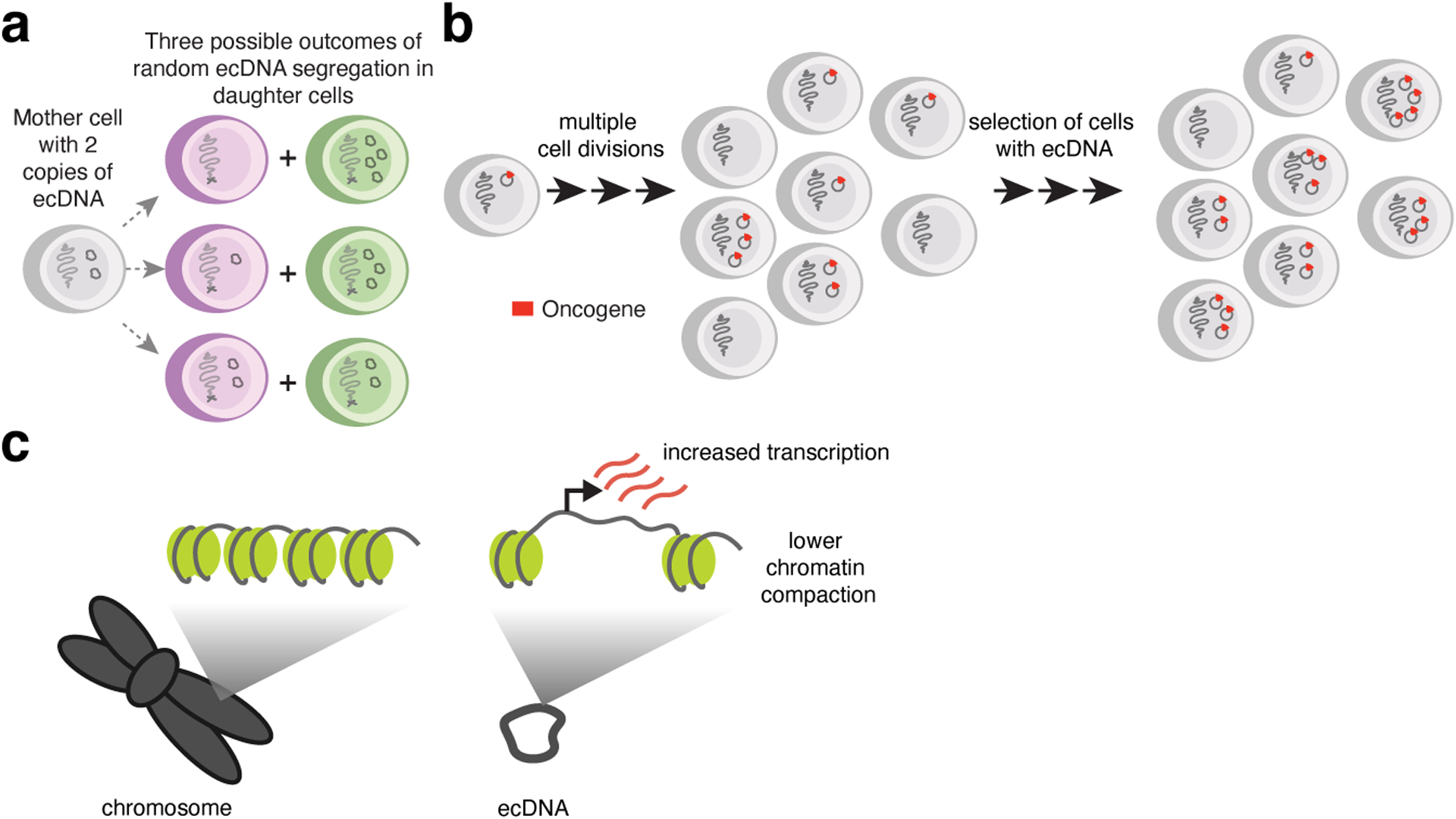
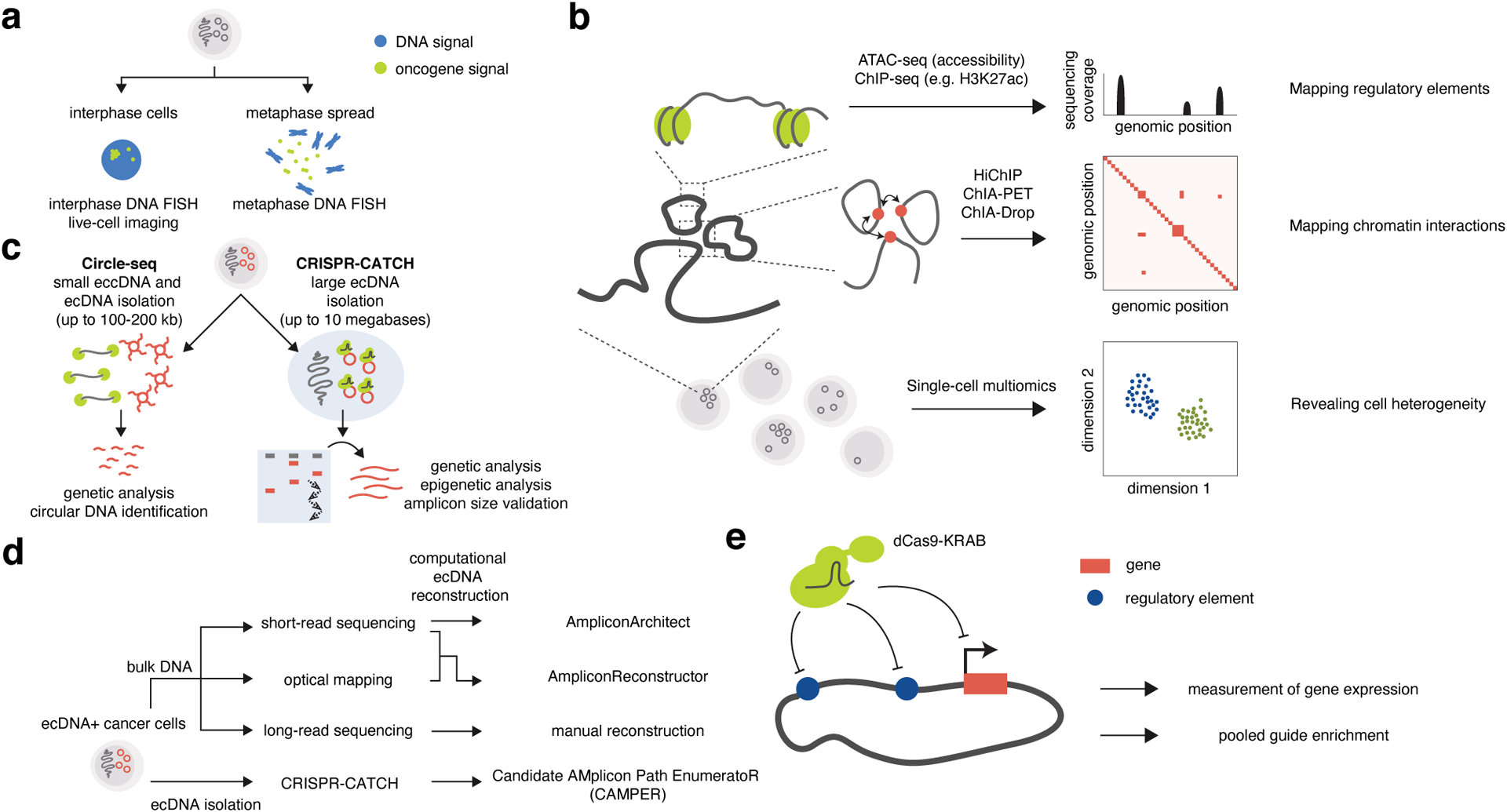
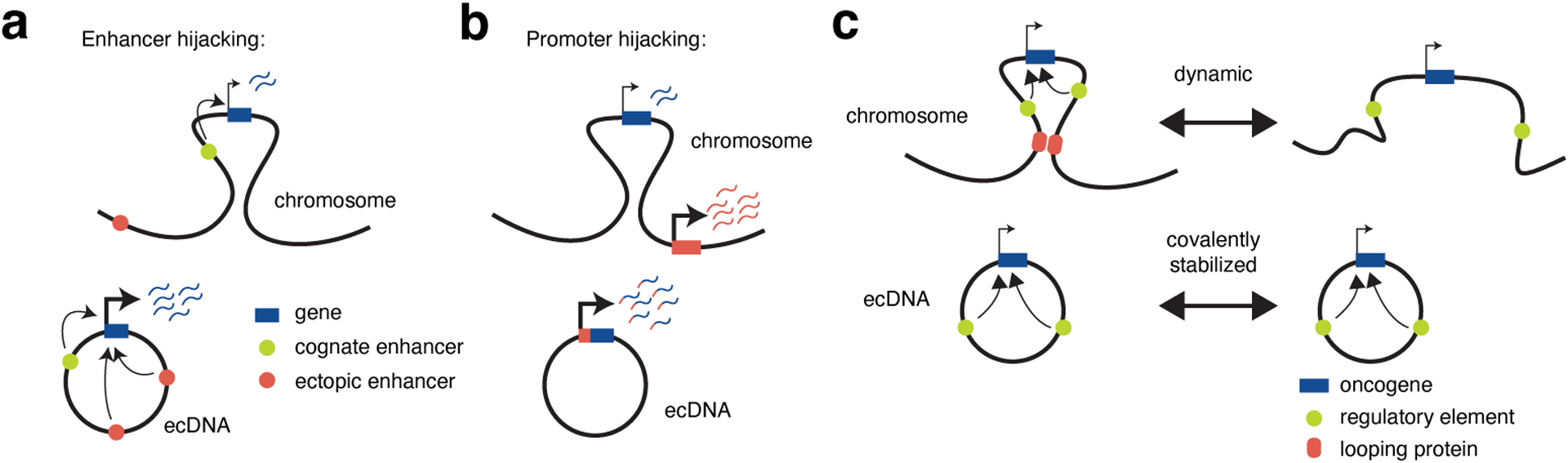
Oncogene amplification on extrachromosomal DNA (ecDNA) is prevalent in human cancer and is associated with poor outcomes. Clonal, megabase-sized circular ecDNAs in cancer are distinct from nonclonal, small sub-kilobase-sized DNAs that may arise during normal tissue homeostasis. ecDNAs enable profound changes in gene regulation beyond copy-number gains. An emerging principle of ecDNA regulation is the formation of ecDNA hubs: micrometer-sized nuclear structures of numerous copies of ecDNAs tethered by proteins in spatial proximity. ecDNA hubs enable cooperative and intermolecular sharing of DNA regulatory elements for potent and combinatorial gene activation. The 3D context of ecDNA shapes its gene expression potential, selection for clonal heterogeneity among ecDNAs, distribution through cell division, and reintegration into chromosomes. Technologies for studying gene regulation and structure of ecDNA are starting to answer long-held questions on the distinct rules that govern cancer genes beyond chromosomes.
癌基因扩增在人类癌症中很常见,与不良预后相关。癌症中的克隆、兆碱基大小的环状 ecDNA 与非克隆、小亚千碱基大小的 DNA 不同,后者可能在正常组织稳态中产生。ecDNA 可在基因调控方面产生深远变化,超越了拷贝数的增加。ecDNA 调节的一个新兴原则是 ecDNA 枢纽的形成:由蛋白质在空间上接近连接的无数 ecDNA 组成的微米级大小的核结构。ecDNA 枢纽使 DNA 调控元件能够进行合作和分子间共享,从而实现强大的组合基因激活。ecDNA 的 3D 结构决定了其基因表达潜力、ecDNA 之间克隆异质性的选择、通过细胞分裂的分布以及重新整合到染色体中。用于研究 ecDNA 基因调控和结构的技术开始回答长期以来关于超越染色体的癌症基因的独特规则的问题。