Colin Ides M, Gérard Katherine M
Endocrino-Diabetology Research Unit, Department of Internal Medicine, Centre Hospitalier Régional (CHR) Mons-Hainaut/Groupe Jolimont, Mons, Belgium.
Group of Animal Molecular and Cellular Biology, Louvain Institute of Biomolecular Science and Technology (LIBST), Université catholique de Louvain (UCLouvain), Louvain-La-Neuve, Belgium.
touchREV Endocrinol. 2022 Jun;18(1):35-42. doi: 10.17925/EE.2022.18.1.35. Epub 2022 Jun 15.
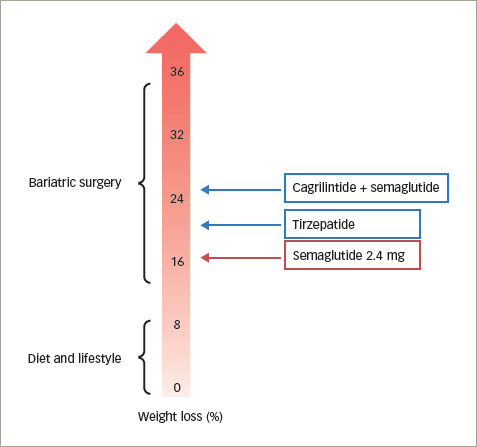
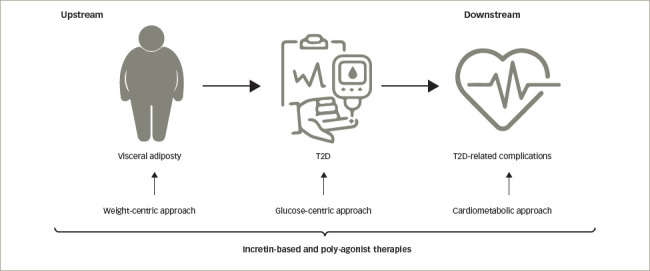
The treatment of obesity can no longer be reduced to a simplistic view of weight loss. Metabolic adaptation leads to systematic weight regain following weight-loss efforts, and new obesity treatments should therefore aim to induce long-standing double-digit weight loss, and thus improve and even reverse obesity-associated comorbidities such as type 2 diabetes. Until now, only metabolic surgery has been able to achieve such a goal, but this invasive procedure cannot be offered on a large scale. Among the alternatives, lifestyle interventions and drug therapies have often been disappointing. The recent availability of once-weekly subcutaneous 2.4 mg semaglutide (a glucagon-like peptide-1 receptor agonist; Wegovy™ Novo Nordisk A/S, Bagsværd, Denmark) has changed the scene, and semaglutide is considered a 'game changer' in the treatment of obesity. The results from the phase III STEP (Semaglutide treatment effect in people with obesity) clinical programme have shown that semaglutide provides clinically meaningful and sustained weight loss in ranges much higher than those achieved with previously available pharmacotherapies. These results led to the approval of semaglutide by regulatory authorities as an adjunct to a reduced-calorie diet and increased physical activity in people with obesity or overweight, with at least one weight-related comorbidity. With data from phase II and III clinical trials showing that newer drugs (i.e. the glucagon-like peptide-1 and gastric inhibitory polypeptide dual receptor agonist tirzepatide and the amylin agonist cagrilintide, either alone or combined) produce a greater sustained weight loss than semaglutide, an upstream 'weight-centric' strategy has emerged as a new standard for the treatment of type 2 diabetes.
肥胖症的治疗不能再简化为单纯的减重观点。代谢适应会导致减肥努力后体重系统性反弹,因此新的肥胖症治疗方法应旨在实现长期两位数的体重减轻,从而改善甚至逆转肥胖相关的合并症,如2型糖尿病。到目前为止,只有代谢手术能够实现这一目标,但这种侵入性手术无法大规模开展。在替代方法中,生活方式干预和药物治疗往往令人失望。最近每周一次皮下注射2.4毫克司美格鲁肽(一种胰高血糖素样肽-1受体激动剂;Wegovy™,丹麦诺和诺德公司, Bagsværd)的出现改变了这一局面,司美格鲁肽被认为是肥胖症治疗中的“变革者”。III期STEP(司美格鲁肽对肥胖症患者的治疗效果)临床项目的结果表明,司美格鲁肽能实现具有临床意义的持续体重减轻,幅度远高于此前可用药物疗法所达到的水平。这些结果促使监管机构批准司美格鲁肽作为一种辅助药物,用于肥胖或超重且至少有一种与体重相关合并症的患者,配合低热量饮食和增加身体活动。II期和III期临床试验的数据表明,新型药物(即胰高血糖素样肽-1和胃抑制多肽双重受体激动剂替尔泊肽以及胰淀素激动剂卡格列净,单独使用或联合使用)比司美格鲁肽能带来更大的持续体重减轻,一种上游的“以体重为中心”策略已成为2型糖尿病治疗的新标准。