Gilmour Sydney M, Kharouba Heather M
Department of Biology University of Ottawa Ottawa Ontario Canada.
Ecol Evol. 2022 Aug 4;12(8):e9131. doi: 10.1002/ece3.9131. eCollection 2022 Aug.
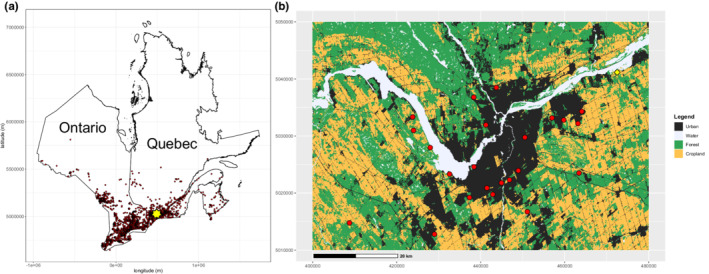
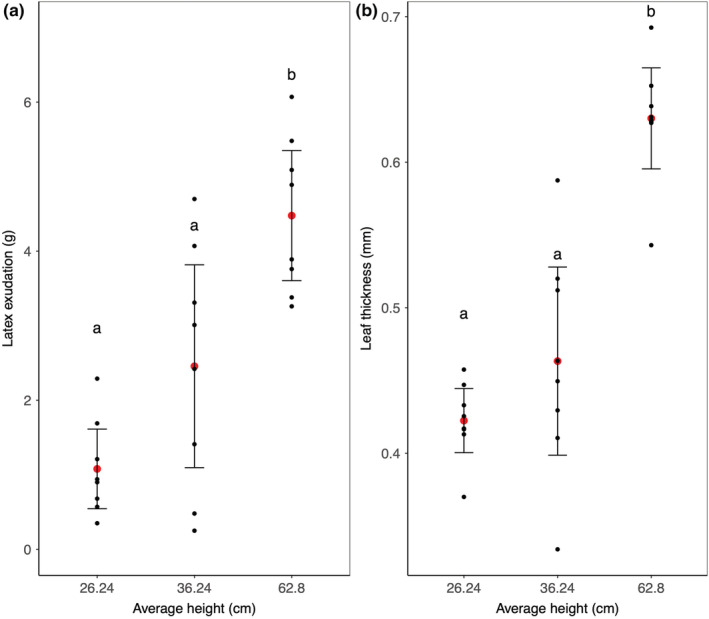
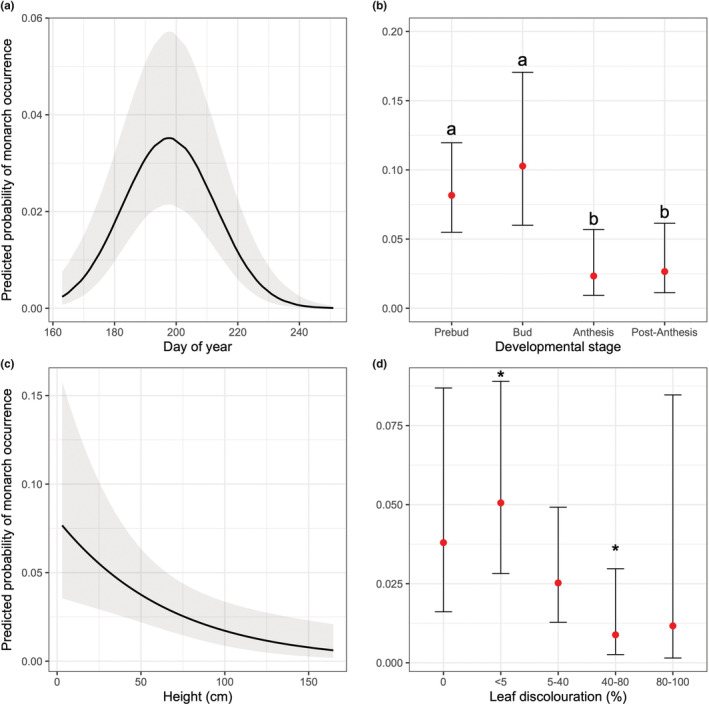
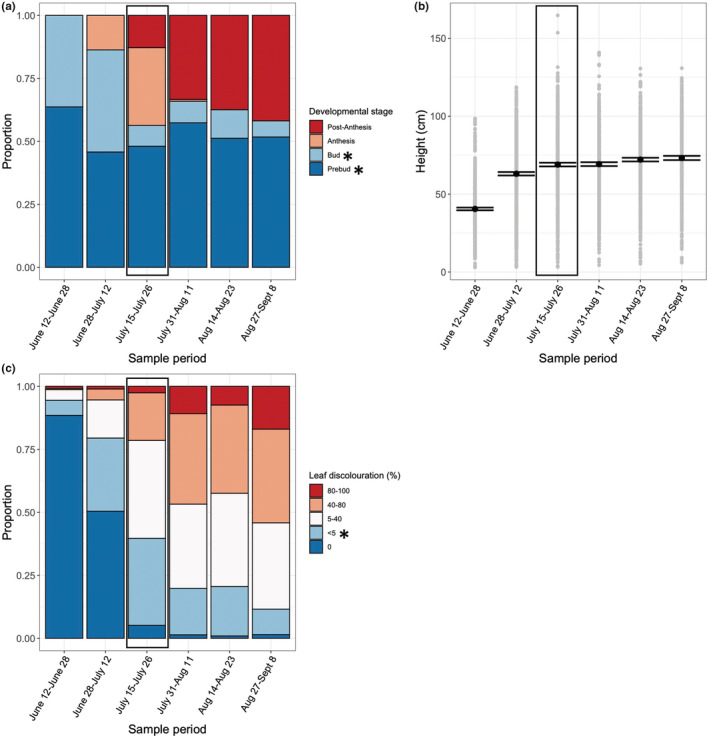
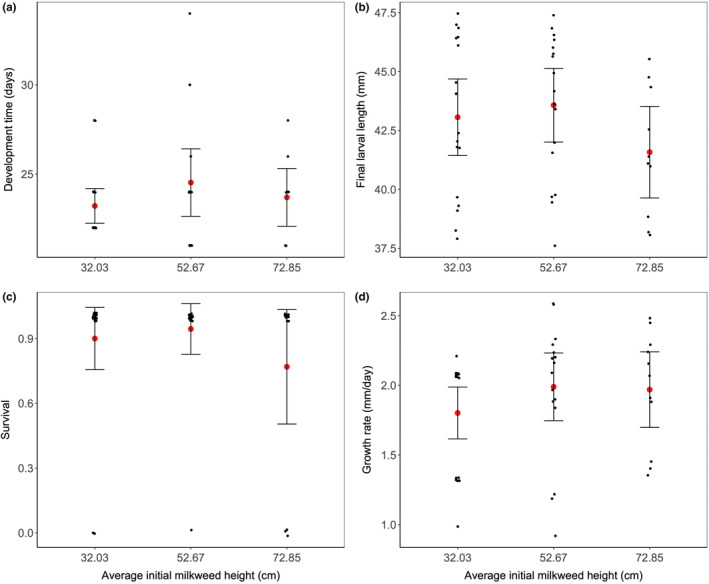
Interacting species are experiencing disruptions in the relative timing of their key life-history events due to climate change. These shifts can sometimes be detrimental to the fitness of the consumer in trophic interactions but not always.The potential consequences of phenological asynchrony for the monarch butterfly () and its host plant ( spp.) have not been well-studied. Given that plants generally undergo seasonal declines in quality, if climate change delays the timing of the larval stage relative to the availability of younger milkweed plants, monarch performance could be negatively affected.Here, we explore the potential consequences for the eastern monarch population due to probable asynchrony with milkweed. We used field surveys around Ottawa, Canada, to determine monarch oviposition preference on common milkweed () plants and the seasonal availability of these plants. To determine the potential fitness consequences when females oviposit on nonpreferred plants, we conducted a field experiment to assess the effect of milkweed size on monarch larval performance (e.g., development time and final size).Preferred oviposition plants (earlier stages of development and better condition) were consistently available in large proportion over the summer season. We also found that declines in leaf quality (more latex and thicker leaves) with plant size did not translate into decreases in larval performance.Our results suggest that even if asynchrony of the monarch-milkweed interaction occurs due to climate change, the larval stage of the eastern monarch may not face negative consequences. Future studies should determine how the relative timing of the interaction will change in the region.
由于气候变化,相互作用的物种正经历其关键生活史事件相对时间的中断。这些变化有时对营养相互作用中消费者的适合度有害,但并非总是如此。物候异步对帝王蝶()及其寄主植物( spp.)的潜在后果尚未得到充分研究。鉴于植物的质量通常会随季节下降,如果气候变化使幼虫阶段的时间相对于较嫩乳草植物的可获得时间延迟,帝王蝶的表现可能会受到负面影响。在此,我们探讨了与乳草可能的异步对东部帝王蝶种群的潜在后果。我们利用加拿大渥太华周边的实地调查来确定帝王蝶在普通乳草()植物上的产卵偏好以及这些植物的季节性可获得情况。为了确定雌性在非偏好植物上产卵时潜在的适合度后果,我们进行了一项实地实验,以评估乳草大小对帝王蝶幼虫表现(如发育时间和最终大小)的影响。在整个夏季,偏好的产卵植物(发育早期且状况较好)一直有很大比例可供使用。我们还发现,随着植物大小增加,叶片质量下降(更多乳胶和更厚的叶子)并没有转化为幼虫表现的降低。我们的结果表明,即使由于气候变化发生帝王蝶与乳草相互作用的异步情况,东部帝王蝶的幼虫阶段可能也不会面临负面后果。未来的研究应确定该地区相互作用的相对时间将如何变化。