Xu Huimin, Wang Chunhua, Shao Guirong, Wu Shasha, Liu Peng, Cao Ping, Jiang Peng, Wang Shubin, Zhu Hong, Lin Xiao, Tauqeer Arfa, Lin Yizhang, Chen Wei, Huang Weiqun, Wen Qingfang, Chang Jiang, Zhong Fenglin, Wu Shuang
College of Life Sciences & College of Horticulture, Fujian Agriculture and Forestry University, Fuzhou 350002, China.
Fujian Jinpin Agricultural Technology Co., Ltd, Fuzhou 350000, China.
Hortic Res. 2022 May 26;9:uhac123. doi: 10.1093/hr/uhac123. eCollection 2022.
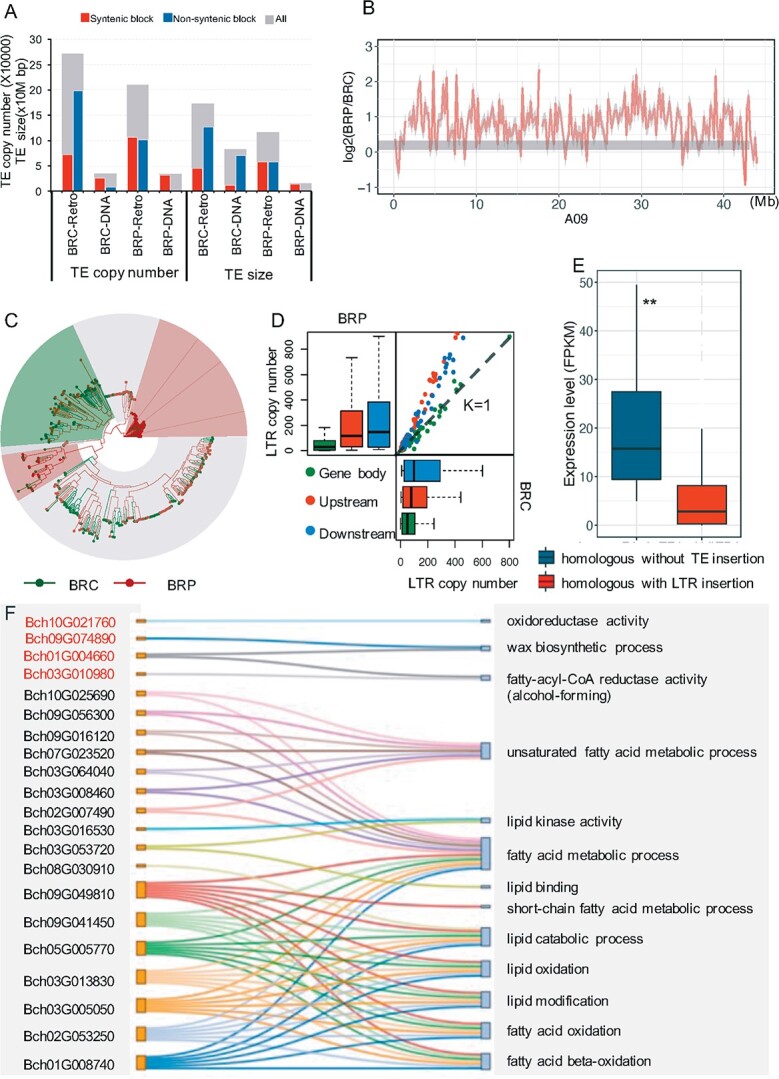
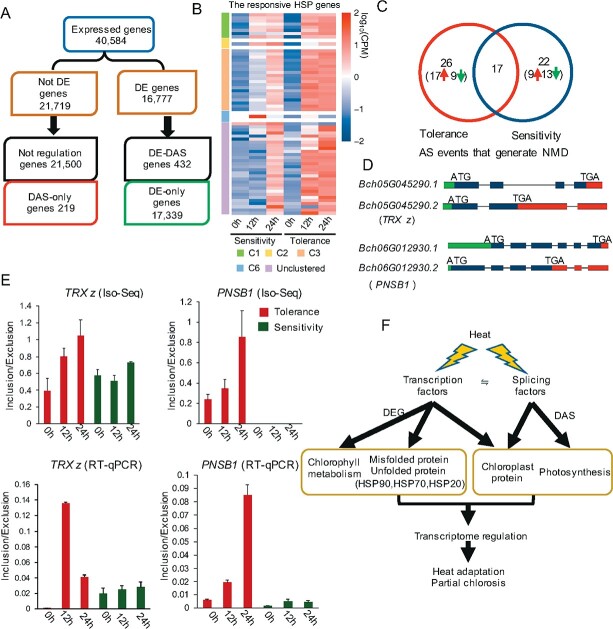
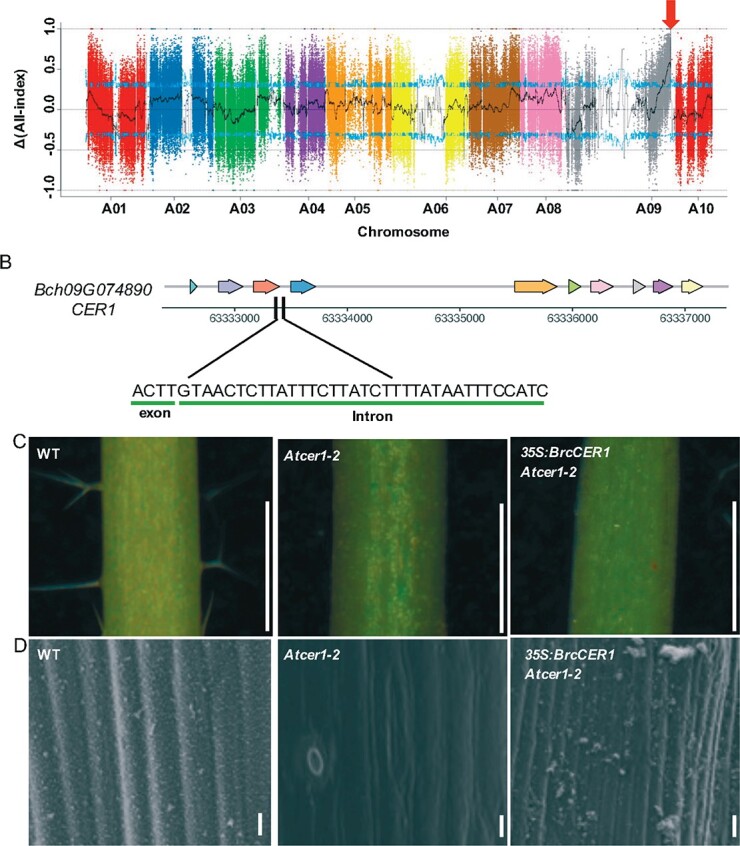
includes various vegetables with high economic value. Among them, green petiole type pakchoi ( ssp. ) is one of the major vegetables grown in southern China. Compared with other varieties, green petiole type pakchoi shows a higher level of heat resistance, which is partially derived from the rich epicuticular wax. Here we sequence a high-quality genome of green petiole type pakchoi, which has been widely used as the parent in breeding. Our results reveal that long terminal repeat retrotransposon insertion plays critical roles in promoting the genome expansion and transcriptional diversity of pakchoi genes through preferential insertions, particularly in cuticle biosynthetic genes. After whole-genome triplication, over-retained pakchoi genes escape stringent selection pressure, and among them a set of cuticle-related genes are retained. Using bulked-segregant analysis of a heat-resistant pakchoi cultivar, we identify a frame-shift deletion across the third exon and the subsequent intron of in candidate regions Using Nanopore long-read sequencing, we analyze the full-length transcriptome of two pakchoi cultivars with opposite sensitivity to high temperature. We find that the heat-resistant pakchoi cultivar can mitigate heat-caused leaf damage by activating an unfolded protein response, as well as by inhibiting chloroplast development and energy metabolism, which are presumably mediated by both transcriptional regulation and splicing factors. Our study provides valuable resources for functional genomics and breeding research, and deepens our understanding of plant stress resistance.
包括各种具有高经济价值的蔬菜。其中,绿梗型小白菜(亚种)是中国南方种植的主要蔬菜之一。与其他品种相比,绿梗型小白菜表现出较高的耐热性,这部分源于其丰富的表皮蜡质。在此,我们对绿梗型小白菜的高质量基因组进行了测序,该品种在育种中被广泛用作亲本。我们的研究结果表明,长末端重复逆转座子插入通过优先插入在促进小白菜基因的基因组扩张和转录多样性方面发挥关键作用,特别是在角质层生物合成基因中。在全基因组三倍化之后,过量保留的小白菜基因逃脱了严格的选择压力,其中一组与角质层相关的基因被保留。通过对一个耐热小白菜品种进行混合分组分析法,我们在候选区域鉴定出一个跨越第三个外显子和后续内含子的移码缺失。利用纳米孔长读长测序技术,我们分析了两个对高温敏感性相反的小白菜品种的全长转录组。我们发现,耐热小白菜品种可以通过激活未折叠蛋白反应以及抑制叶绿体发育和能量代谢来减轻高温造成的叶片损伤,这可能是由转录调控和剪接因子介导的。我们的研究为功能基因组学和育种研究提供了宝贵资源,并加深了我们对植物抗逆性的理解。