Departamento de Biotecnología, Universidad Autónoma Metropolitana-Iztapalapa, Ciudad de Mexico, Mexico.
Department of Microbiology and Immunology, Midwestern University, Downers Grove, IL, USA.
Appl Microbiol Biotechnol. 2022 Sep;106(18):5987-6002. doi: 10.1007/s00253-022-12112-9. Epub 2022 Aug 11.
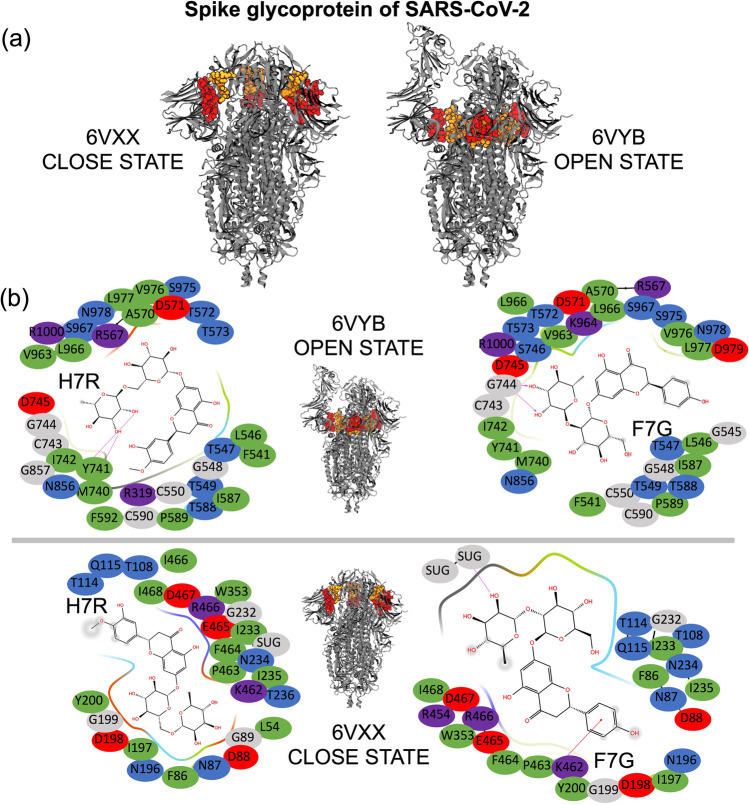
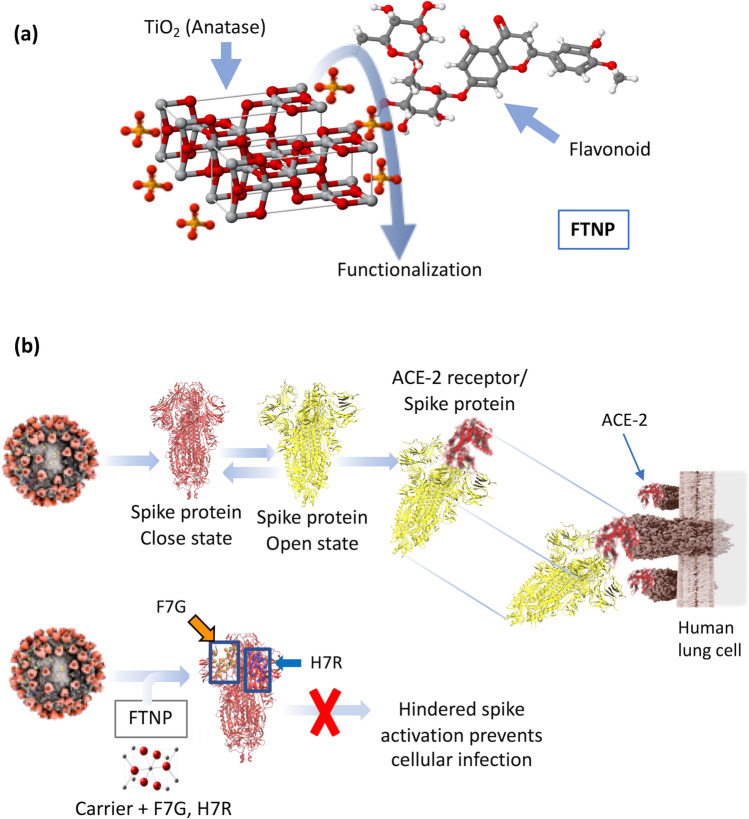
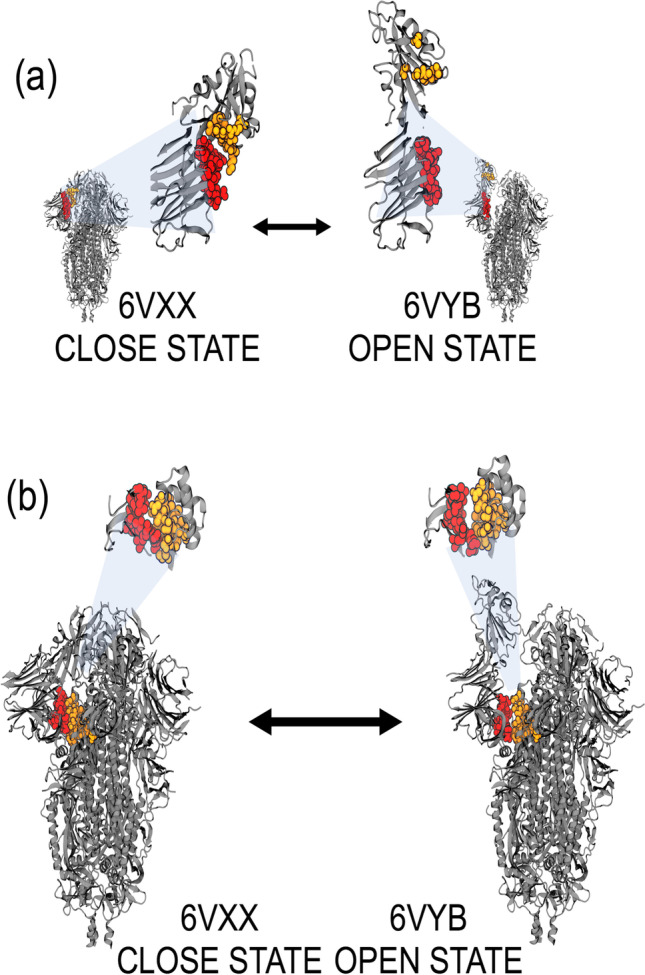
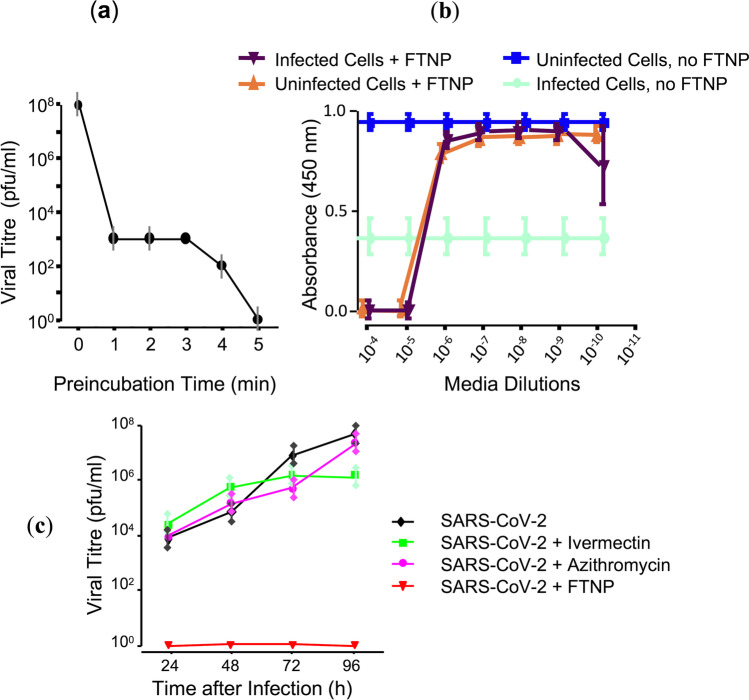
The coronavirus SARS-CoV-2 has caused a pandemic with > 550 millions of cases and > 6 millions of deaths worldwide. Medical management of COVID-19 relies on supportive care as no specific targeted therapies are available yet. Given its devastating effects on the economy and mental health, it is imperative to develop novel antivirals. An ideal candidate will be an agent that blocks the early events of viral attachment and cell entry, thereby preventing viral infection and spread. This work reports functionalized titanium dioxide (TiO)-based nanoparticles adsorbed with flavonoids that block SARS-CoV-2 entry and fusion. Using molecular docking analysis, two flavonoids were chosen for their specific binding to critical regions of the SARS-CoV-2 spike glycoprotein that interacts with the host cell angiotensin-converting enzyme-2 (ACE-2) receptor. These flavonoids were adsorbed onto TiO functionalized nanoparticles (FTNP). This new nanoparticulate compound was assayed in vitro against two different coronaviruses; HCoV 229E and SARS-CoV-2, in both cases a clear antiviral effect was observed. Furthermore, using a reporter-based cell culture model, a potent antiviral activity is demonstrated. The adsorption of flavonoids to functionalized TiO nanoparticles induces a ~ threefold increase of that activity. These studies also indicate that FTNP interferes with the SARS-CoV-2 spike, impairing the cell fusion mechanism. KEY POINTS/HIGHLIGHTS: • Unique TiO nanoparticles displaying flavonoid showed potent anti-SARS-CoV-2 activity. • The nanoparticles precisely targeting SARS-CoV-2 were quantitatively verified by cell infectivity in vitro. • Flavonoids on nanoparticles impair the interactions between the spike glycoprotein and ACE-2 receptor.
新型冠状病毒 SARS-CoV-2 引发的大流行已导致全球超过 5.5 亿例病例和超过 600 万人死亡。目前针对 COVID-19 的医学治疗主要依靠支持性护理,因为尚未有专门的靶向疗法。鉴于其对经济和精神健康造成的破坏性影响,开发新型抗病毒药物迫在眉睫。理想的候选药物将是一种能够阻断病毒附着和细胞进入早期事件的药物,从而防止病毒感染和传播。本研究报告了基于功能化二氧化钛(TiO)的纳米颗粒吸附黄酮类化合物,可阻断 SARS-CoV-2 的进入和融合。通过分子对接分析,选择了两种黄酮类化合物,因为它们能够特异性结合 SARS-CoV-2 刺突糖蛋白的关键区域,该区域与宿主细胞血管紧张素转换酶 2(ACE-2)受体相互作用。这些黄酮类化合物被吸附到 TiO 功能化纳米颗粒(FTNP)上。该新型纳米颗粒化合物在体外针对两种不同的冠状病毒(HCoV 229E 和 SARS-CoV-2)进行了检测,在这两种情况下均观察到明显的抗病毒作用。此外,通过基于报告基因的细胞培养模型,也证明了其具有很强的抗病毒活性。黄酮类化合物吸附到功能化 TiO 纳米颗粒上会使该活性增加约三倍。这些研究还表明,FTNP 会干扰 SARS-CoV-2 的刺突,从而损害细胞融合机制。关键点/亮点:
具有独特 TiO 纳米颗粒的显示出针对 SARS-CoV-2 的强大活性。
通过体外细胞感染性定量验证了针对 SARS-CoV-2 的精确靶向纳米颗粒。
纳米颗粒上的黄酮类化合物会损害刺突糖蛋白与 ACE-2 受体之间的相互作用。