Institute of Molecular Biology and Biotechnology, The University of Lahore, Lahore, Pakistan.
Department of Eastern Medicine, Government College University Faisalabad, Faisalabad, Pakistan.
Int J Immunopathol Pharmacol. 2021 Jan-Dec;35:20587384211002621. doi: 10.1177/20587384211002621.
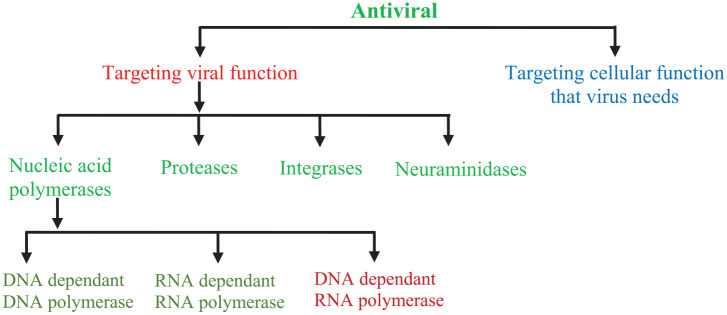
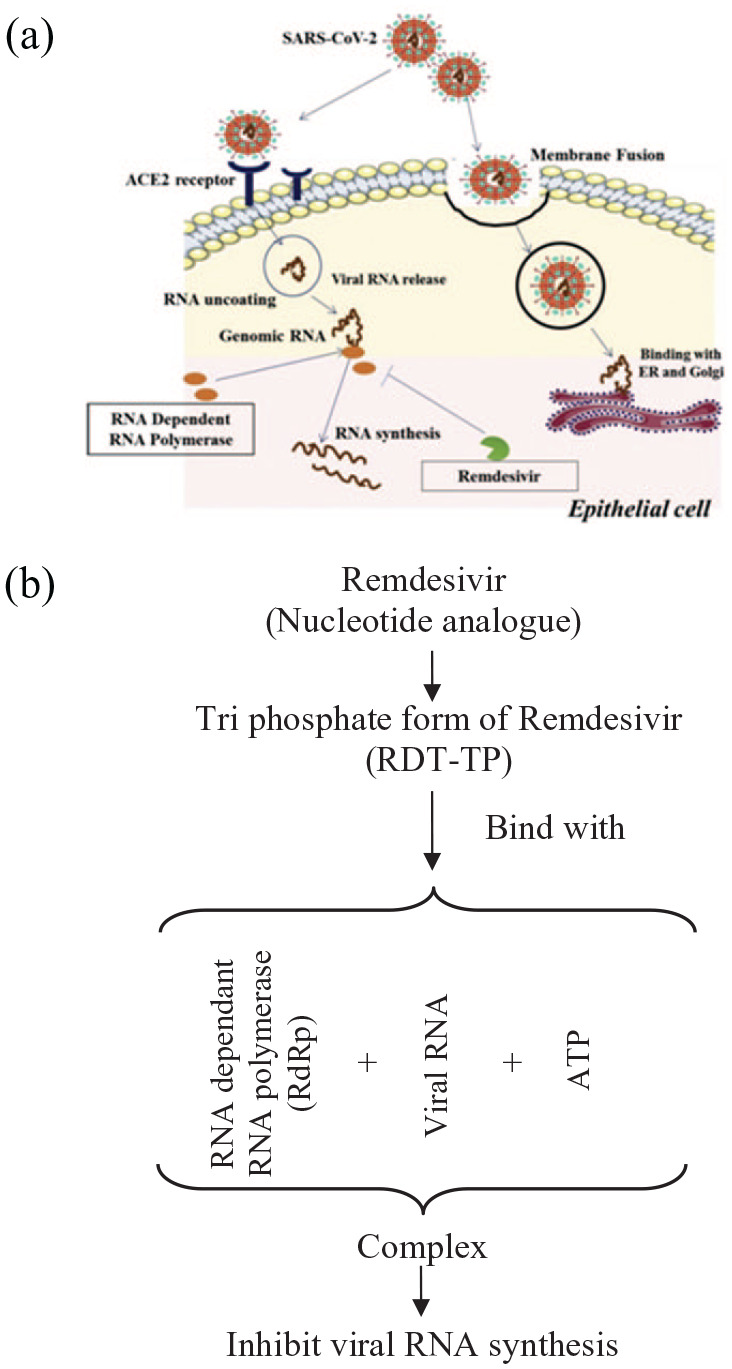
Antiviral drugs are a class of medicines particularly used for the treatment of viral infections. Drugs that combat viral infections are called antiviral drugs. Viruses are among the major pathogenic agents that cause number of serious diseases in humans, animals and plants. Viruses cause many diseases in humans, from self resolving diseases to acute fatal diseases. Developing strategies for the antiviral drugs are focused on two different approaches: Targeting the viruses themselves or the host cell factors. Antiviral drugs that directly target the viruses include the inhibitors of virus attachment, inhibitors of virus entry, uncoating inhibitors, polymerase inhibitors, protease inhibitors, inhibitors of nucleoside and nucleotide reverse transcriptase and the inhibitors of integrase. The inhibitors of protease (ritonavir, atazanavir and darunavir), viral DNA polymerase (acyclovir, tenofovir, valganciclovir and valacyclovir) and of integrase (raltegravir) are listed among the Top 200 Drugs by sales during 2010s. Still no effective antiviral drugs are available for many viral infections. Though, there are a couple of drugs for herpesviruses, many for influenza and some new antiviral drugs for treating hepatitis C infection and HIV. Action mechanism of antiviral drugs consists of its transformation to triphosphate following the viral DNA synthesis inhibition. An analysis of the action mechanism of known antiviral drugs concluded that they can increase the cell's resistance to a virus (interferons), suppress the virus adsorption in the cell or its diffusion into the cell and its deproteinisation process in the cell (amantadine) along with antimetabolites that causes the inhibition of nucleic acids synthesis. This review will address currently used antiviral drugs, mechanism of action and antiviral agents reported against COVID-19.
抗病毒药物是一类专门用于治疗病毒感染的药物。用于对抗病毒感染的药物被称为抗病毒药物。病毒是导致人类、动物和植物许多严重疾病的主要病原体之一。病毒会导致人类许多疾病,从自行缓解的疾病到急性致命疾病。开发抗病毒药物的策略集中在两种不同的方法上:针对病毒本身或宿主细胞因子。直接针对病毒的抗病毒药物包括病毒附着抑制剂、病毒进入抑制剂、脱壳抑制剂、聚合酶抑制剂、蛋白酶抑制剂、核苷和核苷酸逆转录酶抑制剂以及整合酶抑制剂。蛋白酶抑制剂(利托那韦、阿扎那韦和达芦那韦)、病毒 DNA 聚合酶抑制剂(阿昔洛韦、替诺福韦、缬更昔洛韦和伐昔洛韦)和整合酶抑制剂(拉替拉韦)均被列入 2010 年代销售额排名前 200 的药物之列。尽管有几种针对疱疹病毒的药物,有几种针对流感的药物,还有一些新的抗病毒药物用于治疗丙型肝炎感染和 HIV,但仍有许多病毒感染没有有效的抗病毒药物。抗病毒药物的作用机制包括其在抑制病毒 DNA 合成后转化为三磷酸。对已知抗病毒药物作用机制的分析得出结论,它们可以提高细胞对病毒的抵抗力(干扰素),抑制病毒在细胞中的吸附或扩散及其在细胞中的脱蛋白过程(金刚烷胺)以及抗代谢物,从而抑制核酸合成。本文将综述目前使用的抗病毒药物、作用机制以及针对 COVID-19 的抗病毒药物。