Dept. of Radiology and Nuclear Medicine, Erasmus MC, Erasmus University Medical Center, 3015 GD, Rotterdam, The Netherlands.
Dept. of Experimental Urology, Erasmus MC, Erasmus University Medical Center, Rotterdam, The Netherlands.
Eur J Nucl Med Mol Imaging. 2022 Nov;49(13):4440-4451. doi: 10.1007/s00259-022-05926-2. Epub 2022 Aug 11.
The radiolabeled gastrin-releasing peptide receptor (GRPR)-targeting antagonist NeoB is a promising radioligand for imaging and therapy of GRPR-expressing malignancies. In the current study, we aimed to discover the target organs of toxicity and the radiotoxic effects to these organs, when repeated dosages of [Lu]Lu-NeoB are administered to healthy female and male mice.
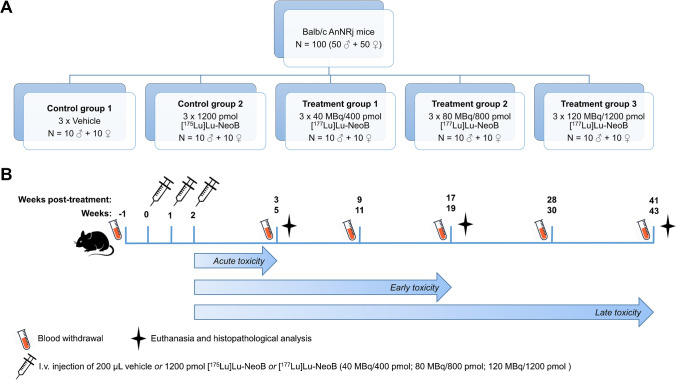
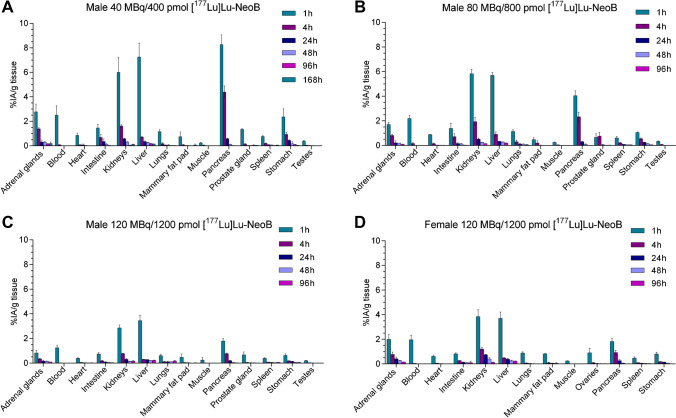
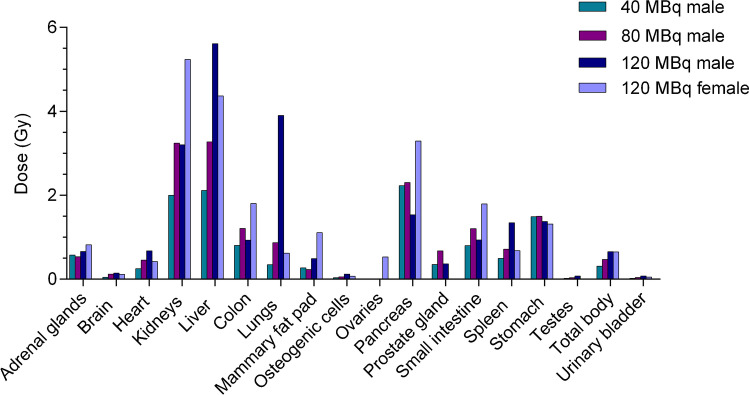
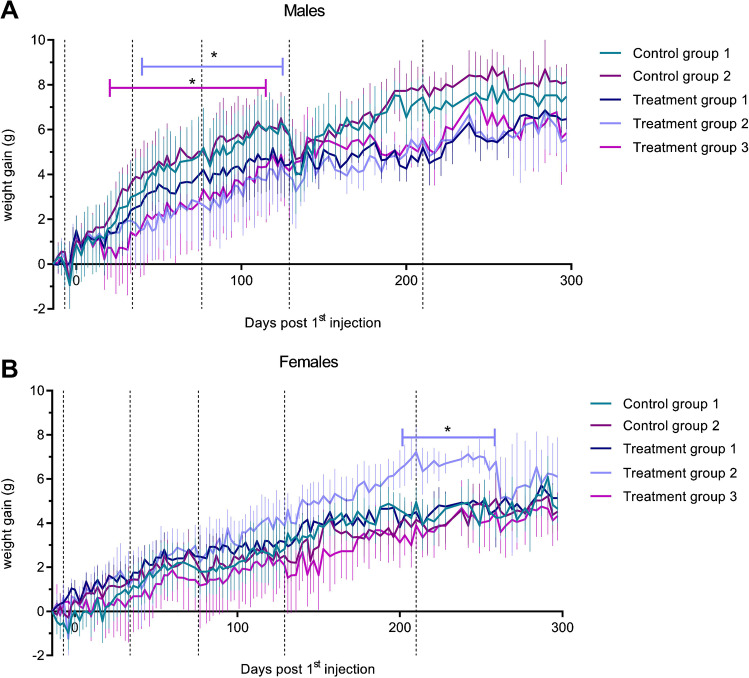
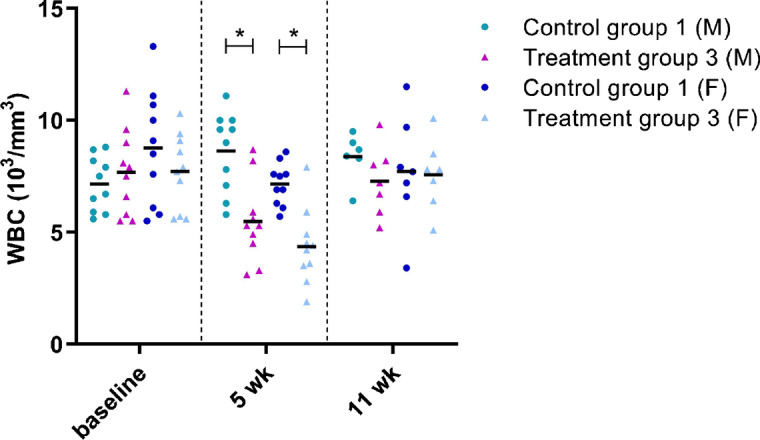
Animals received either 3 injections, with a 7-day interval, of vehicle (control group 1), 1200 pmol [Lu]Lu-NeoB (control group 2) or 40 MBq/400 pmol, 80 MBq/800 pmol, and 120 MBq/1200 pmol [Lu]Lu-NeoB (treatment groups 1, 2, and 3, respectively). At week 5, 19, and 43 after the first injection acute, early, and late organ toxicity, respectively, was determined. For this, histopathological and blood analyses were performed. To correlate the observed toxicity to absorbed dose, we also performed extensive biodistribution and dosimetry studies.
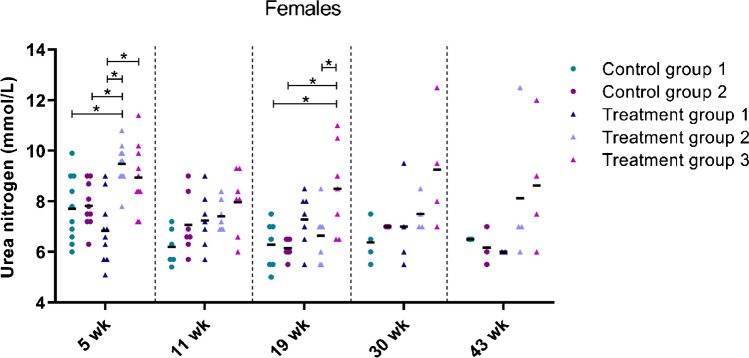
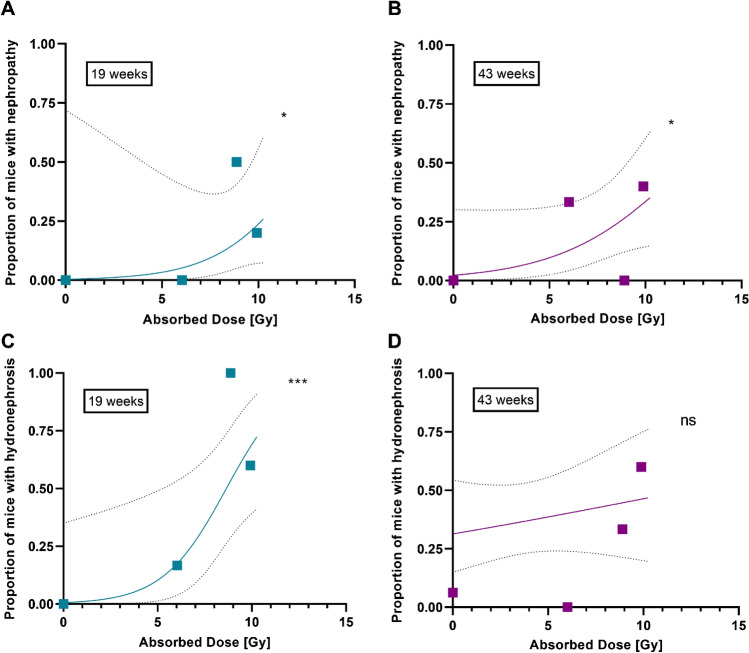
The biodistribution study showed the highest absorbed doses in GRPR-expressing pancreas, the liver, and the kidneys (the main organs of excretion). Both control groups and almost all animals of treatment group 1 did not show any treatment-related toxicological effects. Despite the high absorbed doses, no clear microscopic signs of toxicity were found in the pancreas and the liver. Histological analysis indicated kidney damage in the form of hydronephrosis and nephropathy in treatment groups 2 and 3 that were sacrificed at the early and late time point. In the same groups, increased blood urea nitrogen levels were found.
In general, repeated administration of [Lu]Lu-NeoB was tolerated. The most significant radiotoxic effects were found in the kidneys, similar to other clinically applied radioligands. The results of this study underline the potential of [Lu]Lu-NeoB as a promising option for clinical therapy.
放射性标记的胃泌素释放肽受体(GRPR)靶向拮抗剂 NeoB 是一种很有前途的用于成像和治疗 GRPR 表达的恶性肿瘤的放射性配体。在本研究中,我们旨在发现重复给予健康雌性和雄性小鼠[Lu]Lu-NeoB 时的毒性靶器官和对这些器官的放射性毒性作用。
动物接受了 3 次注射,间隔 7 天,分别给予载体(对照组 1)、1200 pmol [Lu]Lu-NeoB(对照组 2)或 40 MBq/400 pmol、80 MBq/800 pmol 和 120 MBq/1200 pmol [Lu]Lu-NeoB(治疗组 1、2 和 3)。在第一次注射后第 5、19 和 43 周,分别确定急性、早期和晚期器官毒性。为此,进行了组织病理学和血液分析。为了将观察到的毒性与吸收剂量相关联,我们还进行了广泛的生物分布和剂量学研究。
生物分布研究表明,在表达 GRPR 的胰腺、肝脏和肾脏(主要排泄器官)中吸收剂量最高。对照组和治疗组 1 的几乎所有动物都没有显示任何与治疗相关的毒性作用。尽管吸收剂量高,但在胰腺和肝脏中没有发现明显的显微镜下毒性迹象。组织学分析表明,在治疗组 2 和 3 中,在早期和晚期时间点处死的动物中,肾脏出现了肾盂积水和肾病的肾损伤。在相同的组中,发现了血尿素氮水平升高。
一般来说,重复给予[Lu]Lu-NeoB 是可以耐受的。最显著的放射性毒性作用发生在肾脏,与其他临床应用的放射性配体相似。本研究的结果强调了[Lu]Lu-NeoB 作为一种有前途的临床治疗选择的潜力。