Department of Physiology, Ajou University School of Medicine, 206 World Cup-ro, Suwon 16499, Korea.
Department of Molecular Science and Technology, Ajou University, 206 World Cup-ro, Suwon 16499, Korea.
Cells. 2022 Aug 3;11(15):2393. doi: 10.3390/cells11152393.
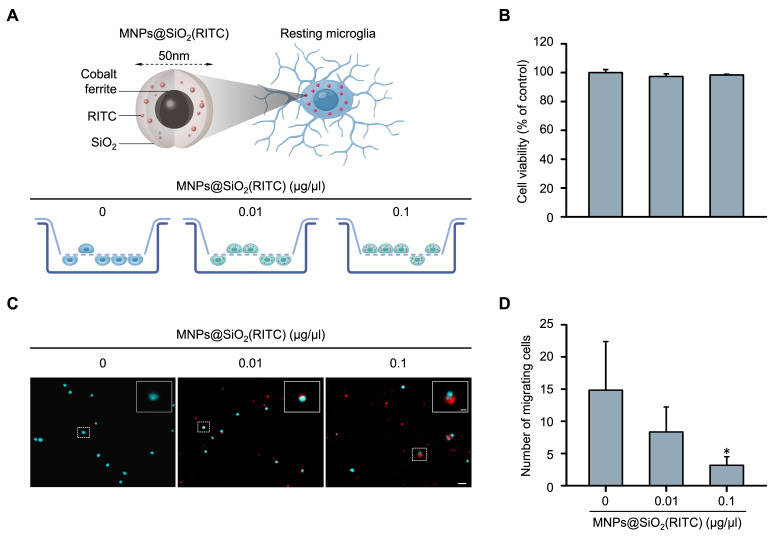
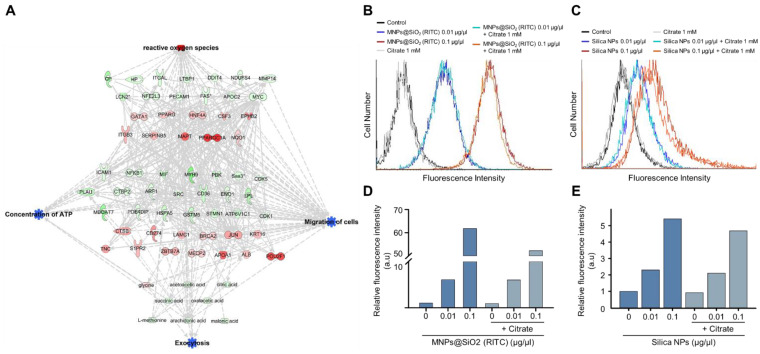
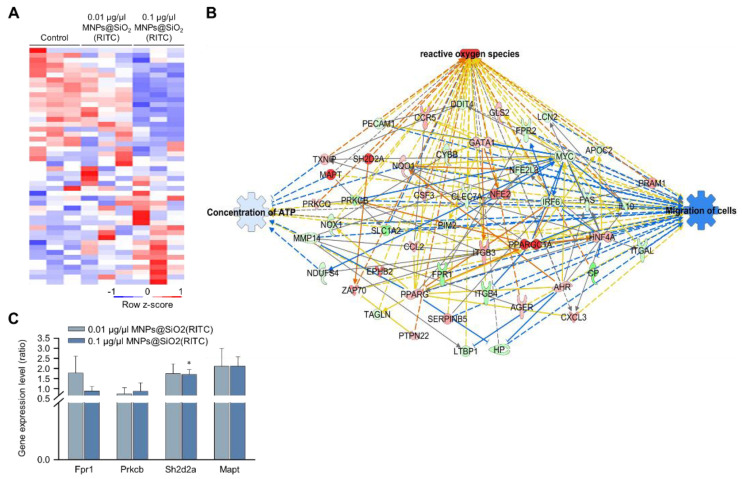
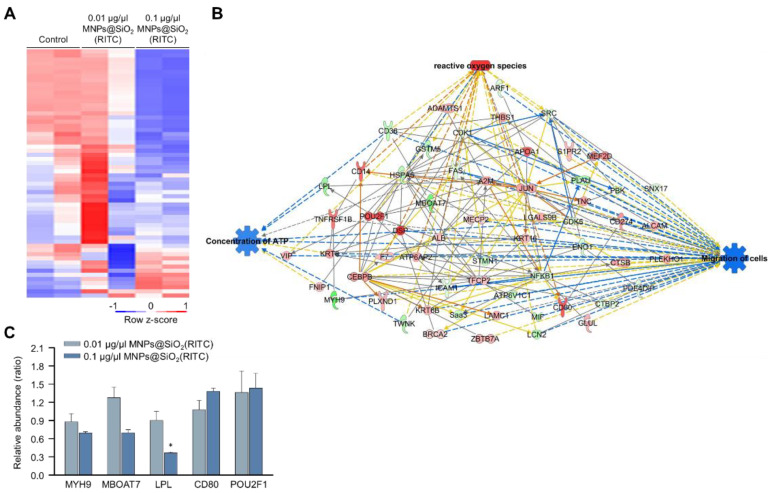
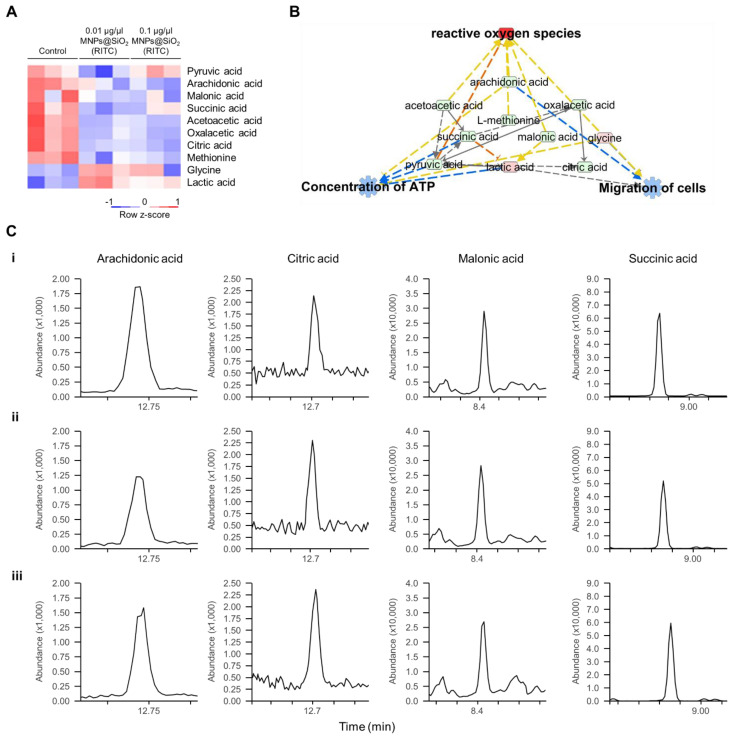
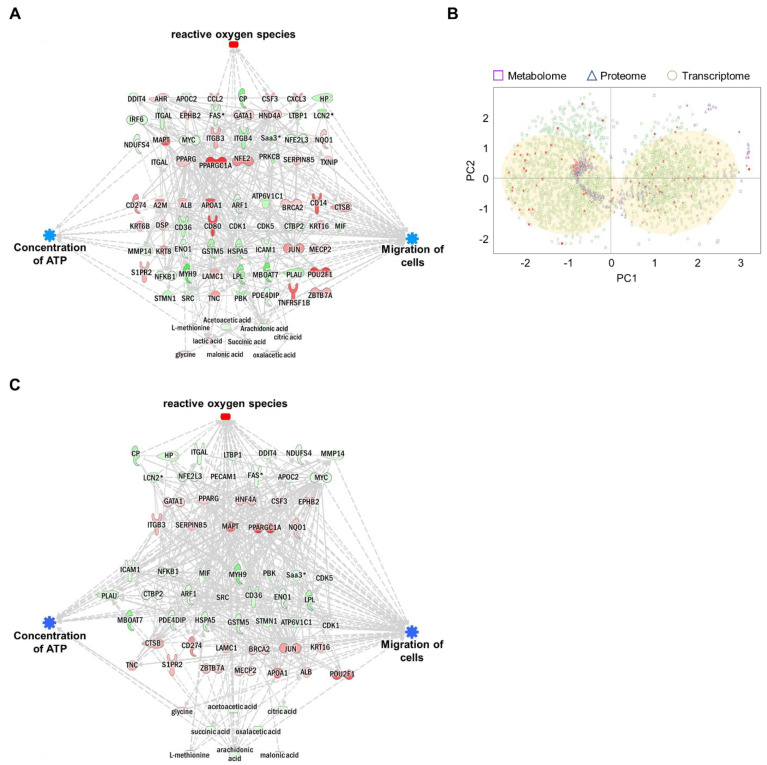
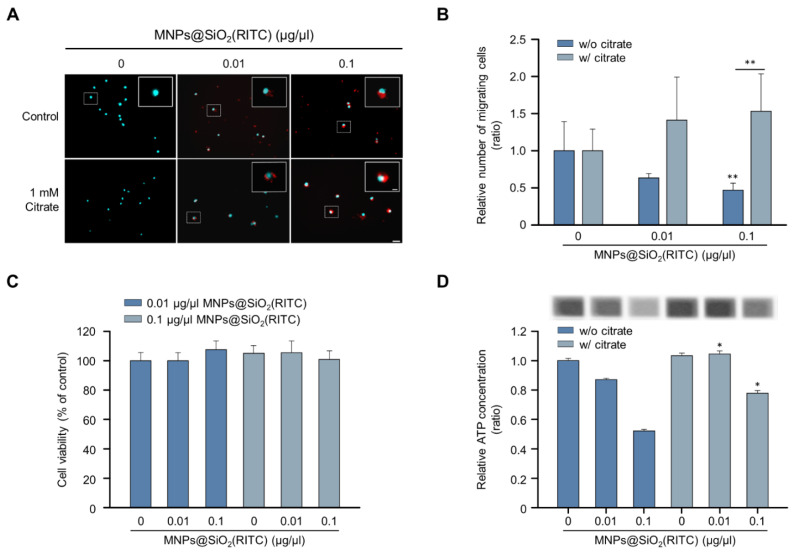
Nanoparticles have garnered significant interest in neurological research in recent years owing to their efficient penetration of the blood-brain barrier (BBB). However, significant concerns are associated with their harmful effects, including those related to the immune response mediated by microglia, the resident immune cells in the brain, which are exposed to nanoparticles. We analysed the cytotoxic effects of silica-coated magnetic nanoparticles containing rhodamine B isothiocyanate dye [MNPs@SiO(RITC)] in a BV2 microglial cell line using systems toxicological analysis. We performed the invasion assay and the exocytosis assay and transcriptomics, proteomics, metabolomics, and integrated triple-omics analysis, generating a single network using a machine learning algorithm. The results highlight alteration in the mechanisms of the nanotoxic effects of nanoparticles using integrated omics analysis.
近年来,由于纳米粒子能够有效地穿透血脑屏障(BBB),因此在神经科学研究中引起了广泛关注。然而,人们对它们的有害影响也存在很大的担忧,其中包括与小胶质细胞介导的免疫反应有关的影响,小胶质细胞是大脑中固有的免疫细胞,会接触到纳米粒子。我们使用系统毒理学分析方法分析了含有罗丹明 B 异硫氰酸酯染料的硅涂层磁性纳米粒子(MNPs@SiO(RITC))对 BV2 小胶质细胞系的细胞毒性作用。我们进行了侵袭实验和胞吐实验以及转录组学、蛋白质组学、代谢组学和整合的三重组学分析,并使用机器学习算法生成了一个单一的网络。结果突出了使用整合组学分析纳米毒性作用机制的改变。