Hersh Andrew M, Gaitsch Hallie, Alomari Safwan, Lubelski Daniel, Tyler Betty M
Department of Neurosurgery, Johns Hopkins University School of Medicine, Baltimore, MD 21287, USA.
NIH Oxford-Cambridge Scholars Program, Wellcome-MRC Cambridge Stem Cell Institute and Department of Clinical Neurosciences, University of Cambridge, Cambridge CB2 1TN, UK.
Cancers (Basel). 2022 Jul 31;14(15):3743. doi: 10.3390/cancers14153743.
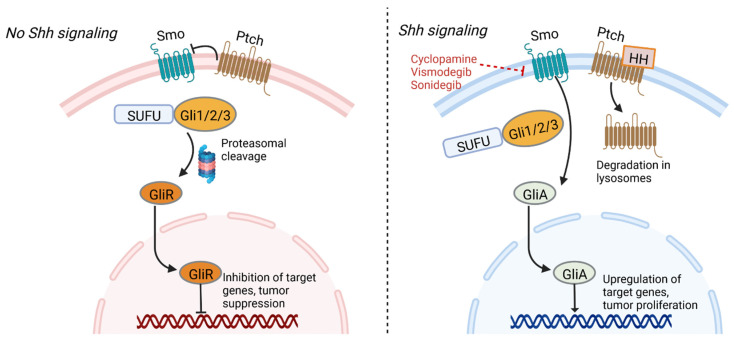
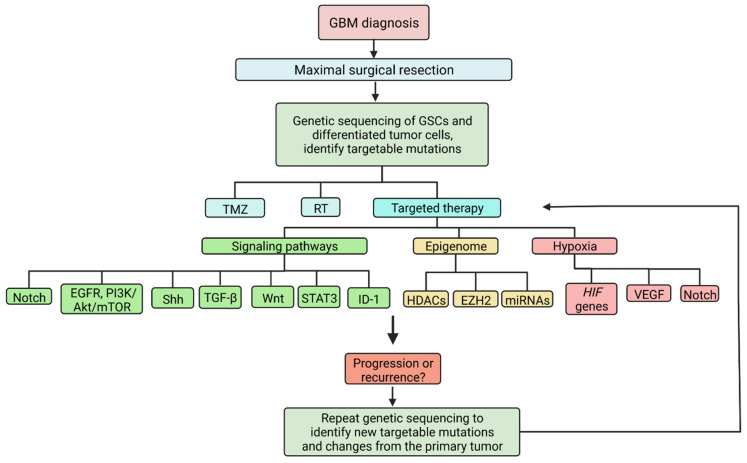
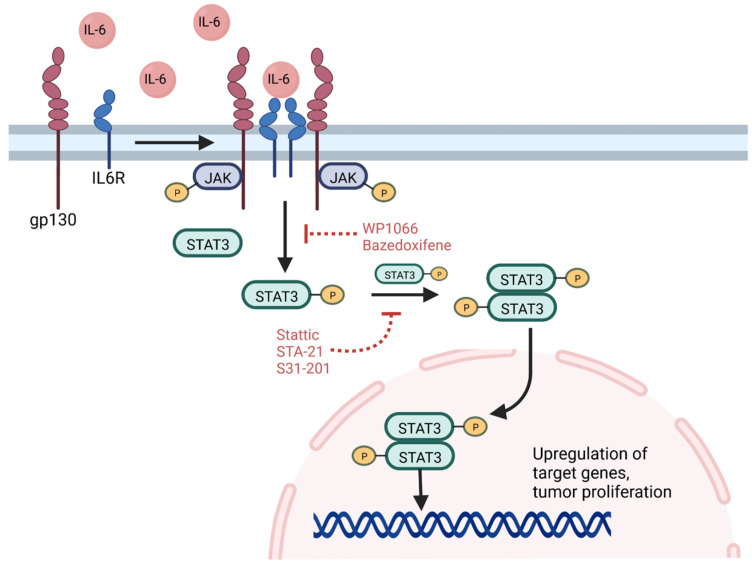
Glioblastoma (GBM) is an aggressive tumor of the central nervous system categorized by the World Health Organization as a Grade 4 astrocytoma. Despite treatment with surgical resection, adjuvant chemotherapy, and radiation therapy, outcomes remain poor, with a median survival of only 14-16 months. Although tumor regression is often observed initially after treatment, long-term recurrence or progression invariably occurs. Tumor growth, invasion, and recurrence is mediated by a unique population of glioblastoma stem cells (GSCs). Their high mutation rate and dysregulated transcriptional landscape augment their resistance to conventional chemotherapy and radiation therapy, explaining the poor outcomes observed in patients. Consequently, GSCs have emerged as targets of interest in new treatment paradigms. Here, we review the unique properties of GSCs, including their interactions with the hypoxic microenvironment that drives their proliferation. We discuss vital signaling pathways in GSCs that mediate stemness, self-renewal, proliferation, and invasion, including the Notch, epidermal growth factor receptor, phosphatidylinositol 3-kinase/Akt, sonic hedgehog, transforming growth factor beta, Wnt, signal transducer and activator of transcription 3, and inhibitors of differentiation pathways. We also review epigenomic changes in GSCs that influence their transcriptional state, including DNA methylation, histone methylation and acetylation, and miRNA expression. The constituent molecular components of the signaling pathways and epigenomic regulators represent potential sites for targeted therapy, and representative examples of inhibitory molecules and pharmaceuticals are discussed. Continued investigation into the molecular pathways of GSCs and candidate therapeutics is needed to discover new effective treatments for GBM and improve survival.
胶质母细胞瘤(GBM)是一种侵袭性中枢神经系统肿瘤,世界卫生组织将其归类为4级星形细胞瘤。尽管采用了手术切除、辅助化疗和放射治疗,但预后仍然很差,中位生存期仅为14 - 16个月。虽然治疗后最初常观察到肿瘤消退,但长期复发或进展总是会发生。肿瘤的生长、侵袭和复发是由胶质母细胞瘤干细胞(GSCs)这一独特群体介导的。它们的高突变率和失调的转录图谱增强了其对传统化疗和放射治疗的抗性,这解释了在患者中观察到的不良预后。因此,GSCs已成为新治疗模式中令人感兴趣的靶点。在这里,我们综述了GSCs的独特特性,包括它们与驱动其增殖的缺氧微环境的相互作用。我们讨论了GSCs中介导干性、自我更新、增殖和侵袭的重要信号通路,包括Notch、表皮生长因子受体、磷脂酰肌醇3 - 激酶/蛋白激酶B、音猬因子、转化生长因子β、Wnt、信号转导子和转录激活子3以及分化途径抑制剂。我们还综述了影响其转录状态的GSCs表观基因组变化,包括DNA甲基化、组蛋白甲基化和乙酰化以及miRNA表达。信号通路和表观基因组调节因子的组成分子成分代表了靶向治疗的潜在位点,并讨论了抑制分子和药物的代表性实例。需要继续研究GSCs的分子途径和候选治疗方法,以发现治疗GBM的新有效疗法并提高生存率。