EPSYLON Laboratory, Department of Psychology, University Paul Valéry Montpellier 3, F34000 Montpellier, France.
EMC Laboratory, Institute of Psychology, University of Lyon 2, F69500 Bron, France.
Int J Environ Res Public Health. 2022 Jul 28;19(15):9218. doi: 10.3390/ijerph19159218.
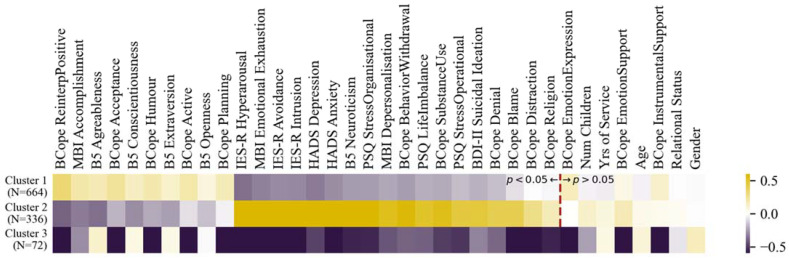
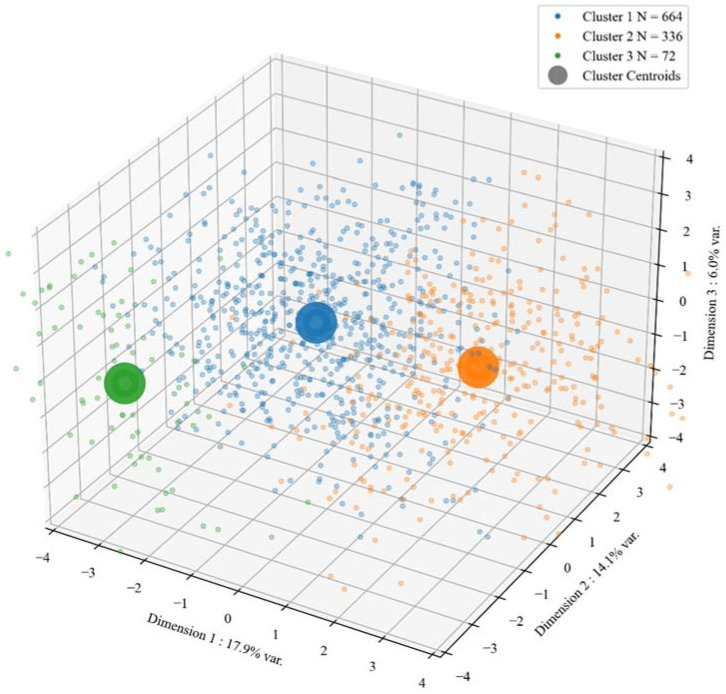
Police officers are frequently exposed to highly stressful situations at work and have an increased risk to develop symptoms of post-traumatic stress disorder (PTSD) and burnout (BO). It is currently not well understood which officers are most at risk to develop these disorders. The aim of this study was to determine which coping strategies and personality traits could act as protective or risk factors in relation to PTSD and BO. The second aim, in the interest of designating preventive and therapeutical measures, was to determine whether certain profiles of police officers could be identified as high risk for developing mental disorders. Herein, 1073 French-speaking police officers in Switzerland reported in an online survey about their PTSD and BO symptoms, anxiety, depression, suicide ideation, coping strategies, occupational stress, and personality factors. The cluster analysis highlighted three principal profiles of police officers: those who are not at risk of developing pathologies because they are not exposed or insensitive to these stressors, and those who are, among which personality and coping strategies oriented the risk of developing PTSD or BO. These same protective and risk factors were also corroborated in the linear and logistic regression analyses. These results may suggest that a crucial opportunity for mitigating mental health issues in the force could consist of screening recruits for risk-related personality traits and orienting them towards psychological training programs for the development of functional coping strategies.
警察在工作中经常面临高度紧张的情况,因此患创伤后应激障碍(PTSD)和倦怠(BO)的风险增加。目前,人们对哪些警察最容易患上这些疾病还不太了解。本研究旨在确定哪些应对策略和人格特质可以作为 PTSD 和 BO 的保护或风险因素。出于指定预防和治疗措施的目的,第二个目的是确定是否可以确定某些警察群体作为发生精神障碍的高风险群体。在此,瑞士的 1073 名讲法语的警察在一项在线调查中报告了他们的 PTSD 和 BO 症状、焦虑、抑郁、自杀意念、应对策略、职业压力和人格因素。聚类分析突出了警察的三个主要特征:那些由于不受这些压力源影响或不敏感而不会患上疾病的警察,以及那些属于其中的警察,其中人格和应对策略决定了患 PTSD 或 BO 的风险。在线性和逻辑回归分析中也证实了这些相同的保护和风险因素。这些结果可能表明,减轻警察部队心理健康问题的一个关键机会是对新兵进行风险相关人格特质的筛查,并引导他们参加心理培训计划,以发展应对压力的有效策略。