
《食品废物的厌氧消化及其微生物群落:历史回顾与未来展望》。
Anaerobic Digestion of Food Waste and Its Microbial Consortia: A Historical Review and Future Perspectives.
机构信息
School of Resources and Environmental Engineering, Anhui University, Hefei 230039, China.
College of Environment and Energy Engineering, Anhui Jianzhu University, Hefei 230601, China.
出版信息
Int J Environ Res Public Health. 2022 Aug 3;19(15):9519. doi: 10.3390/ijerph19159519.
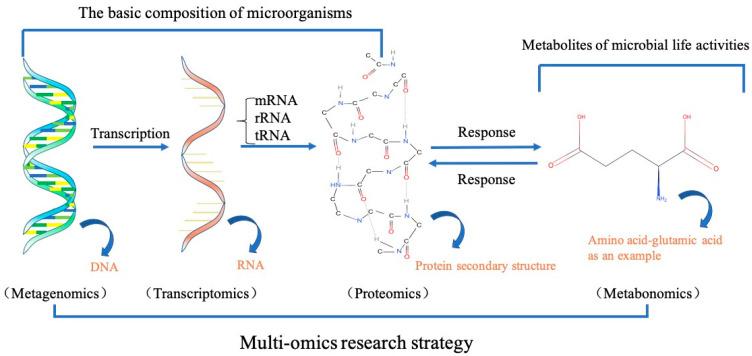
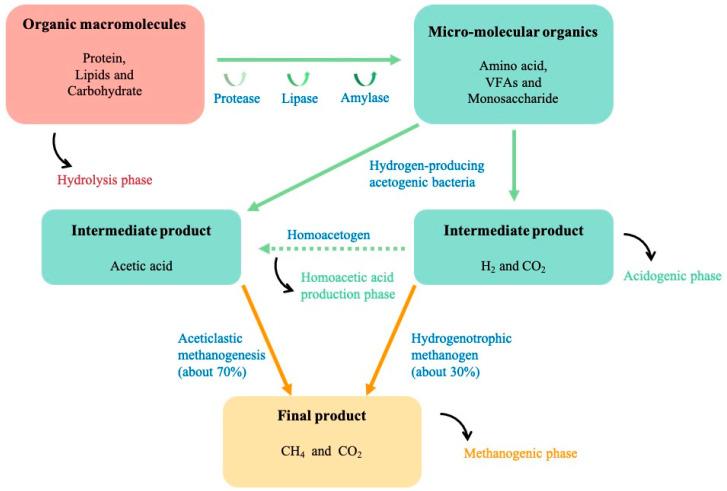
Renewable energy source, such as food waste (FW), has drawn great attention globally due to the energy crisis and the environmental problem. Anaerobic digestion (AD) mediated by novel microbial consortia is widely used to convert FW to clean energy. Despite of the considerable progress on food waste and FWAD optimization condition in recent years, a comprehensive and predictive understanding of FWAD microbial consortia is absent and therefore represents a major research challenge in FWAD. The review begins with a global view on the FWAD status and is followed by an overview of the role of AD key conditions' association with microbial community variation during the three main energy substances (hydrogen, organic acids, and methane) production by FWAD. The following topic is the historical understanding of the FWAD microorganism through the development of molecular biotechnology, from classic strain isolation to low-throughput sequencing technologies, to high-throughput sequencing technologies, and to the combination of high-throughput sequencing and isotope tracing. Finally, the integration of multi-omics for better understanding of the microbial community activity and the synthetic biology for the manipulation of the functioning microbial consortia during the FWAD process are proposed. Understanding microbial consortia in FWAD helps us to better manage the global renewable energy source.
可再生能源,如食物垃圾 (FW),由于能源危机和环境问题,在全球范围内引起了极大的关注。新型微生物群落介导的厌氧消化 (AD) 被广泛用于将 FW 转化为清洁能源。尽管近年来在 FW 和 FWAD 优化条件方面取得了相当大的进展,但对 FWAD 微生物群落的全面和预测性理解仍然缺乏,因此这是 FWAD 的一个主要研究挑战。本综述首先从全球角度介绍 FWAD 的现状,然后概述 AD 关键条件与 FWAD 过程中三种主要能量物质(氢气、有机酸和甲烷)产生时微生物群落变化的关系。接下来的主题是通过分子生物技术的发展,从经典菌株分离到低通量测序技术,再到高通量测序技术,以及高通量测序和同位素示踪技术的结合,对 FWAD 微生物的历史认识。最后,提出了多组学的整合,以更好地了解微生物群落的活性,以及合成生物学在 FWAD 过程中对功能微生物群落的操纵。了解 FWAD 中的微生物群落有助于我们更好地管理全球可再生能源。

 Zotero 插件