Fundamentos del Análisis Económico (FAE), University of Alicante, 03690 Alicante, Spain.
Applied Economics Department, University of Murcia, 30100 Murcia, Spain.
Int J Environ Res Public Health. 2022 Aug 3;19(15):9557. doi: 10.3390/ijerph19159557.
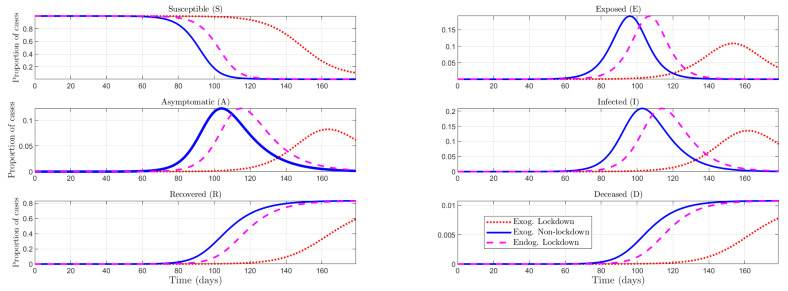
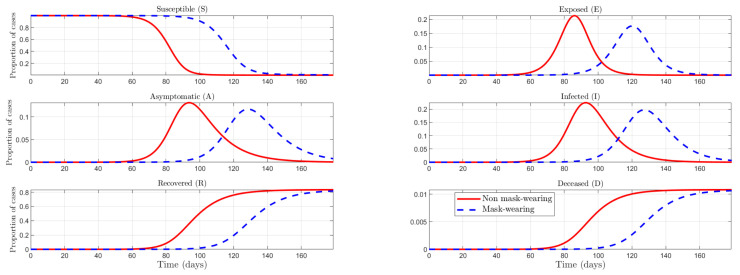
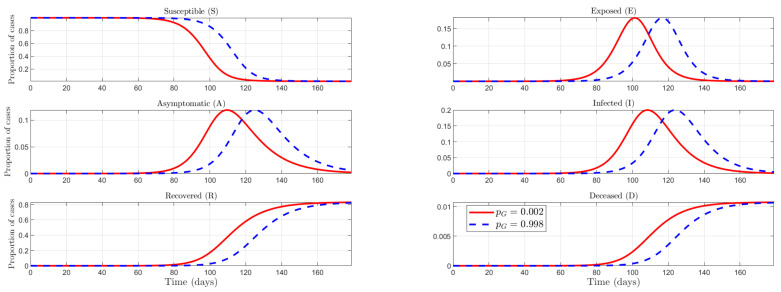
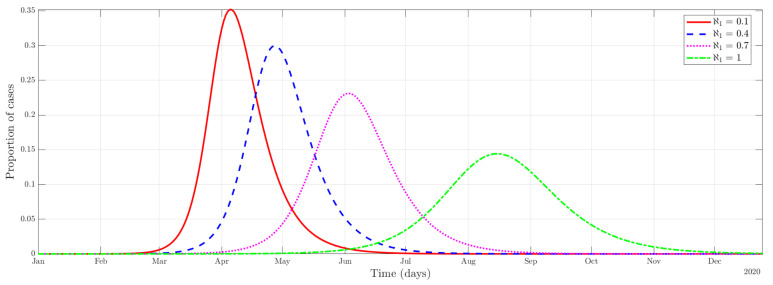
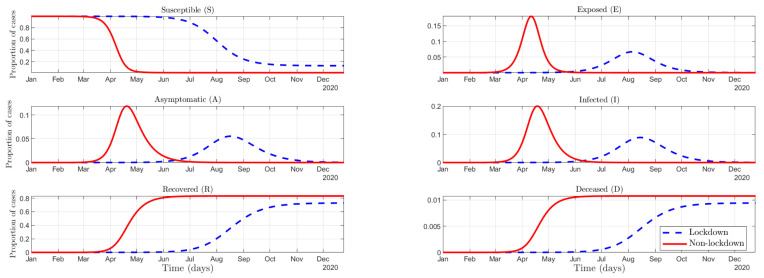
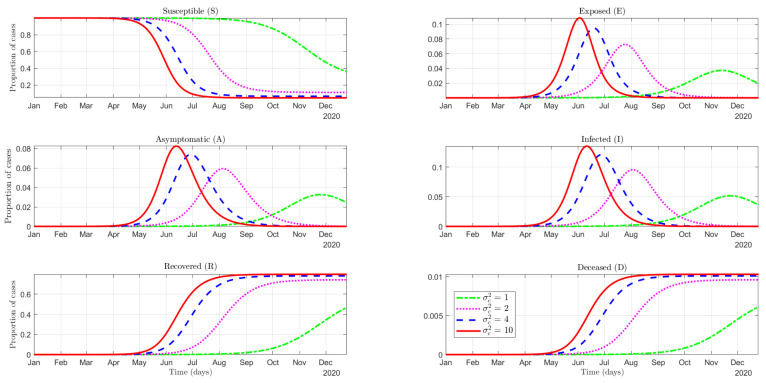
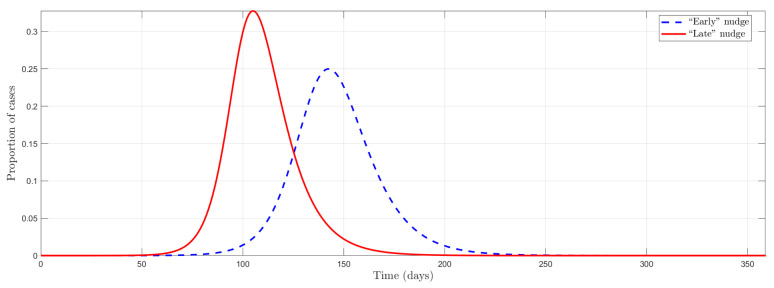
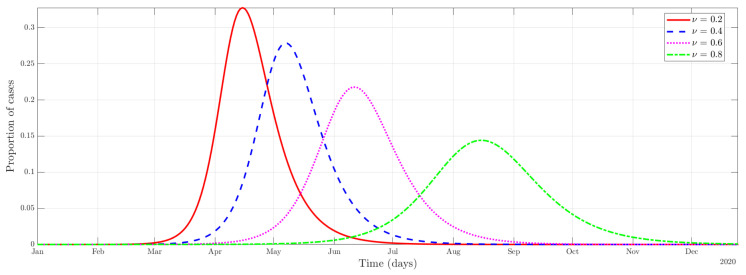
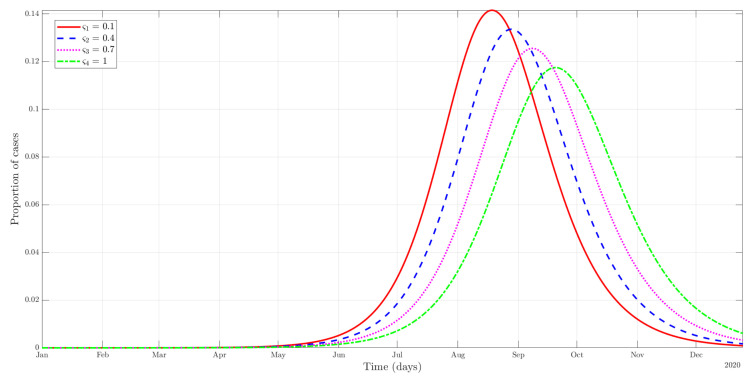
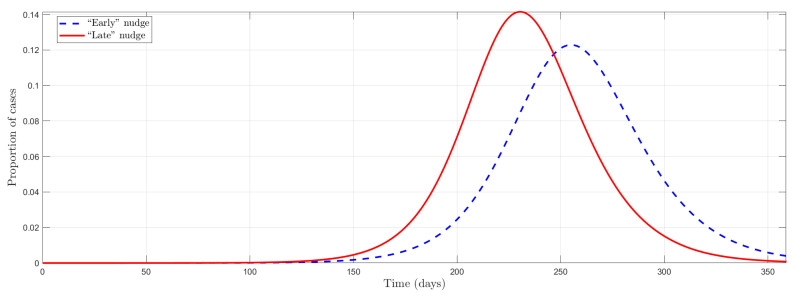
We provide a game-theoretical epidemiological model for the COVID-19 pandemic that takes into account that: (1) asymptomatic individuals can be contagious, (2) contagion is behavior-dependent, (3) behavior is determined by a game that depends on beliefs and social interactions, (4) there can be systematic biases in the perceptions and beliefs about the pandemic. We incorporate lockdown decisions by the government into the model. The citizens' and government's beliefs can exhibit several biases that we discuss from the point of view of behavioral economics. We provide simulations to understand the effect of lockdown decisions and the possibility of "nudging" citizens in the right direction by improving the accuracy of their beliefs.
我们提供了一个考虑到以下因素的 COVID-19 大流行的博弈论流行病学模型:(1) 无症状个体可能具有传染性;(2) 传染与行为有关;(3) 行为由取决于信念和社会互动的博弈决定;(4) 对大流行的看法和信念可能存在系统偏差。我们将政府的封锁决策纳入模型中。公民和政府的信念可能表现出我们从行为经济学角度讨论的几种偏差。我们提供模拟结果,以了解封锁决策的效果,以及通过提高公民信念的准确性来“推动”他们走向正确方向的可能性。