Department of Urology, IRCCS Policlinic Hospital San Martino, 16132 Genoa, Italy.
Dipartimento di Scienze Chirurgiche e Diagnostiche Integrate (DISC), University of Genoa, 16132 Genoa, Italy.
Int J Environ Res Public Health. 2022 Aug 5;19(15):9648. doi: 10.3390/ijerph19159648.
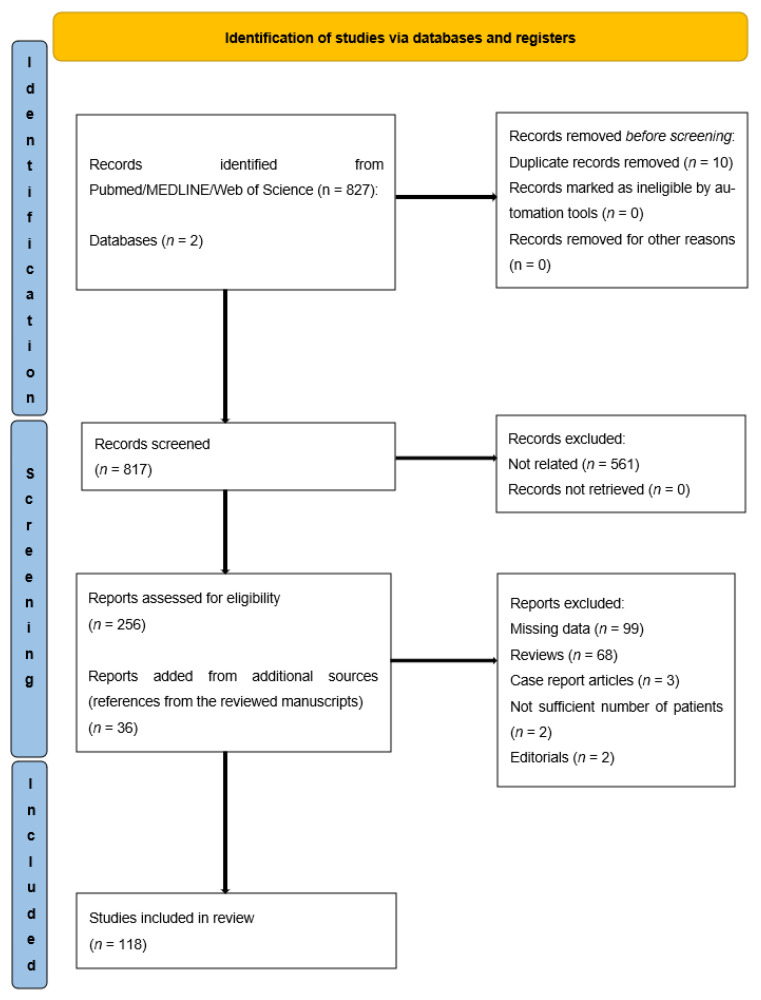
The aim of this review is to analyze and describe the current landscape of bladder cancer diagnostic and surveillance biomarkers. We researched the literature from 2016 to November 2021 to find the most promising new molecules and divided them into seven different subgroups based on their function and location in the cell. Although cystoscopy and cytology are still the gold standard for diagnosis and surveillance when it comes to bladder cancer (BCa), their cost is quite a burden for national health systems worldwide. Currently, the research is focused on finding a biomarker that has high negative predictive value (NPV) and can exclude with a certainty the presence of the tumor, considering missing it could be disastrous for the patient. Every subgroup has its own advantages and disadvantages; for example, protein biomarkers cost less than genomic ones, but on the other hand, they seem to be less precise. We tried to simplify this complicated topic as much as possible in order to make it comprehensible to doctors and urologists that are not as familiar with it, as well as encourage them to actively participate in ongoing research.
本文旨在分析和描述当前膀胱癌诊断和监测生物标志物的现状。我们检索了 2016 年至 2021 年 11 月的文献,以找到最有前途的新分子,并根据其在细胞中的功能和位置将其分为七个不同的亚组。虽然膀胱镜检查和细胞学检查仍然是膀胱癌 (BCa) 诊断和监测的金标准,但它们的成本对全球各国的卫生系统来说是相当大的负担。目前,研究的重点是寻找一种具有高阴性预测值 (NPV) 的生物标志物,能够确定地排除肿瘤的存在,因为漏诊对患者来说可能是灾难性的。每个亚组都有其自身的优点和缺点;例如,蛋白质生物标志物的成本低于基因组生物标志物,但另一方面,它们似乎不太精确。我们试图尽可能简化这个复杂的主题,以便让不太熟悉这个主题的医生和泌尿科医生能够理解,并鼓励他们积极参与正在进行的研究。