Division of Hepatology and Gastroenterology, Department of Internal Medicine, Shin Kong Wu Ho-Su Memorial Hospital, Taipei 11101, Taiwan.
Graduate Institute of Business Administration, Fu Jen Catholic University, New Taipei City 24205, Taiwan.
Int J Environ Res Public Health. 2022 Aug 8;19(15):9756. doi: 10.3390/ijerph19159756.
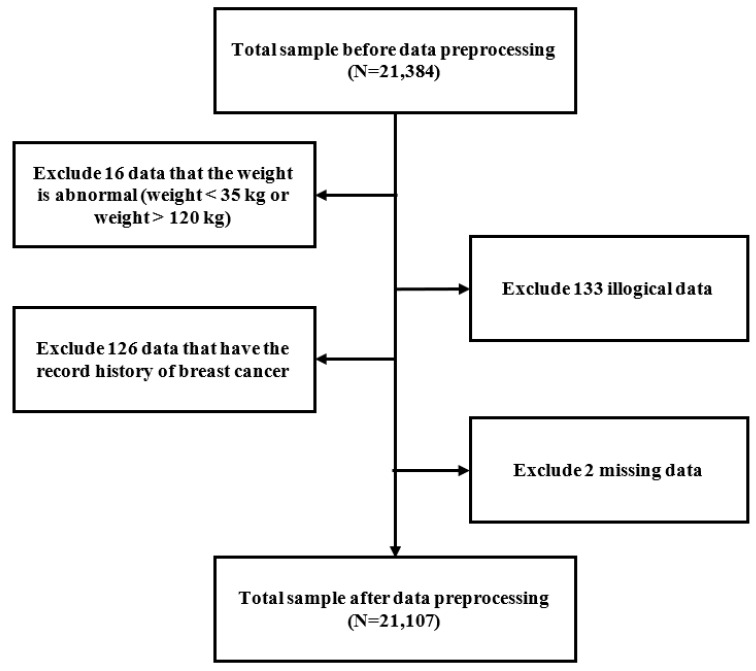
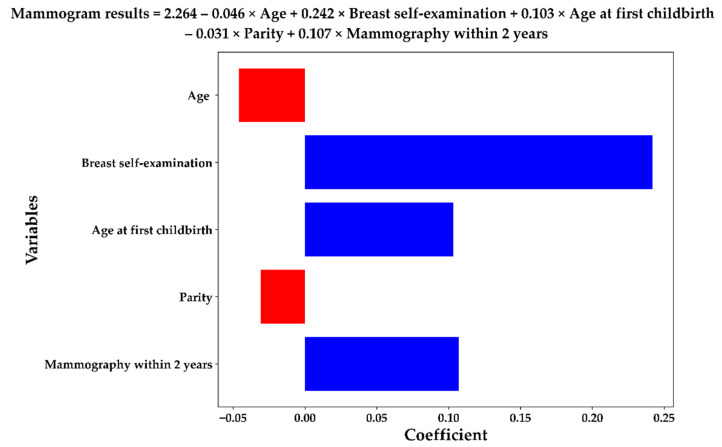
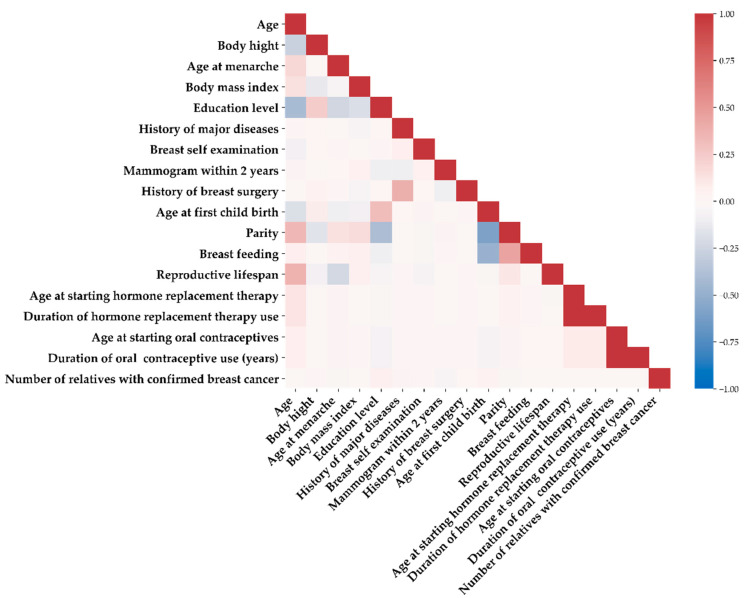
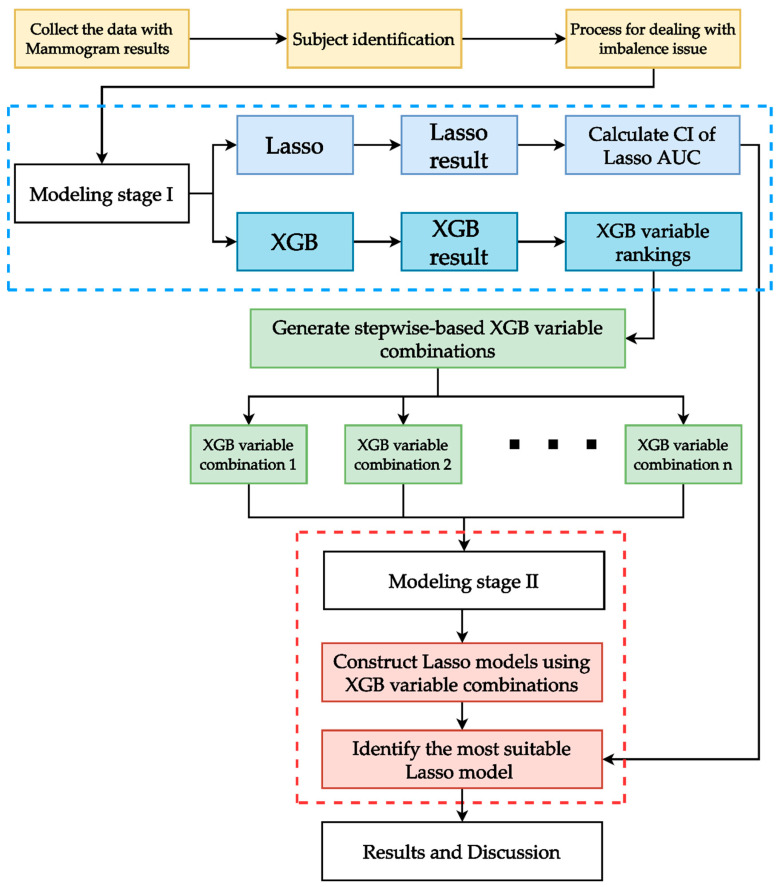
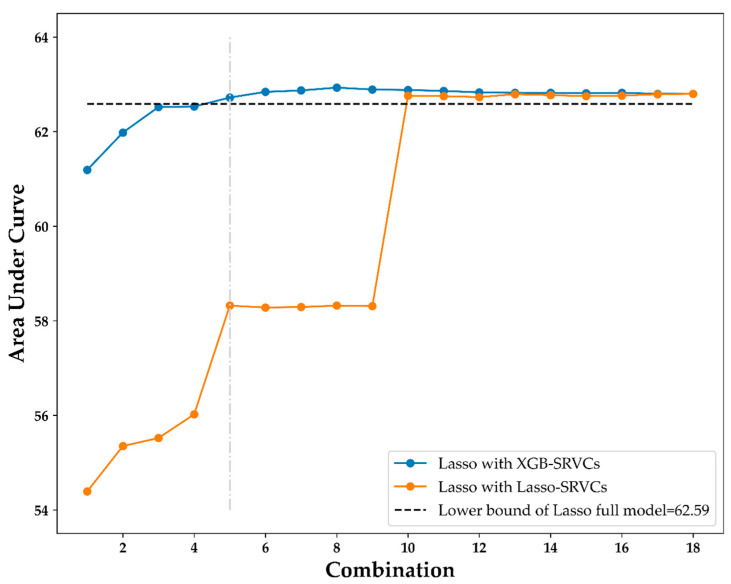
This study aimed to investigate the important predictors related to predicting positive mammographic findings based on questionnaire-based demographic and obstetric/gynecological parameters using the proposed integrated machine learning (ML) scheme. The scheme combines the benefits of two well-known ML algorithms, namely, least absolute shrinkage and selection operator (Lasso) logistic regression and extreme gradient boosting (XGB), to provide adequate prediction for mammographic anomalies in high-risk individuals and the identification of significant risk factors. We collected questionnaire data on 18 breast-cancer-related risk factors from women who participated in a national mammographic screening program between January 2017 and December 2020 at a single tertiary referral hospital to correlate with their mammographic findings. The acquired data were retrospectively analyzed using the proposed integrated ML scheme. Based on the data from 21,107 valid questionnaires, the results showed that the Lasso logistic regression models with variable combinations generated by XGB could provide more effective prediction results. The top five significant predictors for positive mammography results were younger age, breast self-examination, older age at first childbirth, nulliparity, and history of mammography within 2 years, suggesting a need for timely mammographic screening for women with these risk factors.
本研究旨在探讨基于问卷调查的人口统计学和妇产科参数,利用提出的集成机器学习(ML)方案,预测阳性乳房 X 光检查结果的重要预测因素。该方案结合了两种知名 ML 算法的优势,即最小绝对收缩和选择算子(Lasso)逻辑回归和极端梯度提升(XGB),为高危人群的乳房 X 光异常提供充分预测,并确定显著的风险因素。我们从 2017 年 1 月至 2020 年 12 月在一家三级转诊医院参加全国乳房 X 光筛查计划的女性中收集了 18 个与乳腺癌相关的风险因素的问卷调查数据,并与她们的乳房 X 光检查结果相关联。使用提出的集成 ML 方案对所获得的数据进行回顾性分析。基于 21107 份有效问卷的数据,结果表明,XGB 生成的具有变量组合的 Lasso 逻辑回归模型可以提供更有效的预测结果。阳性乳房 X 光检查结果的五个最重要的预测因素是年龄较小、乳房自我检查、首次分娩年龄较大、未婚和 2 年内有乳房 X 光检查史,这表明这些有风险因素的女性需要及时进行乳房 X 光筛查。