Department of Dermatology, Faculty of Medicine, Jichi Medical University, Shimotsuke 329-0498, Tochigi, Japan.
Int J Mol Sci. 2022 Aug 1;23(15):8530. doi: 10.3390/ijms23158530.
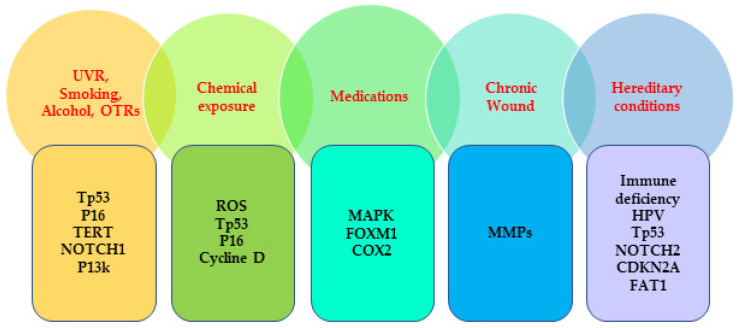
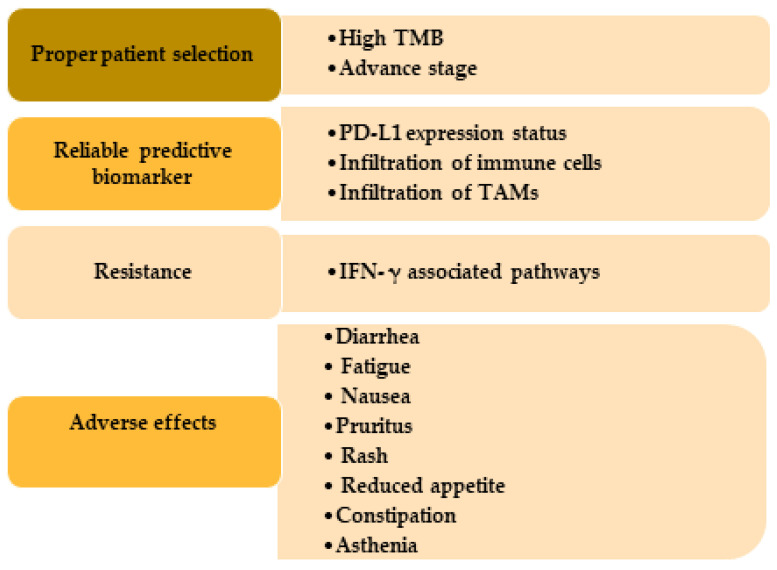
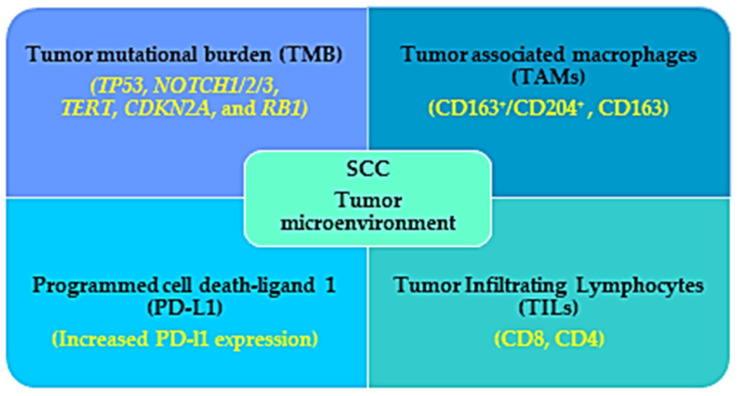
Melanoma and nonmelanoma skin cancers (NMSCs) are recognized as among the most common neoplasms, mostly in white people, with an increasing incidence rate. Among the NMSCs, squamous cell carcinoma (SCC) is the most prevalent malignancy known to affect people with a fair complexion who are exposed to extreme ultraviolet radiation (UVR), have a hereditary predisposition, or are immunosuppressed. There are several extrinsic and intrinsic determinants that contribute to the pathophysiology of the SCC. The therapeutic modalities depend on the SCC stages, from actinic keratosis to late-stage multiple metastases. Standard treatments include surgical excision, radiotherapy, and chemotherapy. As SCC represents a favorable tumor microenvironment with high tumor mutational burden, infiltration of immune cells, and expression of immune checkpoints, the SCC tumors are highly responsive to immunotherapies. Until now, there are three checkpoint inhibitors, cemiplimab, pembrolizumab, and nivolumab, that are approved for the treatment of advanced, recurrent, or metastatic SCC patients in the United States. Immunotherapy possesses significant therapeutic benefits for patients with metastatic or locally advanced tumors not eligible for surgery or radiotherapy to avoid the potential toxicity caused by the chemotherapies. Despite the high tolerability and efficiency, the existence of some challenges has been revealed such as, resistance to immunotherapy, less availability of the biomarkers, and difficulty in appropriate patient selection. This review aims to accumulate evidence regarding the genetic alterations related to SCC, the factors that contribute to the potential benefits of immunotherapy, and the challenges to follow this treatment regime.
黑色素瘤和非黑色素瘤皮肤癌(NMSC)被认为是最常见的肿瘤之一,主要发生在白人中,发病率呈上升趋势。在 NMSC 中,鳞状细胞癌(SCC)是最常见的恶性肿瘤,已知会影响暴露于极端紫外线辐射(UVR)、有遗传易感性或免疫抑制的浅色皮肤人群。有几个外在和内在的决定因素导致 SCC 的病理生理学发生变化。治疗方式取决于 SCC 的阶段,从光化性角化病到晚期多发性转移。标准治疗包括手术切除、放疗和化疗。由于 SCC 代表了一个具有高肿瘤突变负担、免疫细胞浸润和免疫检查点表达的有利肿瘤微环境,因此 SCC 肿瘤对免疫疗法高度敏感。到目前为止,有三种检查点抑制剂,西米普利单抗、帕博利珠单抗和纳武利尤单抗,已被批准用于治疗美国晚期、复发性或转移性 SCC 患者。免疫疗法为不符合手术或放疗条件的转移性或局部晚期肿瘤患者提供了显著的治疗益处,以避免化疗可能带来的毒性。尽管具有高耐受性和效率,但已经发现了一些挑战,例如对免疫疗法的耐药性、生物标志物的可用性较低以及适当患者选择的困难。本综述旨在收集有关 SCC 相关遗传改变、促进免疫疗法潜在益处的因素以及遵循这种治疗方案的挑战的证据。