College of Advanced Agriculture Sciences, Zhejiang A&F University, Hangzhou 311300, China.
Int J Mol Sci. 2022 Aug 2;23(15):8584. doi: 10.3390/ijms23158584.
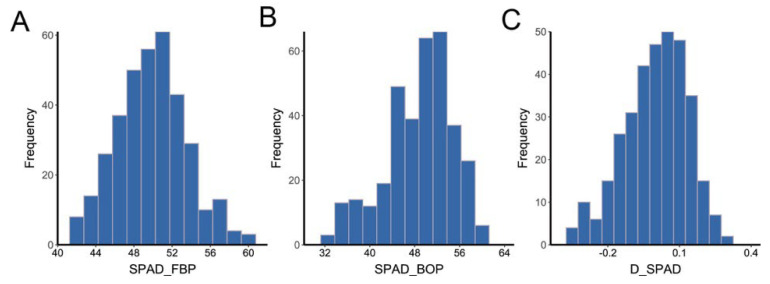
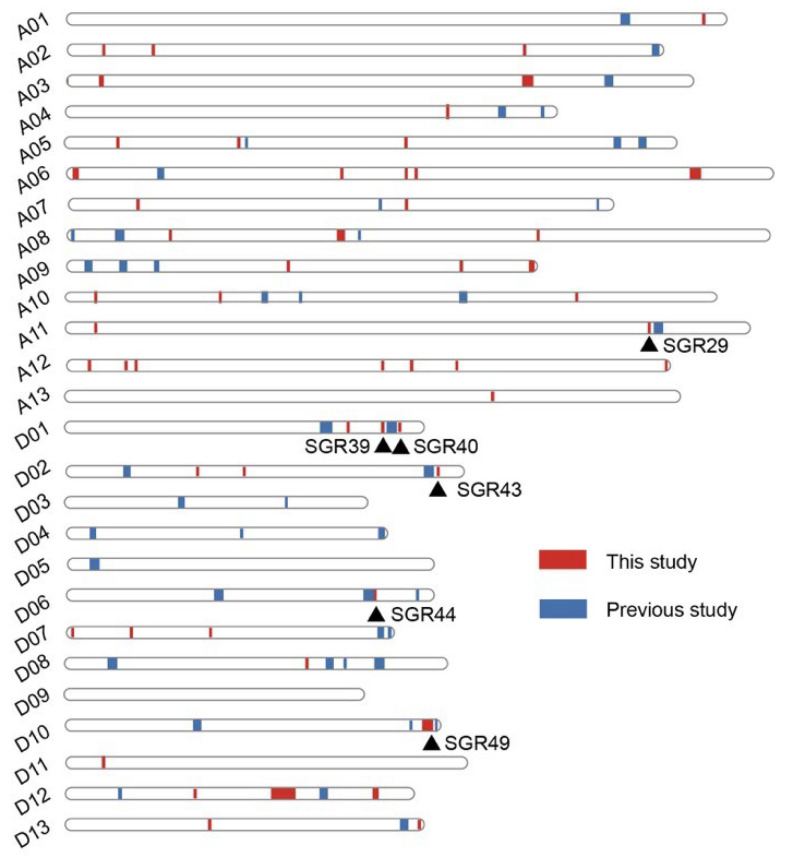
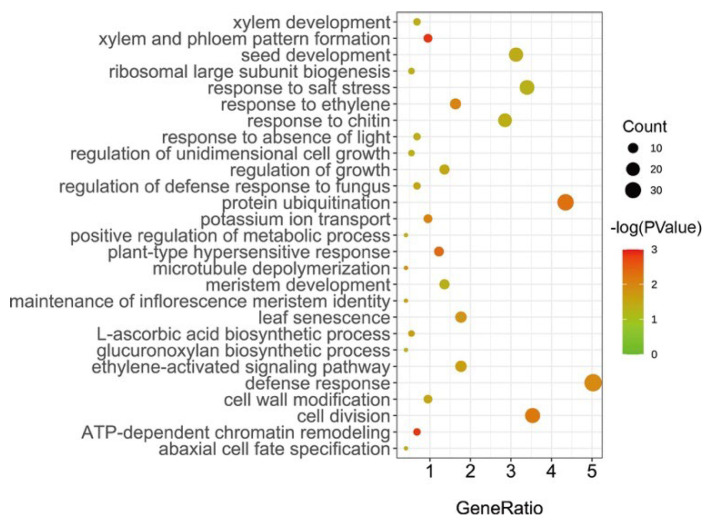
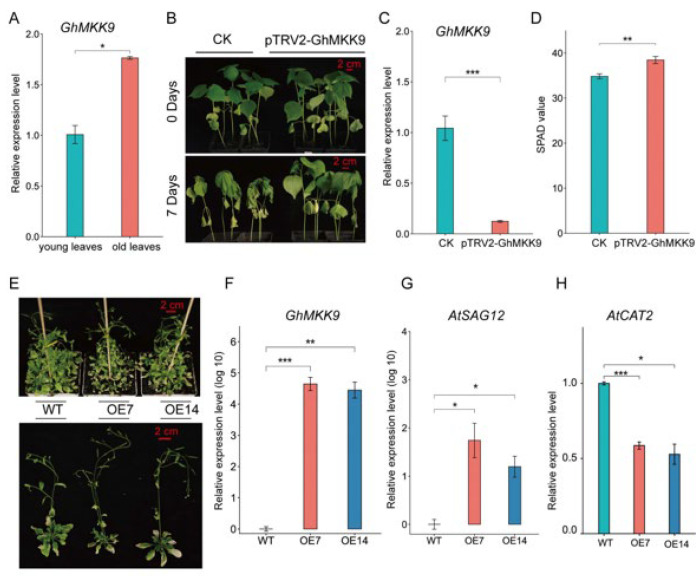
Senescence is the last stage of plant development and is controlled by both internal and external factors. Premature senescence significantly affects the yield and quality of cotton. However, the genetic architecture underlying cotton senescence remains unclear. In this study, genome-wide association studies (GWAS) were performed based on 3,015,002 high-quality SNP markers from the resequencing data of 355 upland cotton accessions to detect genomic regions for cotton senescence. A total of 977 candidate genes within 55 senescence-related genomic regions (SGRs), SGR1-SGR55, were predicted. Gene ontology (GO) analysis of candidate genes revealed that a set of biological processes was enriched, such as salt stress, ethylene processes, and leaf senescence. Furthermore, in the leaf senescence GO term, one candidate gene was focused on: (), located in SGR36, which encodes a protein of the MAP kinase kinase family. Quantitative real-time PCR (qRT-PCR) analysis showed that was up-regulated in old cotton leaves. Overexpression of in accelerated natural leaf senescence. Virus-induced gene silencing (VIGS) of in cotton increased drought tolerance. These results suggest that is a positive regulator and might be involved in drought-induced senescence in cotton. The results provide new insights into the genetic basis of cotton senescence and will be useful for improving cotton breeding in the future.
衰老是植物发育的最后阶段,受内部和外部因素的控制。过早衰老会显著影响棉花的产量和品质。然而,棉花衰老的遗传结构尚不清楚。在这项研究中,基于 355 个陆地棉品种重测序数据中的 3015002 个高质量 SNP 标记,进行了全基因组关联研究(GWAS),以检测与棉花衰老相关的基因组区域。共预测到 55 个衰老相关基因组区域(SGRs)SGR1-SGR55 中的 977 个候选基因。候选基因的基因本体(GO)分析表明,一组生物学过程被富集,如盐胁迫、乙烯作用和叶片衰老。此外,在叶片衰老的 GO 术语中,关注到一个候选基因:(),位于 SGR36 中,它编码一个 MAP 激酶激酶家族的蛋白质。定量实时 PCR(qRT-PCR)分析表明,在老棉花叶片中上调表达。在中过表达 加速了自然叶片衰老。在棉花中对 的病毒诱导基因沉默(VIGS)增加了耐旱性。这些结果表明 是一个正调控因子,可能参与棉花干旱诱导的衰老。这些结果为棉花衰老的遗传基础提供了新的见解,并将有助于未来改进棉花的培育。