Department of Neurodegeneration Diagnostics, Medical University of Bialystok, 15-269 Bialystok, Poland.
Department of Criminal Law and Criminology, Faculty of Law, University of Bialystok, 15-213 Bialystok, Poland.
Int J Mol Sci. 2022 Aug 2;23(15):8598. doi: 10.3390/ijms23158598.
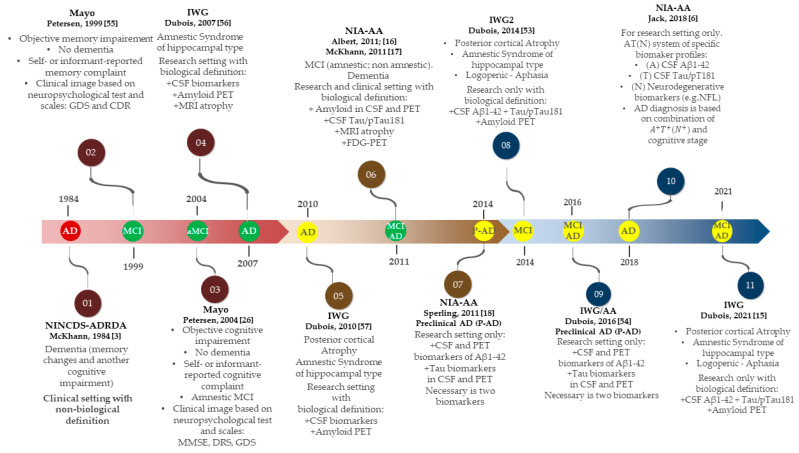
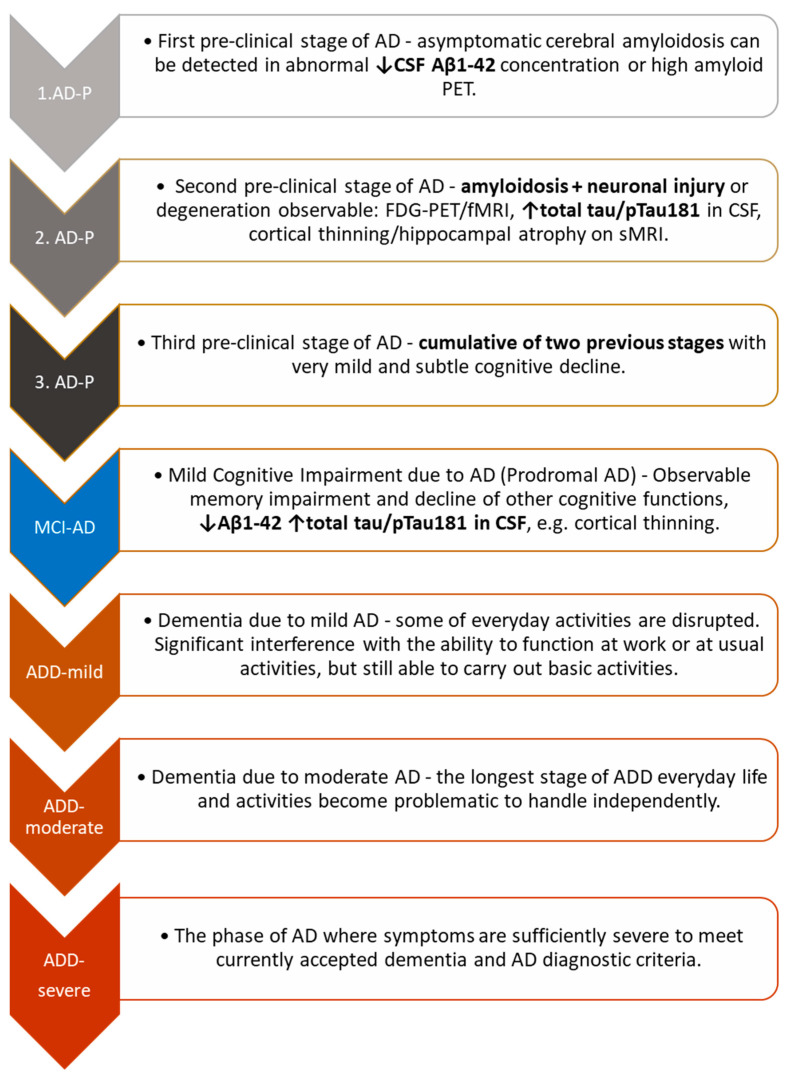
Alzheimer's disease (AD) is a progressive condition and the most common cause of dementia worldwide. The neuropathological changes characteristic of the disorder can be successfully detected before the development of full-blown AD. Early diagnosis of the disease constitutes a formidable challenge for clinicians. CSF biomarkers are the in vivo evidence of neuropathological changes developing in the brain of dementia patients. Therefore, measurement of their concentrations allows for improved accuracy of clinical diagnosis. Moreover, AD biomarkers may provide an indication of disease stage. Importantly, the CSF biomarkers of AD play a pivotal role in the new diagnostic criteria for the disease, and in the recent biological definition of AD by the National Institute on Aging, NIH and Alzheimer's Association. Due to the necessity of collecting CSF by lumbar puncture, the procedure seems to be an important issue not only from a medical, but also a legal, viewpoint. Furthermore, recent technological advances may contribute to the automation of AD biomarkers measurement and may result in the establishment of unified cut-off values and reference limits. Moreover, a group of international experts in the field of AD biomarkers have developed a consensus and guidelines on the interpretation of CSF biomarkers in the context of AD diagnosis. Thus, technological advancement and expert recommendations may contribute to a more widespread use of these diagnostic tests in clinical practice to support a diagnosis of mild cognitive impairment (MCI) or dementia due to AD. This review article presents up-to-date data regarding the usefulness of CSF biomarkers in routine clinical practice and in biomarkers research.
阿尔茨海默病(AD)是一种进行性疾病,也是全球最常见的痴呆症病因。这种疾病的神经病理学变化可以在完全发作之前成功检测到。早期诊断疾病对临床医生来说是一个巨大的挑战。CSF 生物标志物是痴呆症患者大脑中发生的神经病理学变化的体内证据。因此,测量它们的浓度可以提高临床诊断的准确性。此外,AD 生物标志物可以提供疾病阶段的指示。重要的是,AD 的 CSF 生物标志物在该疾病的新诊断标准中发挥着关键作用,并且在最近由美国国立卫生研究院、国家老龄化研究所和阿尔茨海默病协会提出的 AD 的生物学定义中发挥着关键作用。由于需要通过腰椎穿刺来收集 CSF,因此该程序似乎不仅从医学角度,而且从法律角度来看都是一个重要问题。此外,最近的技术进步可能有助于 AD 生物标志物测量的自动化,并可能导致建立统一的截止值和参考范围。此外,AD 生物标志物领域的一组国际专家已经就 AD 诊断背景下 CSF 生物标志物的解释达成了共识和指南。因此,技术进步和专家建议可能有助于更广泛地将这些诊断测试用于临床实践,以支持 AD 引起的轻度认知障碍(MCI)或痴呆的诊断。本文综述了 CSF 生物标志物在常规临床实践和生物标志物研究中的最新数据。