Plant Physiology Section, Department of Botany, Faculty of Life Sciences, Aligarh Muslim University, Aligarh 202002, India.
Department of Biology and Plant Ecology, Faculty of Biology, University of Bialystok, Ciolkowskiego 1J, 15-245 Bialystok, Poland.
Int J Mol Sci. 2022 Aug 4;23(15):8664. doi: 10.3390/ijms23158664.
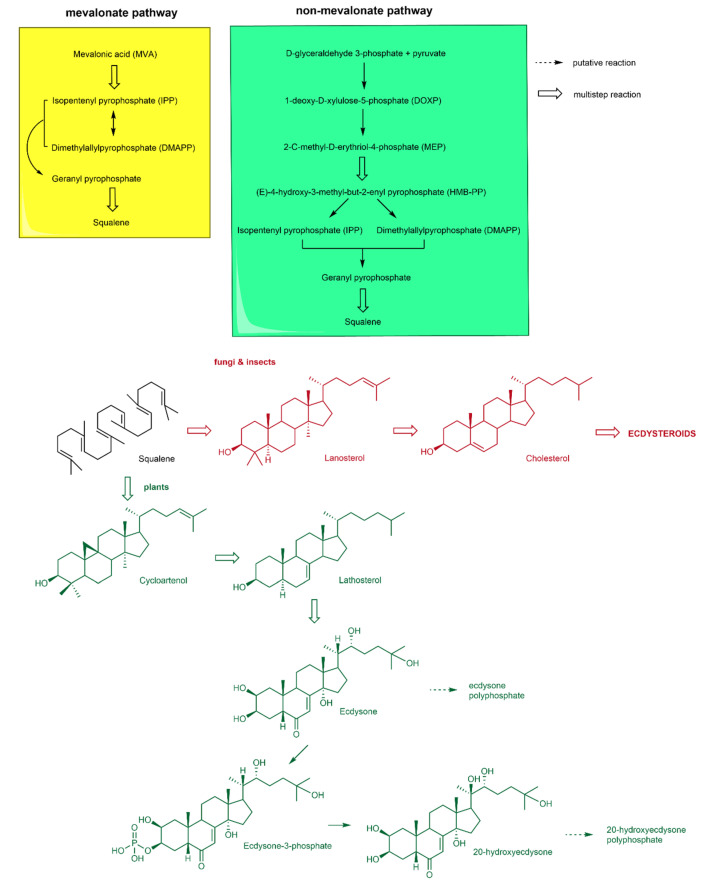
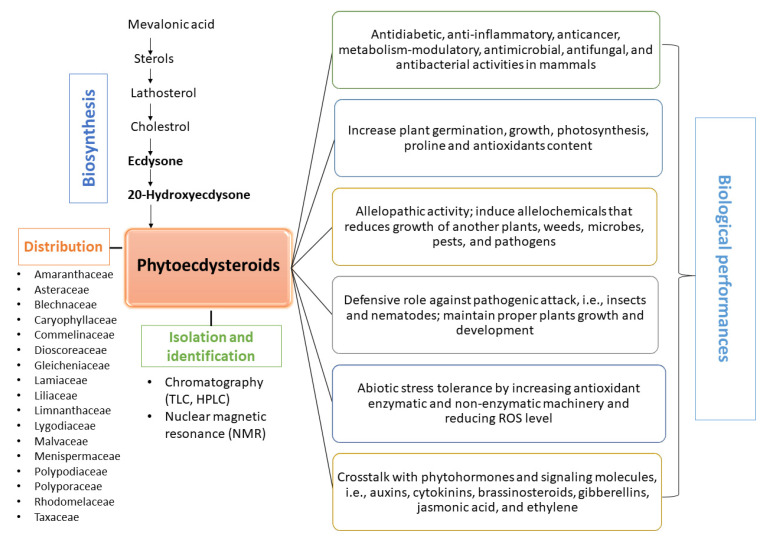
Phytoecdysteroids (PEs) are naturally occurring polyhydroxylated compounds with a structure similar to that of insect molting hormone and the plant hormone brassinosteroids. PEs have a four-ringed skeleton composed of 27, 28, 29, or 30 carbon atoms (derived from plant sterols). The carbon skeleton of ecdysteroid is known as cyclopentanoperhydrophenanthrene and has a β-sidechain on C-17. Plants produce PEs via the mevalonate pathway with the help of the precursor acetyl-CoA. PEs are found in algae, fungi, ferns, gymnosperms, and angiosperms; more than 500 different PEs are found in over 100 terrestrial plants. 20-hydroxyecdysone is the most common PE. PEs exhibit versatile biological roles in plants, invertebrates, and mammals. These compounds contribute to mitigating biotic and abiotic stresses. In plants, PEs play a potent role in enhancing tolerance against insects and nematodes via their allelochemical activity, which increases plant biological and metabolic responses. PEs promote enzymatic and non-enzymatic antioxidant defense systems, which decrease reactive oxygen species in the form of superoxide radicals and hydroxyl radicals and reduce malondialdehyde content. PEs also induce protein biosynthesis and modulate carbohydrate and lipid synthesis. In humans, PEs display biological, pharmacological, and medicinal properties, such as anti-diabetic, antioxidant, anti-microbial, hepatoprotective, hypoglycemic, anti-cancer, anti-inflammatory, antidepressant, and tissue differentiation activity.
植物甾醇类(PEs)是天然存在的多羟基化合物,其结构与昆虫蜕皮激素和植物激素油菜素内酯相似。PEs 具有由 27、28、29 或 30 个碳原子组成的四环骨架(来源于植物甾醇)。蜕皮甾体的碳骨架称为环戊烷并全氢菲,在 C-17 上具有β-侧链。植物通过甲羟戊酸途径在乙酰辅酶 A 的帮助下产生 PEs。PEs 存在于藻类、真菌、蕨类植物、裸子植物和被子植物中;在 100 多种陆地植物中发现了 500 多种不同的 PEs。20-羟基蜕皮甾酮是最常见的 PE。PEs 在植物、无脊椎动物和哺乳动物中表现出多种生物功能。这些化合物有助于减轻生物和非生物胁迫。在植物中,PEs 通过其化感作用在增强对昆虫和线虫的耐受性方面发挥强大作用,从而增加植物的生物和代谢反应。PEs 促进酶和非酶抗氧化防御系统,减少超氧自由基和羟基自由基形式的活性氧,并降低丙二醛含量。PEs 还诱导蛋白质生物合成并调节碳水化合物和脂质合成。在人类中,PEs 具有生物、药理和药用特性,如抗糖尿病、抗氧化、抗微生物、保肝、降血糖、抗癌、抗炎、抗抑郁和组织分化活性。