Laboratory of Visual Neuroscience, Graduate Course in Biological Sciences, Iwate University Division of Science and Engineering, 4-3-5 Ueda, Morioka 020-8551, Iwate, Japan.
Rohto Pharmaceutical Co., Ltd., 6-5-4 Kunimidai, Kizugawa 619-0216, Kyoto, Japan.
Int J Mol Sci. 2022 Aug 8;23(15):8802. doi: 10.3390/ijms23158802.
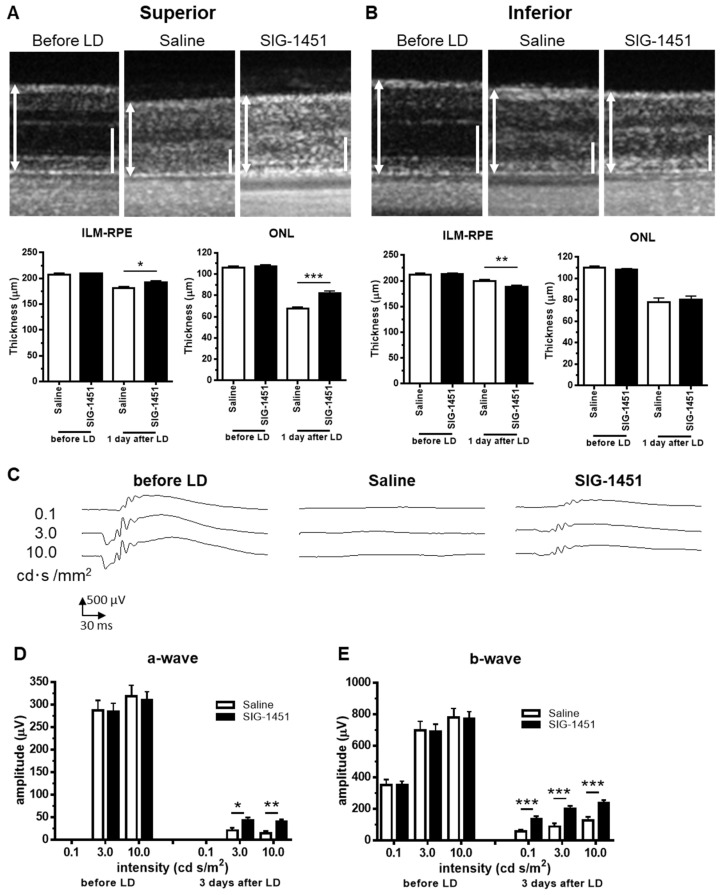
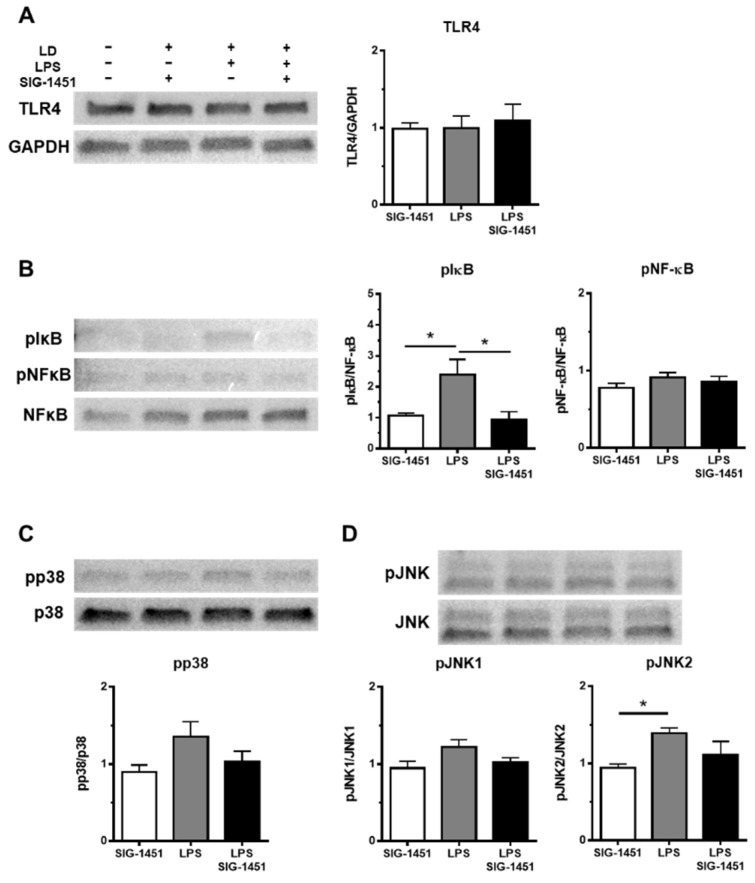
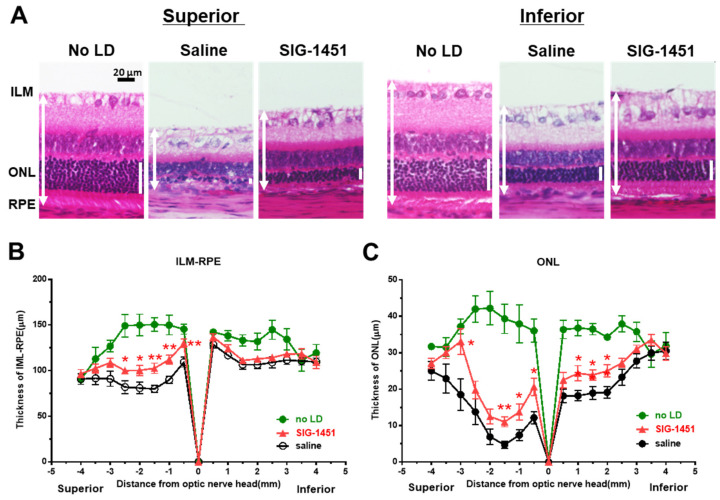
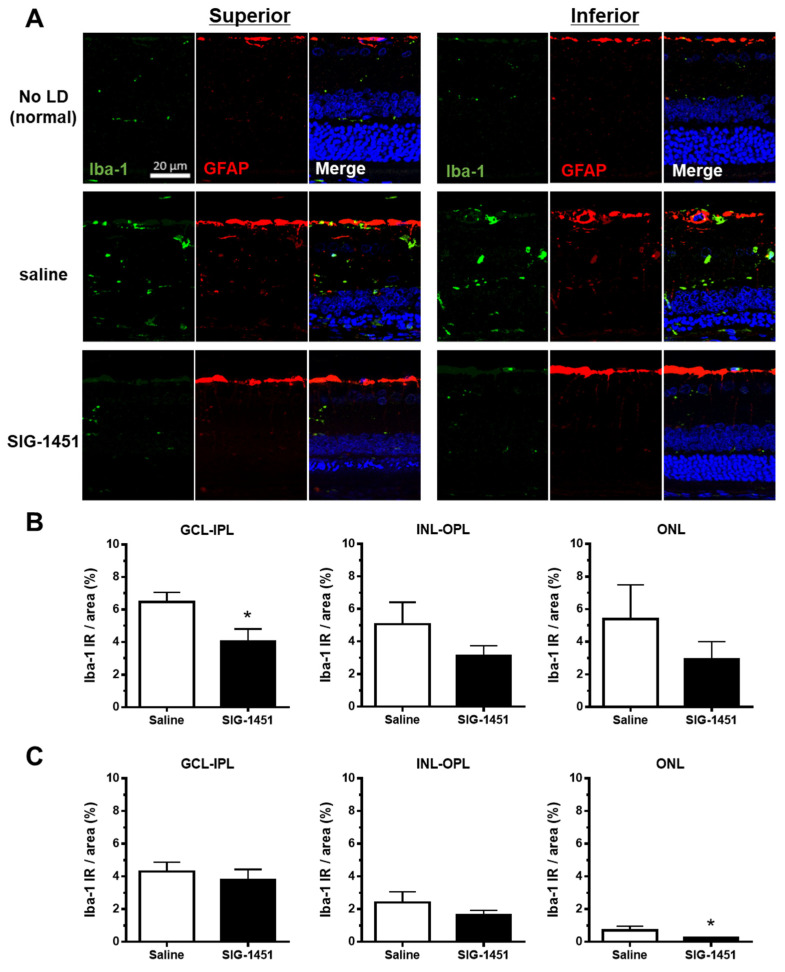
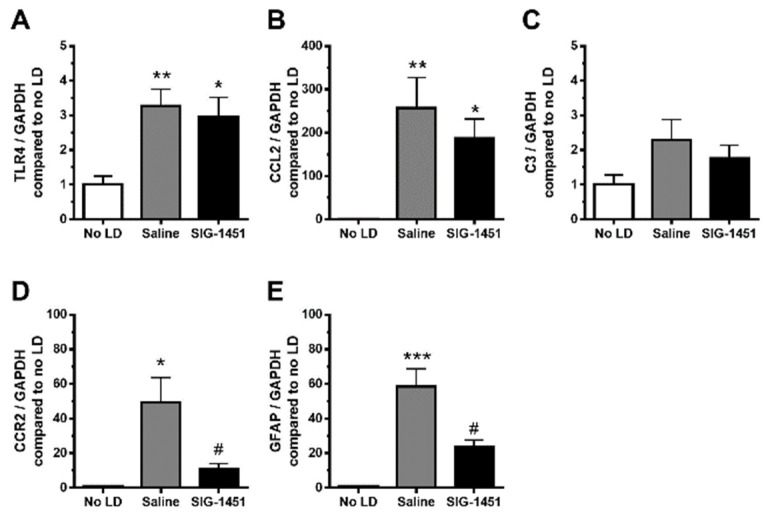
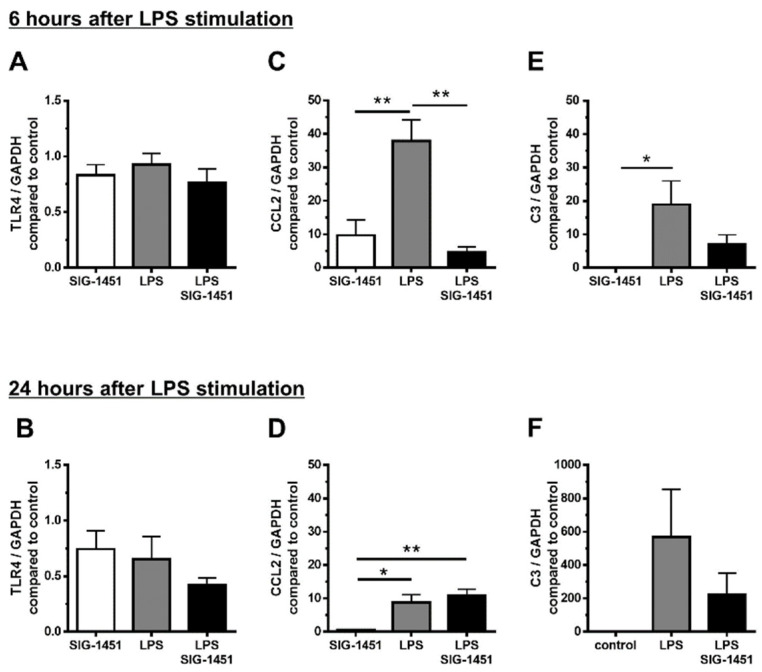
Age-related macular degeneration is a progressive retinal disease that is associated with factors such as oxidative stress and inflammation. In this study, we evaluated the protective effects of SIG-1451, a non-steroidal anti-inflammatory compound developed for treating atopic dermatitis and known to inhibit Toll-like receptor 4, in light-induced photoreceptor degeneration. SIG-1451 was intraperitoneally injected into rats once per day before exposure to 1000 lx light for 24 h; one day later, optical coherence tomography showed a decrease in retinal thickness, and electroretinogram (ERG) amplitude was also found to have decreased 3 d after light exposure. Moreover, SIG-1451 partially protected against this decrease in retinal thickness and increase in ERG amplitude. One day after light exposure, upregulation of inflammatory response-related genes was observed, and SIG-1451 was found to inhibit this upregulation. Iba-1, a microglial marker, was suppressed in SIG-1451-injected rats. To investigate the molecular mechanism underlying these effects, we used lipopolysaccharide (LPS)-stimulated rat immortalised Müller cells. The upregulation of C-C motif chemokine 2 by LPS stimulation was significantly inhibited by SIG-1451 treatment, and Western blot analysis revealed a decrease in phosphorylated I-κB levels. These results indicate that SIG-1451 indirectly protects photoreceptor cells by attenuating light damage progression, by affecting the inflammatory responses.
年龄相关性黄斑变性是一种进行性视网膜疾病,与氧化应激和炎症等因素有关。在这项研究中,我们评估了 SIG-1451 的保护作用,SIG-1451 是一种非甾体抗炎化合物,专为治疗特应性皮炎而开发,已知可抑制 Toll 样受体 4。在光诱导的光感受器变性中,SIG-1451 每天通过腹腔注射一次,在暴露于 1000 lx 光 24 h 之前;一天后,光学相干断层扫描显示视网膜厚度下降,并且在光暴露后 3 天发现视网膜电图(ERG)幅度也降低。此外,SIG-1451 部分保护了视网膜厚度的减少和 ERG 幅度的增加。光暴露后一天,观察到炎症反应相关基因的上调,并且发现 SIG-1451 抑制了这种上调。在注射 SIG-1451 的大鼠中,Iba-1(小胶质细胞标志物)受到抑制。为了研究这些作用的分子机制,我们使用脂多糖(LPS)刺激的大鼠永生化 Müller 细胞。SIG-1451 处理显著抑制了 LPS 刺激的 C-C 基序趋化因子 2 的上调,并且 Western blot 分析显示磷酸化 I-κB 水平降低。这些结果表明,SIG-1451 通过影响炎症反应,间接通过减轻光损伤进展来保护光感受器细胞。