• 文献检索
  • 文档翻译
  • 深度研究
  • 学术资讯
  • Suppr Zotero 插件Zotero 插件
  • 邀请有礼
  • 套餐&价格
  • 历史记录
应用&插件
Suppr Zotero 插件Zotero 插件浏览器插件Mac 客户端Windows 客户端微信小程序
定价
高级版会员购买积分包购买API积分包
服务
文献检索文档翻译深度研究API 文档MCP 服务
关于我们
关于 Suppr公司介绍联系我们用户协议隐私条款
关注我们

Suppr 超能文献

核心技术专利:CN118964589B侵权必究
粤ICP备2023148730 号-1Suppr @ 2026

文献检索

告别复杂PubMed语法,用中文像聊天一样搜索,搜遍4000万医学文献。AI智能推荐,让科研检索更轻松。

立即免费搜索

文件翻译

保留排版,准确专业,支持PDF/Word/PPT等文件格式,支持 12+语言互译。

免费翻译文档

深度研究

AI帮你快速写综述,25分钟生成高质量综述,智能提取关键信息,辅助科研写作。

立即免费体验

基于聚酰胺11/不同尺寸硅藻壳的生物复合材料。

Biocomposites Based on Polyamide 11/Diatoms with Different Sized Frustules.

作者信息

Dobrosielska Marta, Dobrucka Renata, Kozera Paulina, Kozera Rafał, Kołodziejczak Marta, Gabriel Ewa, Głowacka Julia, Jałbrzykowski Marek, Kurzydłowski Krzysztof J, Przekop Robert E

机构信息

Faculty of Materials Science and Engineering, Warsaw University of Technology, ul. Wołoska 141, 02-507 Warsaw, Poland.

Department of Non-Food Products Quality and Packaging Development, Institute of Quality Science, Poznań University of Economics and Business, al. Niepodległości 10, 61-875 Poznań, Poland.

出版信息

Polymers (Basel). 2022 Aug 2;14(15):3153. doi: 10.3390/polym14153153.

DOI:10.3390/polym14153153
PMID:35956665
原文链接:https://pmc.ncbi.nlm.nih.gov/articles/PMC9371175/
Abstract

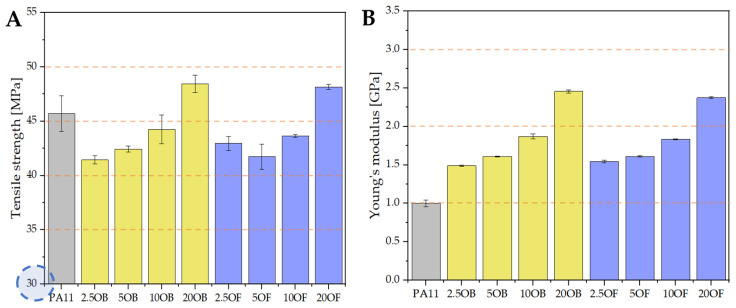
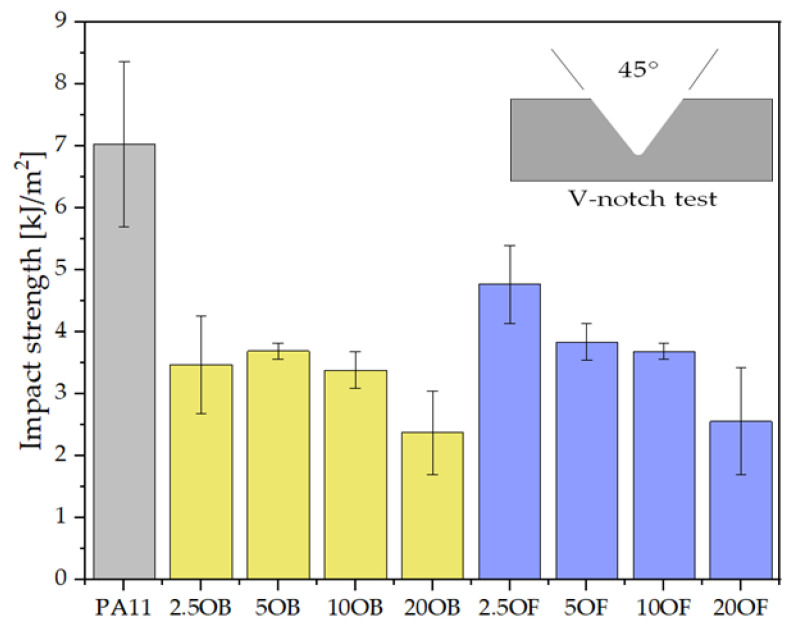
Amorphous diatomite was used as a filler for a thermoplastic polymer of polyamide 11 obtained from natural sources. The diatomite particles of different sizes were previously fractionated by sedimentation to obtain powders with varying particle size distribution, including powders with or without frustule particles, crushed, uncrushed or agglomerated. Biocomposites containing 2.5, 5, 10 and 20% filler were tested for their mechanical properties, including tensile strength, flexural strength and impact strength. In addition, a particle size analysis (by Dynamic Light Scattering, DLS) was performed and the dispersion of the filler in the polymer matrix (Scanning Electron Microscopy, SEM), thermal parameters (Differential Scanning Calorimetry, DSC, and Dynamic Mechanical Analysis, DMA) were determined. Testing showed that biocomposites modified with diatomaceous earth have a higher mechanical strength than the reference system, especially with larger amounts of the filler (10 and 20%), e.g., the tensile strength of pure PA11 is about 46 MPa, while 20OB and 20OF 47.5 and 47 MPa, respectively, while an increase in max. flexural strength and flexural modulus is also observed compared to pure PA11 by a maximum of 63 and 54%, respectively Diatomaceous earth can be obtained in various ways-it is commercially available or it is possible to breed diatoms in laboratory conditions, while the use of commercially available diatomite, which contains diatoms of different sizes, eliminates the possibility of controlling mechanical parameters by filling biocomposites with a filler with the desired particle size distribution, and diatom breeding is not possible on an industrial scale. Our proposed biocomposite based on fractionated diatomaceous earth using a sedimentation process addresses the current need to produce biocomposite materials from natural sources, and moreover, the nature of the process, due to its simplicity, can be successfully used on an industrial scale.

摘要

无定形硅藻土被用作由天然来源获得的聚酰胺11热塑性聚合物的填料。不同尺寸的硅藻土颗粒先前通过沉降进行分级,以获得具有不同粒度分布的粉末,包括带有或不带有硅藻壳颗粒、破碎的、未破碎的或团聚的粉末。对含有2.5%、5%、10%和20%填料的生物复合材料进行了机械性能测试,包括拉伸强度、弯曲强度和冲击强度。此外,进行了粒度分析(通过动态光散射,DLS),并测定了填料在聚合物基体中的分散情况(扫描电子显微镜,SEM)、热参数(差示扫描量热法,DSC,和动态力学分析,DMA)。测试表明,用硅藻土改性的生物复合材料比参考体系具有更高的机械强度,特别是在填料用量较大时(10%和20%),例如,纯PA11的拉伸强度约为46MPa,而20OB和20OF分别为47.5MPa和47MPa,同时最大弯曲强度和弯曲模量相比纯PA11也分别最多提高了63%和54%。硅藻土可以通过多种方式获得——它有商业产品,也可以在实验室条件下培养硅藻,而使用含有不同尺寸硅藻的市售硅藻土,排除了通过用具有所需粒度分布的填料填充生物复合材料来控制机械参数的可能性,并且在工业规模上无法培养硅藻。我们提出的基于沉降过程分级硅藻土的生物复合材料满足了当前从天然来源生产生物复合材料的需求,此外,该过程的性质由于其简单性,可以成功地用于工业规模。
https://cdn.ncbi.nlm.nih.gov/pmc/blobs/ca77/9371175/5147b46d637b/polymers-14-03153-g015.jpg
https://cdn.ncbi.nlm.nih.gov/pmc/blobs/ca77/9371175/bc6a1612bf85/polymers-14-03153-g001.jpg
https://cdn.ncbi.nlm.nih.gov/pmc/blobs/ca77/9371175/b1617306f75f/polymers-14-03153-g002.jpg
https://cdn.ncbi.nlm.nih.gov/pmc/blobs/ca77/9371175/d2d17e6177e8/polymers-14-03153-g003.jpg
https://cdn.ncbi.nlm.nih.gov/pmc/blobs/ca77/9371175/fe18fae60889/polymers-14-03153-g004.jpg
https://cdn.ncbi.nlm.nih.gov/pmc/blobs/ca77/9371175/b741f9607000/polymers-14-03153-g005.jpg
https://cdn.ncbi.nlm.nih.gov/pmc/blobs/ca77/9371175/fd8661fab528/polymers-14-03153-g006.jpg
https://cdn.ncbi.nlm.nih.gov/pmc/blobs/ca77/9371175/2512eae92257/polymers-14-03153-g007.jpg
https://cdn.ncbi.nlm.nih.gov/pmc/blobs/ca77/9371175/31a018ca7f3e/polymers-14-03153-g008.jpg
https://cdn.ncbi.nlm.nih.gov/pmc/blobs/ca77/9371175/1c7e385432c6/polymers-14-03153-g009.jpg
https://cdn.ncbi.nlm.nih.gov/pmc/blobs/ca77/9371175/ceb42af0c998/polymers-14-03153-g010.jpg
https://cdn.ncbi.nlm.nih.gov/pmc/blobs/ca77/9371175/3412f2fa0839/polymers-14-03153-g011.jpg
https://cdn.ncbi.nlm.nih.gov/pmc/blobs/ca77/9371175/0ff53095eb33/polymers-14-03153-g012.jpg
https://cdn.ncbi.nlm.nih.gov/pmc/blobs/ca77/9371175/9f30ce7b9958/polymers-14-03153-g013.jpg
https://cdn.ncbi.nlm.nih.gov/pmc/blobs/ca77/9371175/3607f4c801de/polymers-14-03153-g014.jpg
https://cdn.ncbi.nlm.nih.gov/pmc/blobs/ca77/9371175/5147b46d637b/polymers-14-03153-g015.jpg
https://cdn.ncbi.nlm.nih.gov/pmc/blobs/ca77/9371175/bc6a1612bf85/polymers-14-03153-g001.jpg
https://cdn.ncbi.nlm.nih.gov/pmc/blobs/ca77/9371175/b1617306f75f/polymers-14-03153-g002.jpg
https://cdn.ncbi.nlm.nih.gov/pmc/blobs/ca77/9371175/d2d17e6177e8/polymers-14-03153-g003.jpg
https://cdn.ncbi.nlm.nih.gov/pmc/blobs/ca77/9371175/fe18fae60889/polymers-14-03153-g004.jpg
https://cdn.ncbi.nlm.nih.gov/pmc/blobs/ca77/9371175/b741f9607000/polymers-14-03153-g005.jpg
https://cdn.ncbi.nlm.nih.gov/pmc/blobs/ca77/9371175/fd8661fab528/polymers-14-03153-g006.jpg
https://cdn.ncbi.nlm.nih.gov/pmc/blobs/ca77/9371175/2512eae92257/polymers-14-03153-g007.jpg
https://cdn.ncbi.nlm.nih.gov/pmc/blobs/ca77/9371175/31a018ca7f3e/polymers-14-03153-g008.jpg
https://cdn.ncbi.nlm.nih.gov/pmc/blobs/ca77/9371175/1c7e385432c6/polymers-14-03153-g009.jpg
https://cdn.ncbi.nlm.nih.gov/pmc/blobs/ca77/9371175/ceb42af0c998/polymers-14-03153-g010.jpg
https://cdn.ncbi.nlm.nih.gov/pmc/blobs/ca77/9371175/3412f2fa0839/polymers-14-03153-g011.jpg
https://cdn.ncbi.nlm.nih.gov/pmc/blobs/ca77/9371175/0ff53095eb33/polymers-14-03153-g012.jpg
https://cdn.ncbi.nlm.nih.gov/pmc/blobs/ca77/9371175/9f30ce7b9958/polymers-14-03153-g013.jpg
https://cdn.ncbi.nlm.nih.gov/pmc/blobs/ca77/9371175/3607f4c801de/polymers-14-03153-g014.jpg
https://cdn.ncbi.nlm.nih.gov/pmc/blobs/ca77/9371175/5147b46d637b/polymers-14-03153-g015.jpg

相似文献

1
Biocomposites Based on Polyamide 11/Diatoms with Different Sized Frustules.基于聚酰胺11/不同尺寸硅藻壳的生物复合材料。
Polymers (Basel). 2022 Aug 2;14(15):3153. doi: 10.3390/polym14153153.
2
Influence of Diatomaceous Earth Particle Size on Mechanical Properties of PLA/Diatomaceous Earth Composites.硅藻土粒径对聚乳酸/硅藻土复合材料力学性能的影响
Materials (Basel). 2022 May 18;15(10):3607. doi: 10.3390/ma15103607.
3
Polyamide 11 Composites Reinforced with Diatomite Biofiller-Mechanical, Rheological and Crystallization Properties.用硅藻土生物填料增强的聚酰胺11复合材料——力学、流变学和结晶性能
Polymers (Basel). 2023 Mar 21;15(6):1563. doi: 10.3390/polym15061563.
4
A New Method of Diatomaceous Earth Fractionation-A Bio-Raw Material Source for Epoxy-Based Composites.硅藻土分级分离的新方法——一种用于环氧基复合材料的生物原料来源
Materials (Basel). 2021 Mar 28;14(7):1663. doi: 10.3390/ma14071663.
5
Methodological Aspects of Obtaining and Characterizing Composites Based on Biogenic Diatomaceous Silica and Epoxy Resins.基于生物源硅藻土和环氧树脂制备及表征复合材料的方法学方面
Materials (Basel). 2021 Aug 17;14(16):4607. doi: 10.3390/ma14164607.
6
Mechanical performance and dimensional stability of Washingtonia/Kenaf fibres-based epoxy hybrid composites.基于华盛顿葵/红麻纤维的环氧混杂复合材料的力学性能和尺寸稳定性。
Sci Rep. 2024 Oct 16;14(1):24242. doi: 10.1038/s41598-024-73300-3.
7
Thermal and Mechanical Properties of Biocomposites Based on Polylactide and Tall Wheatgrass.基于聚乳酸和高羊茅的生物复合材料的热性能和力学性能
Materials (Basel). 2023 Oct 28;16(21):6923. doi: 10.3390/ma16216923.
8
Enhancement of mechanical and thermal properties of oil palm empty fruit bunch fiber poly(butylene adipate-co-terephtalate) biocomposites by matrix esterification using succinic anhydride.利用琥珀酸酐对基体进行酯化来增强油棕果串纤维的聚(己二酸丁二醇酯-对苯二甲酸酯)生物复合材料的机械和热性能。
Molecules. 2012 Feb 16;17(2):1969-91. doi: 10.3390/molecules17021969.
9
Beeswax as a natural alternative to synthetic waxes for fabrication of PLA/diatomaceous earth composites.将蜂蜡用作 PLA/硅藻土复合材料制造的天然替代品,以替代合成蜡。
Sci Rep. 2023 Jan 20;13(1):1161. doi: 10.1038/s41598-023-28435-0.
10
Effects of Rice Straw Powder (RSP) Size and Pretreatment on Properties of FDM 3D-Printed RSP/Poly(Lactic Acid) Biocomposites.稻秸秆粉(RSP)粒径和预处理对 RSP/聚乳酸(PLA)纤维增材制造(FDM)生物复合材料性能的影响。
Molecules. 2021 May 27;26(11):3234. doi: 10.3390/molecules26113234.

引用本文的文献

1
The Influence of Environmental Factors on the Degradation of PLA/Diatomaceous Earth Composites.环境因素对聚乳酸/硅藻土复合材料降解的影响
Polymers (Basel). 2024 May 21;16(11):1450. doi: 10.3390/polym16111450.
2
Polyamide 11 Composites Reinforced with Diatomite Biofiller-Mechanical, Rheological and Crystallization Properties.用硅藻土生物填料增强的聚酰胺11复合材料——力学、流变学和结晶性能
Polymers (Basel). 2023 Mar 21;15(6):1563. doi: 10.3390/polym15061563.
3
The Structural Evolution and Mechanical Properties of Semi-Aromatic Polyamide 12T after Stretching.

本文引用的文献

1
Influence of Diatomaceous Earth Particle Size on Mechanical Properties of PLA/Diatomaceous Earth Composites.硅藻土粒径对聚乳酸/硅藻土复合材料力学性能的影响
Materials (Basel). 2022 May 18;15(10):3607. doi: 10.3390/ma15103607.
2
A Study of the Flexural Properties of PA12/Clay Nanocomposites.PA12/粘土纳米复合材料的弯曲性能研究。
Polymers (Basel). 2022 Jan 21;14(3):434. doi: 10.3390/polym14030434.
3
Bioplastics for a circular economy.用于循环经济的生物塑料。
拉伸后半芳香族聚酰胺12T的结构演变与力学性能
Polymers (Basel). 2022 Nov 8;14(22):4805. doi: 10.3390/polym14224805.
Nat Rev Mater. 2022;7(2):117-137. doi: 10.1038/s41578-021-00407-8. Epub 2022 Jan 20.
4
Methodological Aspects of Obtaining and Characterizing Composites Based on Biogenic Diatomaceous Silica and Epoxy Resins.基于生物源硅藻土和环氧树脂制备及表征复合材料的方法学方面
Materials (Basel). 2021 Aug 17;14(16):4607. doi: 10.3390/ma14164607.
5
A New Method of Diatomaceous Earth Fractionation-A Bio-Raw Material Source for Epoxy-Based Composites.硅藻土分级分离的新方法——一种用于环氧基复合材料的生物原料来源
Materials (Basel). 2021 Mar 28;14(7):1663. doi: 10.3390/ma14071663.
6
Morphology, Mechanical Properties and Shape Memory Effects of Polyamide12/Polyolefin Elastomer Blends Compatibilized by Glycidylisobutyl POSS.由缩水甘油异丁基倍半硅氧烷增容的聚酰胺12/聚烯烃弹性体共混物的形态、力学性能及形状记忆效应
Materials (Basel). 2020 Dec 23;14(1):27. doi: 10.3390/ma14010027.
7
Biogenic Composite Filaments Based on Polylactide and Diatomaceous Earth for 3D Printing.基于聚乳酸和硅藻土的用于3D打印的生物基复合长丝
Materials (Basel). 2020 Oct 16;13(20):4632. doi: 10.3390/ma13204632.
8
Evaluation of Thermal and Thermomechanical Behaviour of Bio-Based Polyamide 11 Based Composites Reinforced with Lignocellulosic Fibres.木质纤维素纤维增强生物基聚酰胺11基复合材料的热性能和热机械性能评估
Polymers (Basel). 2017 Oct 18;9(10):522. doi: 10.3390/polym9100522.
9
Impact Strength and Water Uptake Behaviors of Fully Bio-Based PA11-SGW Composites.全生物基PA11-SGW复合材料的冲击强度和吸水行为
Polymers (Basel). 2018 Jun 29;10(7):717. doi: 10.3390/polym10070717.
10
Plant-Oil-Based Polyamides and Polyurethanes: Toward Sustainable Nitrogen-Containing Thermoplastic Materials.基于植物油的聚酰胺和聚氨酯:迈向可持续含氮热塑性材料。
Macromol Rapid Commun. 2019 Jan;40(1):e1800524. doi: 10.1002/marc.201800524. Epub 2018 Sep 4.