EA 6295 Nanomédicaments et Nanosondes, Faculté de Pharmacie, Université de Tours, 31 Avenue Monge, 37200 Tours, France.
Department of Pharmaceutical Chemistry, Faculty of Pharmacy, University of Gezira, P.O. Box 20, Wad Madani 21111, Sudan.
Molecules. 2022 Jul 27;27(15):4819. doi: 10.3390/molecules27154819.
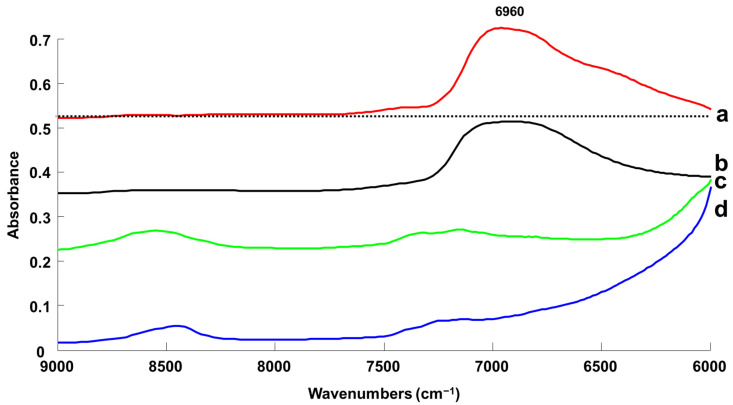
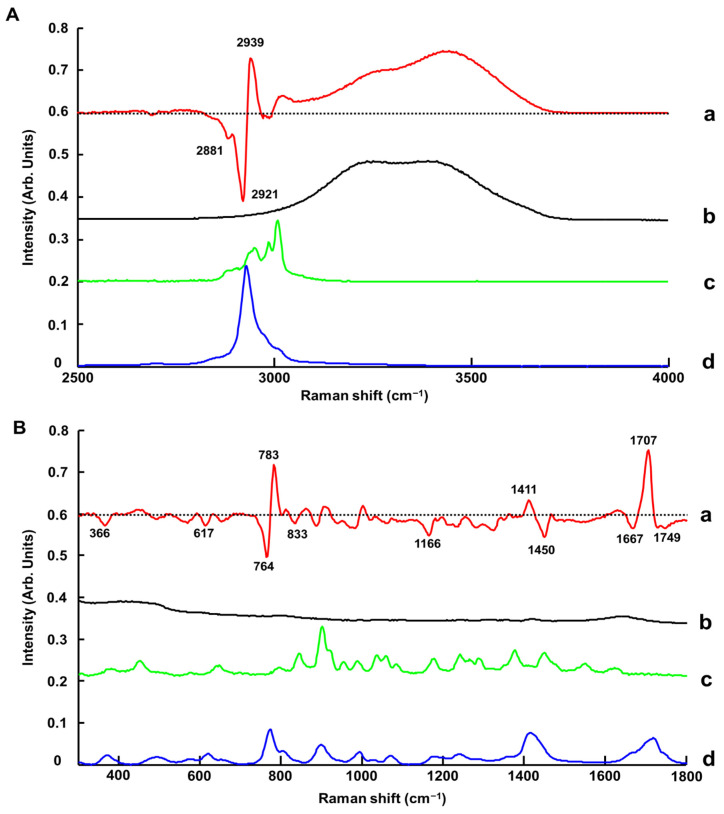
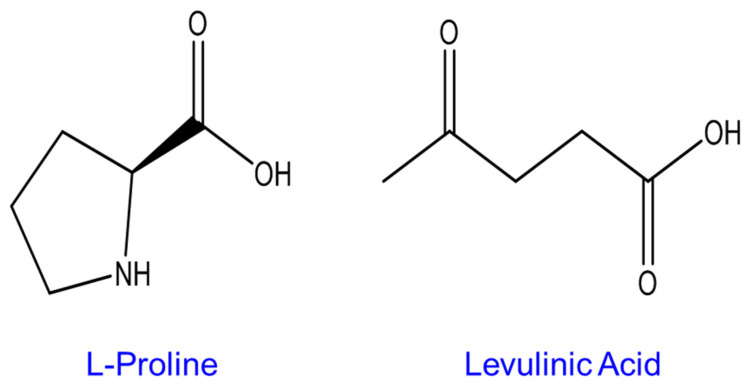
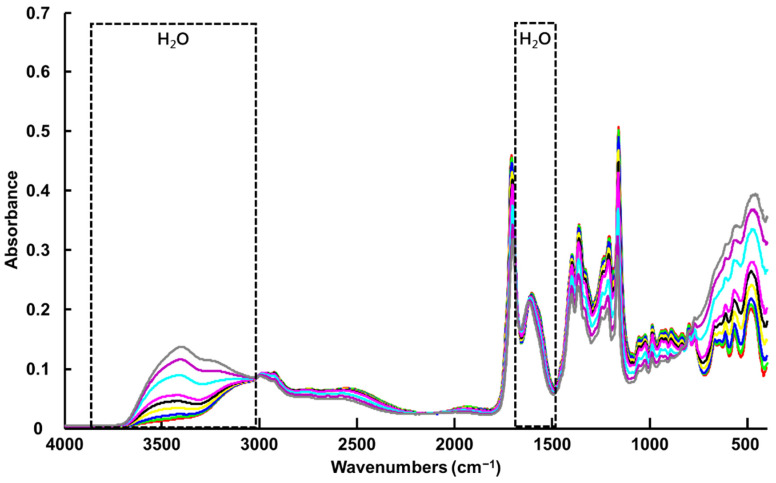
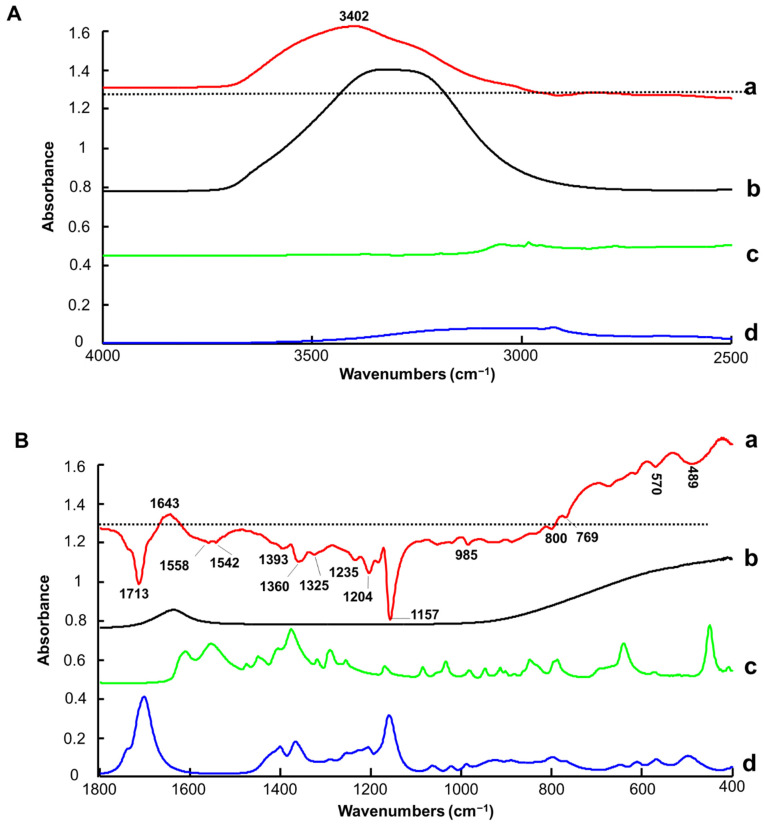
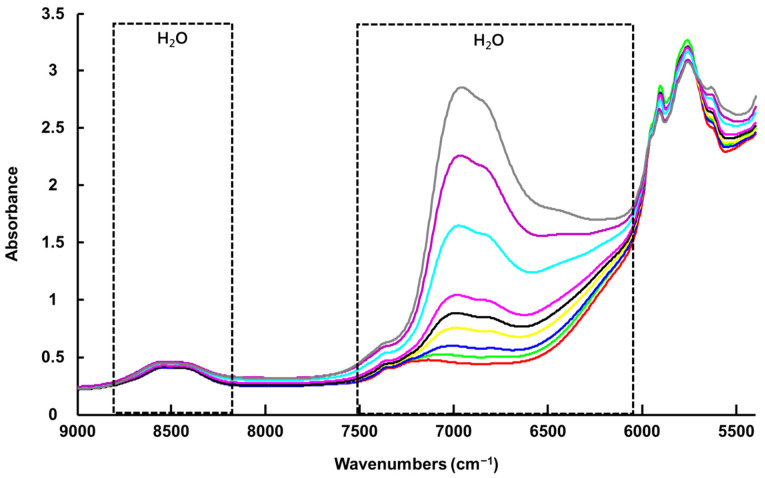
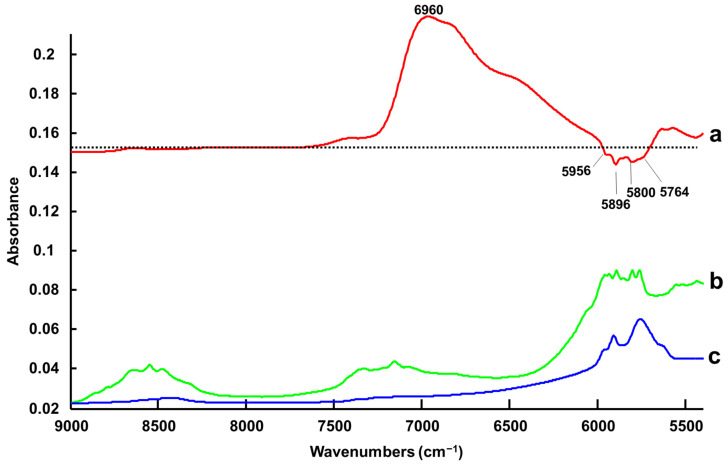
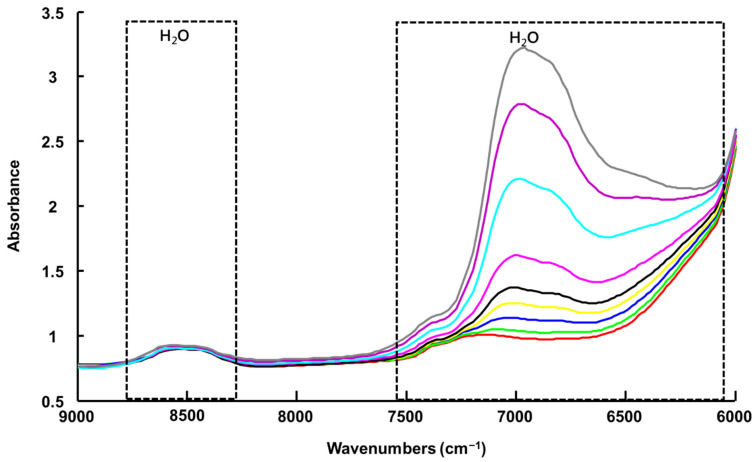
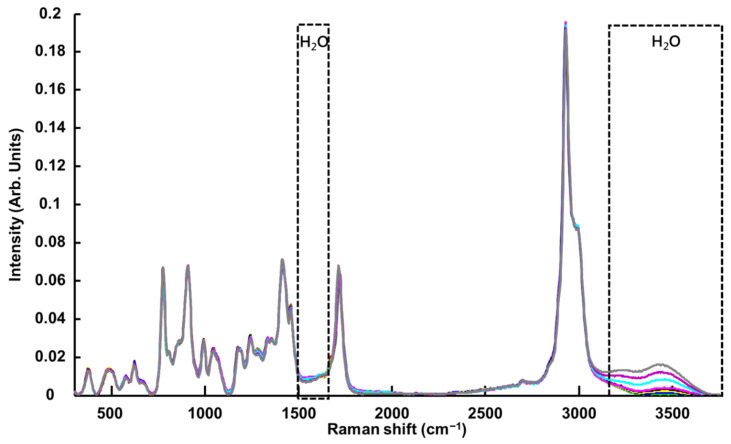
Vibrational spectroscopic techniques, i.e., attenuated total reflectance infrared (ATR-IR), near infrared spectroscopy (NIRS) and Raman spectroscopy (RS), coupled with Partial Least Squares Regression (PLSR), were evaluated as cost-effective label-free and reagent-free tools to monitor water content in Levulinic Acid/L-Proline (LALP) (2:1, mol/mol) Natural Deep Eutectic Solvent (NADES). ATR-IR delivered the best outcome of Root Mean Squared Error (RMSE) of Cross-Validation (CV) = 0.27% added water concentration, RMSE of Prediction (P) = 0.27% added water concentration and mean % relative error = 2.59%. Two NIRS instruments (benchtop and handheld) were also compared during the study, respectively yielding RMSECV = 0.35% added water concentration, RMSEP = 0.56% added water concentration and mean % relative error = 5.13% added water concentration, and RMECV = 0.36% added water concentration, RMSEP = 0.68% added water concentration and mean % relative error = 6.23%. RS analysis performed in quartz cuvettes enabled accurate water quantification with RMECV = 0.43% added water concentration, RMSEP = 0.67% added water concentration and mean % relative error = 6.75%. While the vibrational spectroscopic techniques studied have shown high performance in relation to reliable determination of water concentration, their accuracy is most likely related to their sensitivity to detect the LALP compounds in the NADES. For instance, whereas ATR-IR spectra display strong features from water, Levulinic Acid and L-Proline that contribute to the PLSR predictive models constructed, NIRS and RS spectra are respectively dominated by either water or LALP compounds, representing partial molecular information and moderate accuracy compared to ATR-IR. However, while ATR-IR instruments are common in chemistry and physics laboratories, making the technique readily transferable to water quantification in NADES, Raman spectroscopy offers promising potential for future development for in situ, sample withdrawal-free analysis for high throughput and online monitoring.
振动光谱技术,即衰减全反射红外(ATR-IR)、近红外光谱(NIRS)和拉曼光谱(RS),与偏最小二乘回归(PLSR)相结合,被评估为具有成本效益的无标签和无试剂工具,用于监测乙酰丙酸/L-脯氨酸(LALP)(2:1,摩尔比)天然深共晶溶剂(NADES)中的含水量。ATR-IR 提供了最佳的结果,交叉验证(CV)的均方根误差(RMSE)为 0.27% 添加的水浓度,预测(P)的 RMSE 为 0.27% 添加的水浓度,平均相对误差为 2.59%。在研究过程中还比较了两种 NIRS 仪器(台式和手持式),它们分别产生了 RMSECV = 0.35% 添加的水浓度、RMSEP = 0.56% 添加的水浓度和平均相对误差 = 5.13% 添加的水浓度,以及 RMECV = 0.36% 添加的水浓度、RMSEP = 0.68% 添加的水浓度和平均相对误差 = 6.23%。在石英比色皿中进行的 RS 分析能够实现准确的水分定量,RMECV = 0.43% 添加的水浓度,RMSEP = 0.67% 添加的水浓度和平均相对误差 = 6.75%。虽然所研究的振动光谱技术在可靠地确定水浓度方面表现出了很高的性能,但它们的准确性很可能与其对 NADES 中 LALP 化合物的检测灵敏度有关。例如,ATR-IR 光谱显示了水、乙酰丙酸和 L-脯氨酸的强特征,这有助于构建 PLSR 预测模型,而 NIRS 和 RS 光谱分别由水或 LALP 化合物主导,代表了部分分子信息,与 ATR-IR 相比具有中等的准确性。然而,虽然 ATR-IR 仪器在化学和物理实验室中很常见,使该技术易于转移到 NADES 中的水分定量,但拉曼光谱为未来的发展提供了有前途的潜力,可用于高通量和在线监测的无样品提取原位分析。