Lee Kiseok Keith, Kim Hyun, Lee Yong-Hwan
Department of Agricultural Biotechnology, Seoul National University, Seoul, South Korea.
Interdisciplinary Program in Agricultural Genomics, Seoul National University, Seoul, South Korea.
Front Microbiol. 2022 Jul 25;13:953300. doi: 10.3389/fmicb.2022.953300. eCollection 2022.
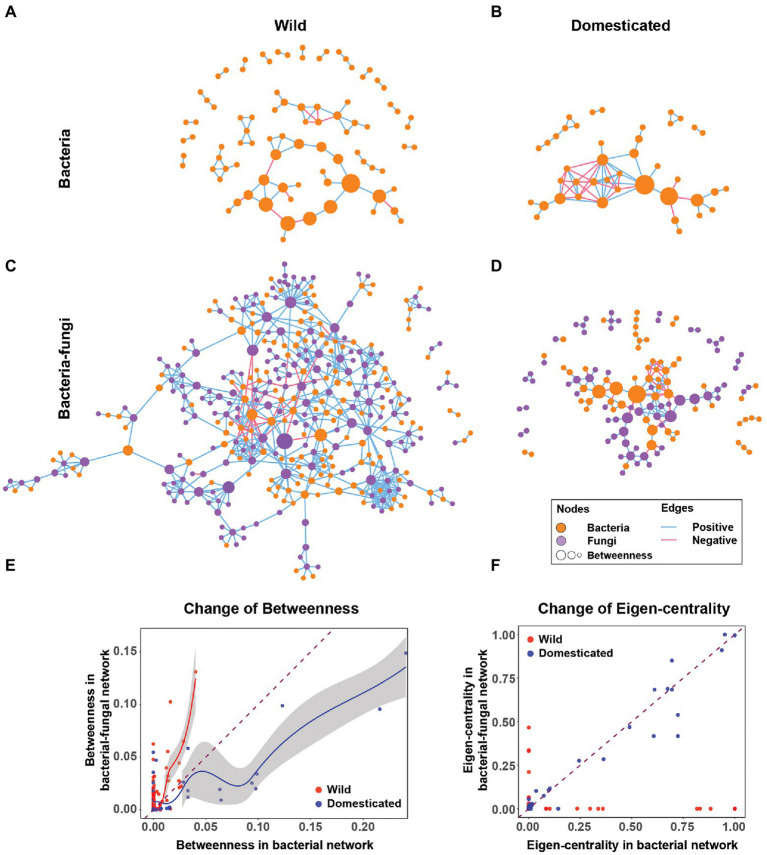
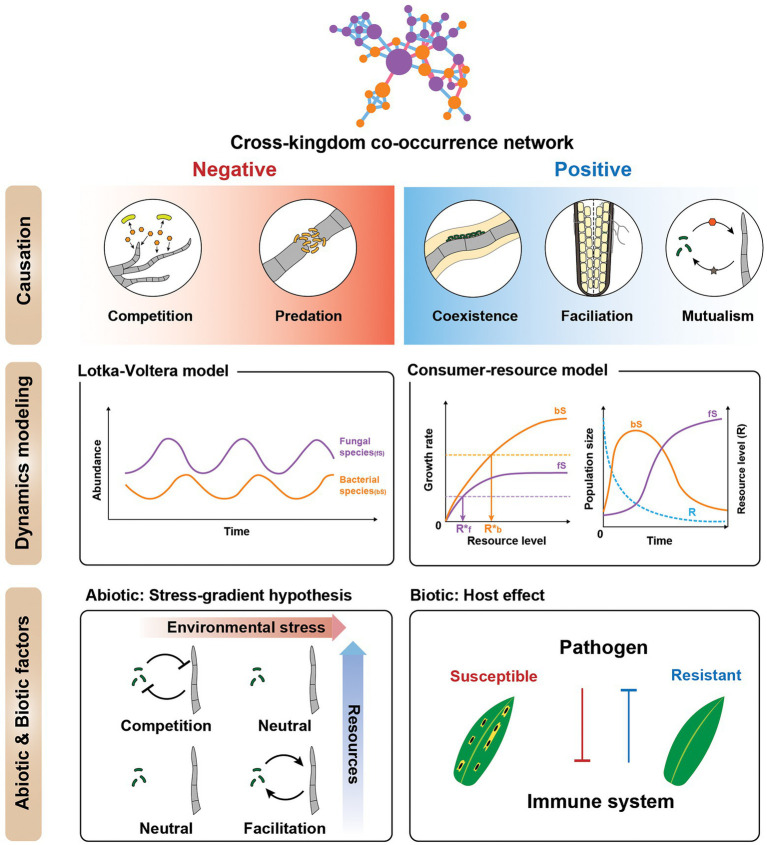
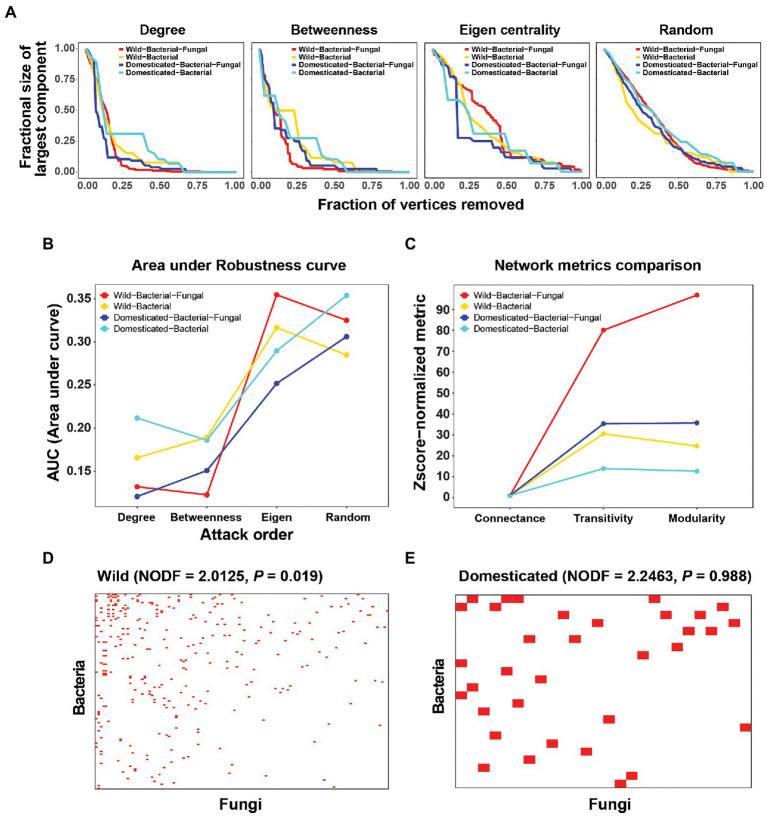
Microbial co-occurrence network analysis is being widely used for data exploration in plant microbiome research. Still, challenges lie in how well these microbial networks represent natural microbial communities and how well we can interpret and extract eco-evolutionary insights from the networks. Although many technical solutions have been proposed, in this perspective, we touch on the grave problem of kingdom-level bias in network representation and interpretation. We underscore the eco-evolutionary significance of using cross-kingdom (bacterial-fungal) co-occurrence networks to increase the network's representability of natural communities. To do so, we demonstrate how ecosystem-level interpretation of plant microbiome evolution changes with and without multi-kingdom analysis. Then, to overcome oversimplified interpretation of the networks stemming from the stereotypical dichotomy between bacteria and fungi, we recommend three avenues for ecological interpretation: (1) understanding dynamics and mechanisms of co-occurrence networks through generalized Lotka-Volterra and consumer-resource models, (2) finding alternative ecological explanations for individual negative and positive fungal-bacterial edges, and (3) connecting cross-kingdom networks to abiotic and biotic (host) environments.
微生物共现网络分析在植物微生物组研究的数据探索中得到了广泛应用。然而,这些微生物网络在多大程度上能够代表自然微生物群落,以及我们能从这些网络中解释和提取多少生态进化见解,仍然是个挑战。尽管已经提出了许多技术解决方案,但在本文中,我们探讨了网络表示和解释中存在的严重的界级偏差问题。我们强调使用跨界(细菌-真菌)共现网络来提高网络对自然群落的代表性的生态进化意义。为此,我们展示了植物微生物组进化的生态系统层面解释在有无多界分析时是如何变化的。然后,为了克服由于细菌和真菌之间刻板的二分法而导致的对网络的过度简化解释,我们推荐了三种生态解释途径:(1)通过广义洛特卡-沃尔泰拉模型和消费者-资源模型理解共现网络的动态和机制,(2)为单个负性和正性真菌-细菌边寻找替代性的生态解释,以及(3)将跨界网络与非生物和生物(宿主)环境联系起来。