Department of Urology, The Affiliated Hospital of Qingdao University, Qingdao, China.
Key Laboratory, Department of Urology and Andrology, The Affiliated Hospital of Qingdao University, Qingdao, China.
Front Immunol. 2022 Jul 25;13:954616. doi: 10.3389/fimmu.2022.954616. eCollection 2022.
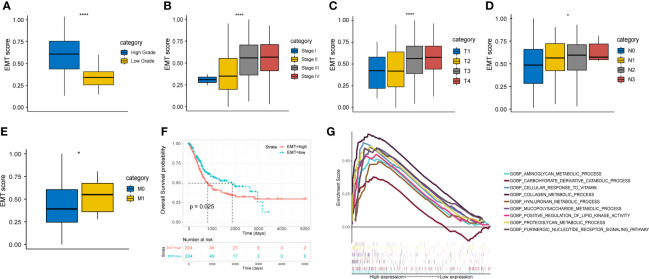
Epithelial-mesenchymal transition (EMT), one leading reason of the dismal prognosis of bladder cancer (BLCA), is closely associated with tumor invasion and metastasis. We aimed to develop a novel immune-related gene signature based on different EMT and metabolic status to predict the prognosis of BLCA.
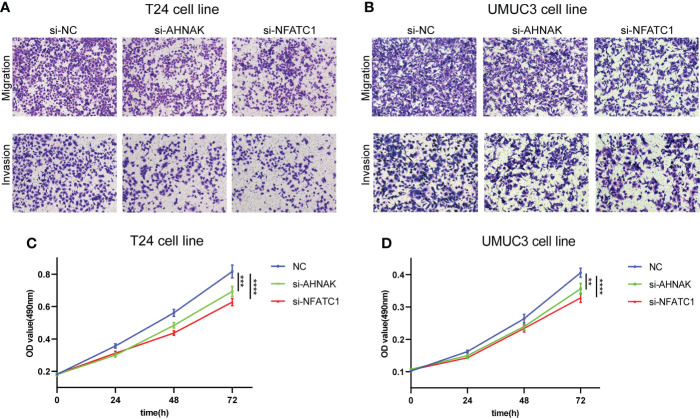
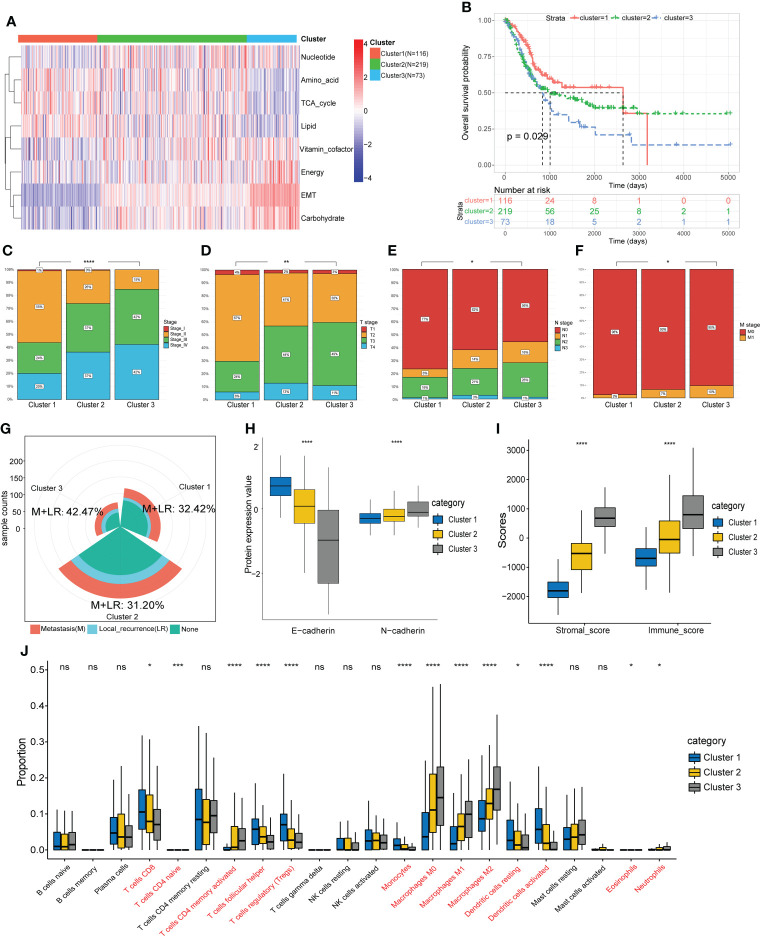
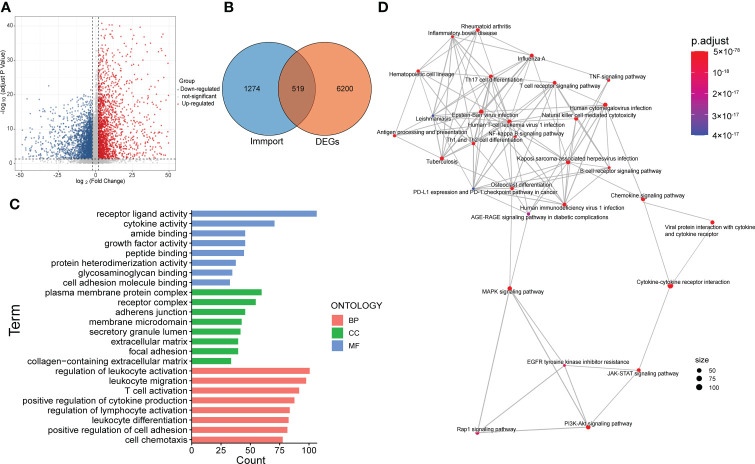
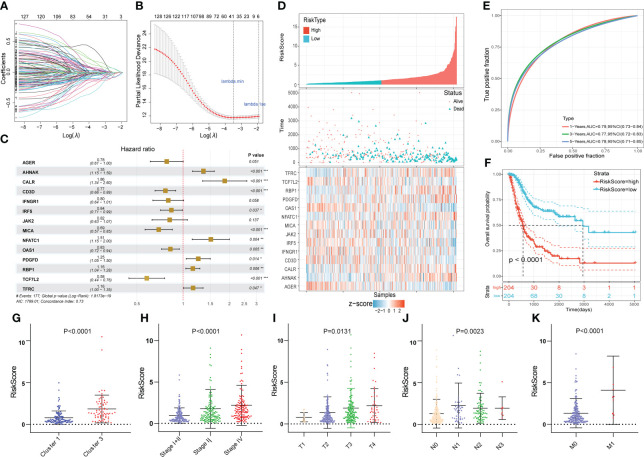
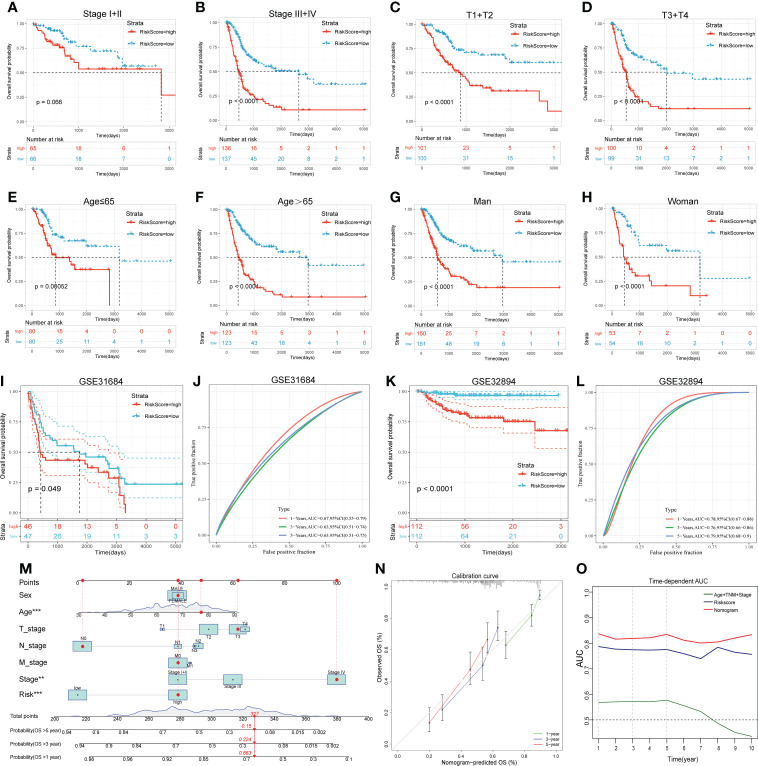
Gene expression and clinical data were obtained from TCGA and GEO databases. Patients were clustered based on EMT and metabolism scores calculated by ssGSEA. The immune-related differentially expressed genes (DEGs) between the two clusters with the most obvious differences were used to construct the signature by LASSO and Cox analysis. Time-dependent receiver operating characteristic (ROC) curves and Kaplan-Meier curves were utilized to evaluate the gene signature in training and validation cohorts. Finally, the function of the signature genes AHNAK and NFATC1 in BLCA cell lines were explored by cytological experiments.
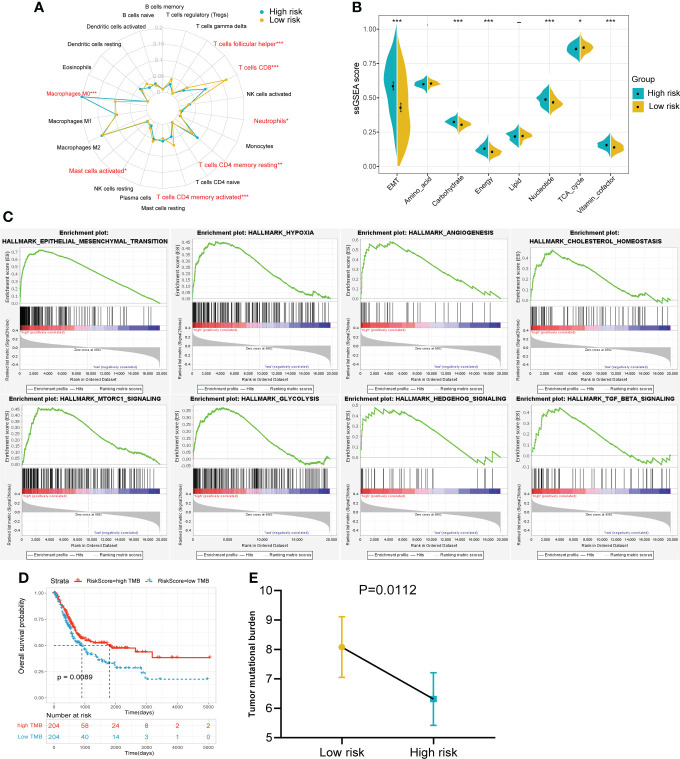
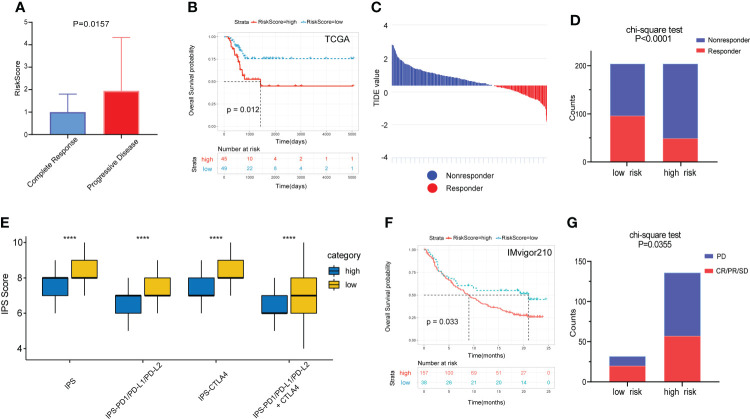
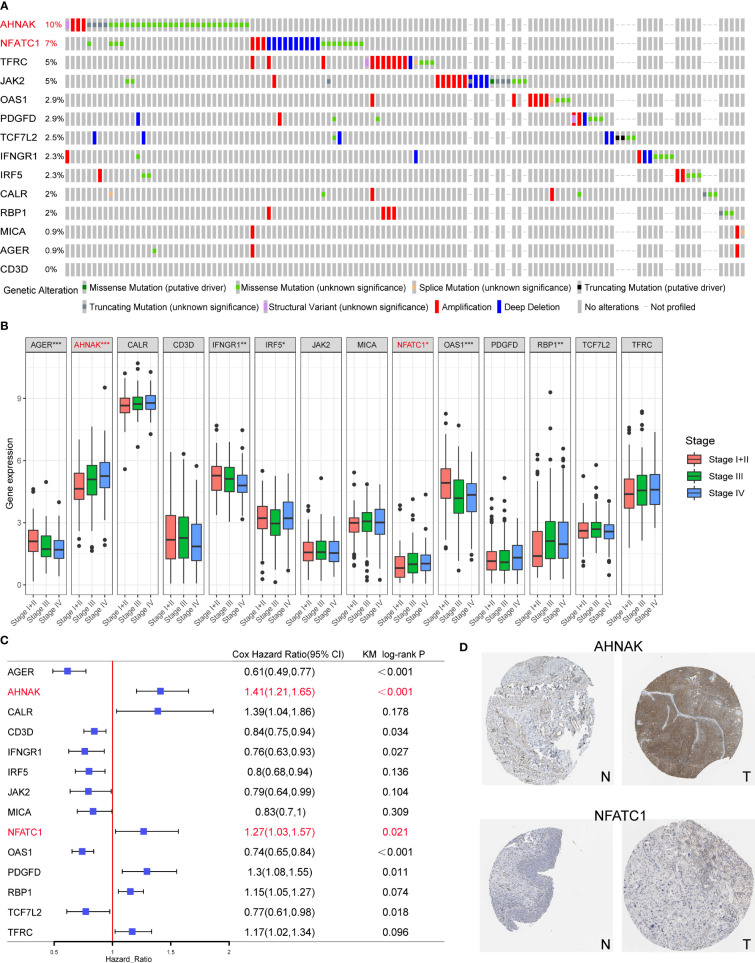
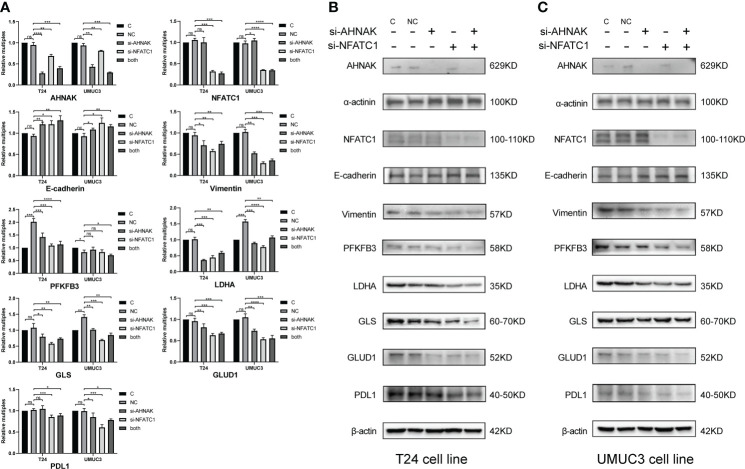
Based on the results of ssGSEA, TCGA patients were divided into three clusters, among which cluster 1 and cluster 3 had completely opposite EMT and metabolic status. Patients in cluster 3 had a significantly worse clinical prognosis than cluster 1. Immune-related DEGs were selected between the two clusters to construct the predictive signature based on 14 genes. High-risk patients had poorer prognosis, lower proportions of CD8 T cells, higher EMT and carbohydrate metabolism, and less sensitivity to chemotherapy and immunotherapy. Overexpression of AHNAK or NFATC1 promoted the proliferation, migration and invasion of T24 and UMUC3 cells. Silencing ANHAK or NFATC1 could effectively inhibit EMT and metabolism in T24 and UMUC3 cells.
The established immune signature may act as a promising model for generating accurate prognosis for patients and predicting their EMT and metabolic status, thus guiding the treatment of BLCA patients.
上皮-间充质转化(EMT)是膀胱癌(BLCA)预后不良的主要原因之一,与肿瘤侵袭和转移密切相关。我们旨在基于不同的 EMT 和代谢状态开发一种新的免疫相关基因特征,以预测 BLCA 的预后。
从 TCGA 和 GEO 数据库中获取基因表达和临床数据。根据 ssGSEA 计算的 EMT 和代谢评分对患者进行聚类。使用 LASSO 和 Cox 分析,从两个聚类中具有最明显差异的免疫相关差异表达基因(DEGs)构建特征。使用时间依赖性接受者操作特征(ROC)曲线和 Kaplan-Meier 曲线在训练和验证队列中评估基因特征。最后,通过细胞学实验探索基因特征中 AHNAK 和 NFATC1 基因在 BLCA 细胞系中的功能。
基于 ssGSEA 的结果,TCGA 患者分为三个聚类,其中聚类 1 和聚类 3 的 EMT 和代谢状态完全相反。聚类 3 的患者临床预后明显比聚类 1 差。在两个聚类之间选择免疫相关 DEGs 基于 14 个基因构建预测特征。高风险患者预后较差,CD8 T 细胞比例较低,EMT 和碳水化合物代谢较高,对化疗和免疫治疗的敏感性较低。AHNAK 或 NFATC1 的过表达促进了 T24 和 UMUC3 细胞的增殖、迁移和侵袭。沉默 ANHAK 或 NFATC1 可有效抑制 T24 和 UMUC3 细胞的 EMT 和代谢。
建立的免疫特征可以作为一种有前途的模型,为患者提供准确的预后,并预测其 EMT 和代谢状态,从而指导 BLCA 患者的治疗。