Institute for Systemic Inflammation Research, University of Lübeck, Lübeck, Germany.
Division of Immunobiology, Cincinnati Childrens Hospital Medical Center, University of Cincinnati College of Medicine, Cincinnati, OH, United States.
Front Immunol. 2022 Jul 25;13:958392. doi: 10.3389/fimmu.2022.958392. eCollection 2022.
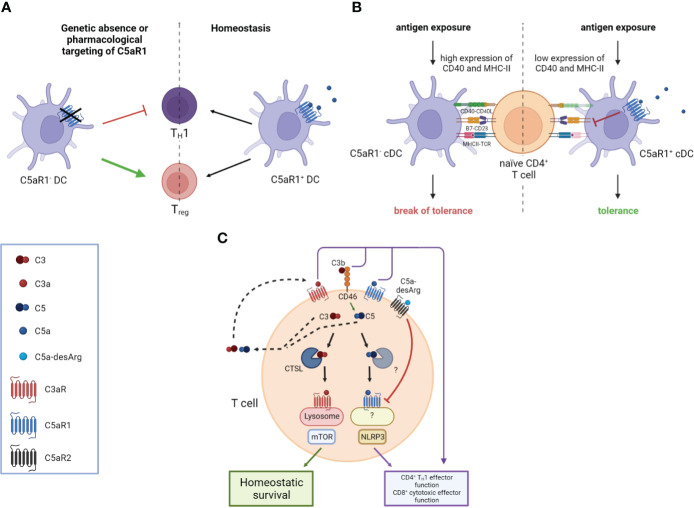
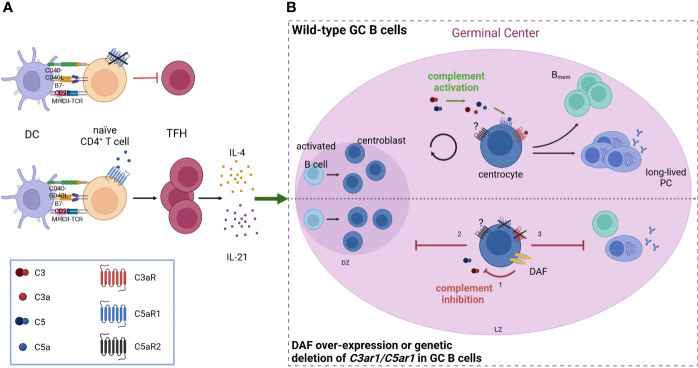
The complement system (CS) is an ancient and highly conserved part of the innate immune system with important functions in immune defense. The multiple fragments bind to specific receptors on innate and adaptive immune cells, the activation of which translates the initial humoral innate immune response (IR) into cellular innate and adaptive immunity. Dysregulation of the CS has been associated with the development of several autoimmune disorders such as systemic lupus erythematosus (SLE), rheumatoid arthritis (RA), ANCA-associated vasculitis, and autoimmune bullous dermatoses (AIBDs), where complement drives the inflammatory response in the effector phase. The role of the CS in autoimmunity is complex. On the one hand, complement deficiencies were identified as risk factors to develop autoimmune disorders. On the other hand, activation of complement can drive autoimmune responses. The anaphylatoxins C3a and C5a are potent mediators and regulators of inflammation during the effector phase of autoimmunity through engagement of specific anaphylatoxin receptors, i.e., C3aR, C5aR1, and C5aR2 either on or in immune cells. In addition to their role in innate IRs, anaphylatoxins regulate humoral and cellular adaptive IRs including B-cell and T-cell activation, differentiation, and survival. They regulate B- and T-lymphocyte responses either directly or indirectly through the activation of anaphylatoxin receptors dendritic cells that modulate lymphocyte function. Here, we will briefly review our current understanding of the complex roles of anaphylatoxins in the regulation of immunologic tolerance and the early events driving autoimmunity and the implications of such regulation for therapeutic approaches that target the CS.
补体系统 (CS) 是先天免疫系统中古老而高度保守的一部分,在免疫防御中具有重要功能。多种片段与先天和适应性免疫细胞上的特定受体结合,其激活将初始体液先天免疫反应 (IR) 转化为细胞先天和适应性免疫。CS 的失调与几种自身免疫性疾病的发展有关,如系统性红斑狼疮 (SLE)、类风湿关节炎 (RA)、ANCA 相关性血管炎和自身免疫性大疱性皮肤病 (AIBD),其中补体在效应期驱动炎症反应。CS 在自身免疫中的作用是复杂的。一方面,补体缺陷被确定为发展自身免疫性疾病的危险因素。另一方面,补体的激活可以驱动自身免疫反应。过敏毒素 C3a 和 C5a 通过与特定过敏毒素受体(即 C3aR、C5aR1 和 C5aR2)结合,在自身免疫的效应期是炎症的有力介质和调节剂。除了在先天免疫反应中的作用外,过敏毒素还调节体液和细胞适应性免疫反应,包括 B 细胞和 T 细胞的激活、分化和存活。它们通过激活调节淋巴细胞功能的树突状细胞来直接或间接调节 B 和 T 淋巴细胞反应。在这里,我们将简要回顾我们对过敏毒素在调节免疫耐受和驱动自身免疫的早期事件中的复杂作用的理解,以及这种调节对靶向 CS 的治疗方法的意义。