Department of Biochemistry, Faculty of Science, Kasetsart University, Bangkok, Thailand.
Faculty of Veterinary Technology, Kasetsart University, Bangkok, Thailand.
Front Immunol. 2022 Jul 25;13:935480. doi: 10.3389/fimmu.2022.935480. eCollection 2022.
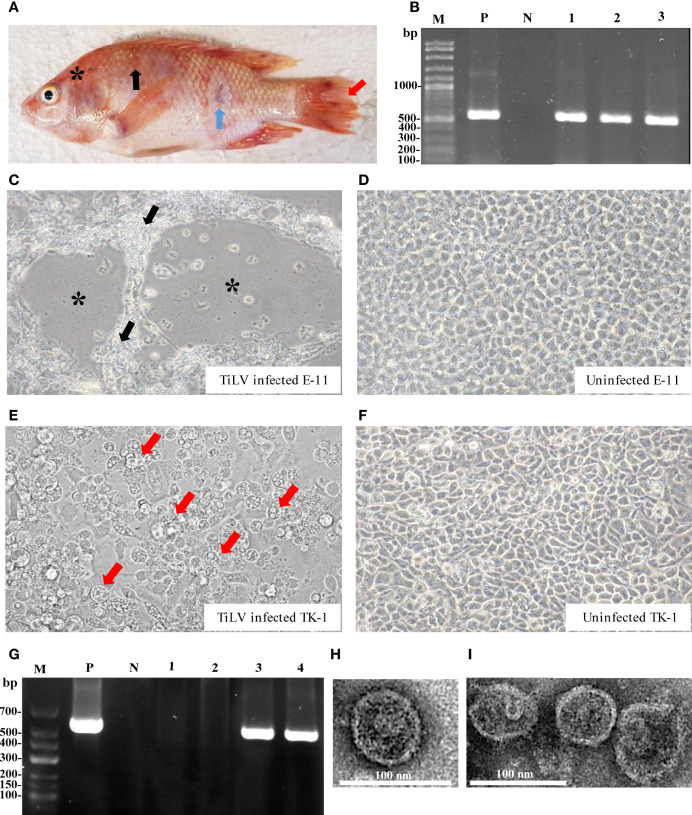
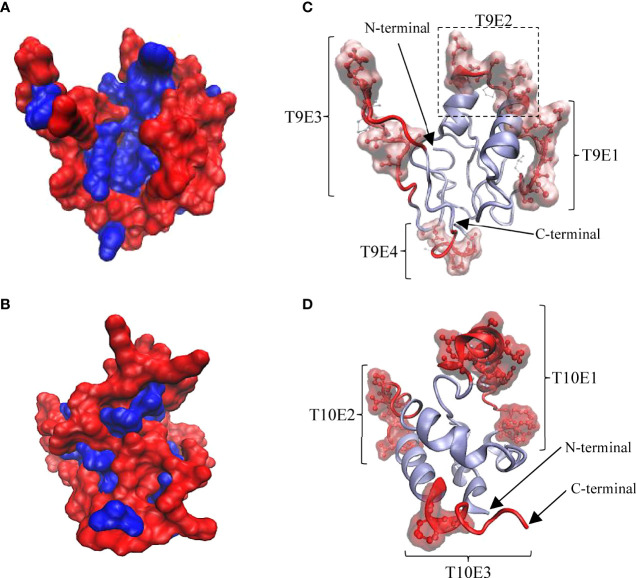
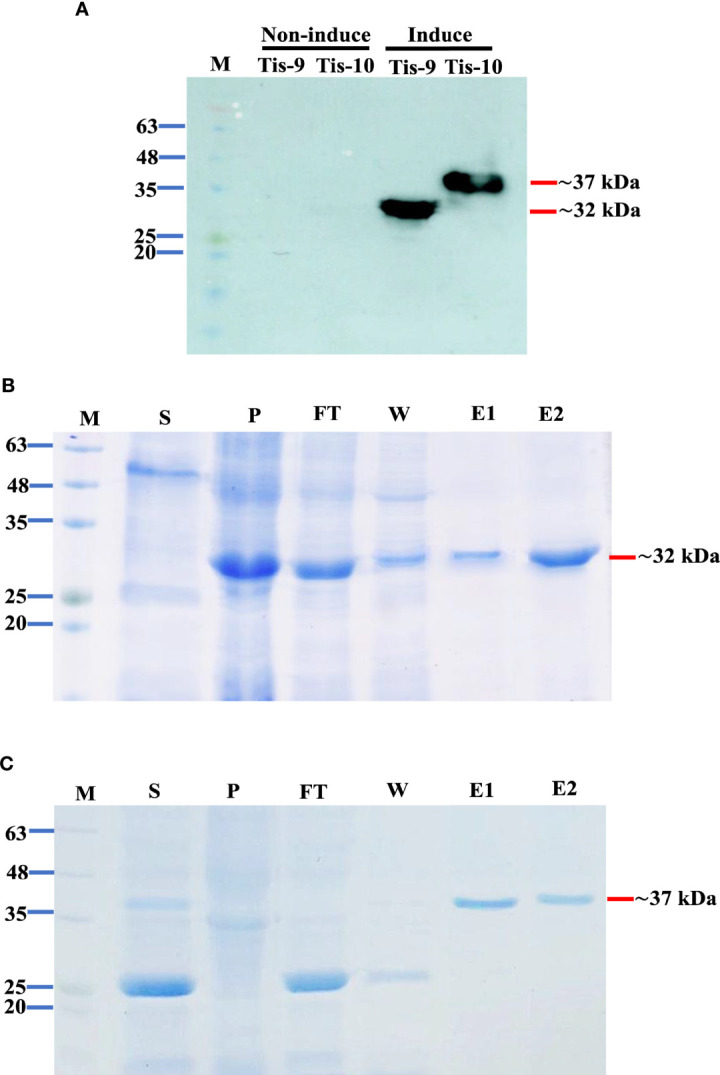
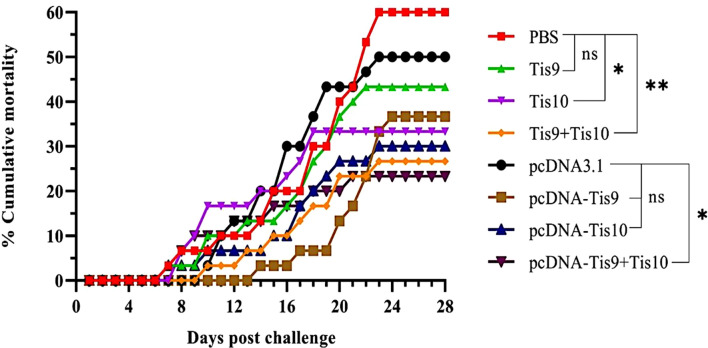
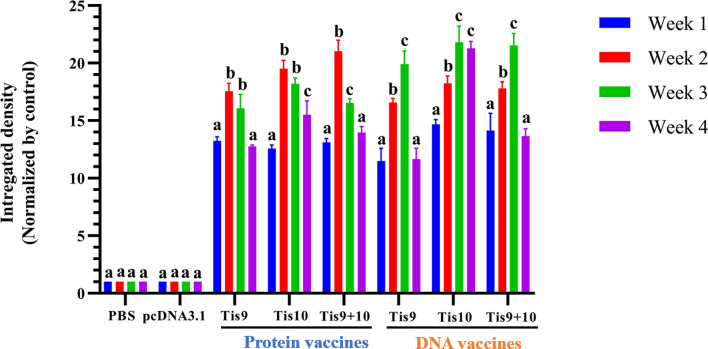
Tilapia lake virus (TiLV) now affects Nile tilapia culture worldwide, with no available commercial vaccine for disease prevention. DNA and recombinant protein-based vaccines were developed and tested following viral isolation and characterization. The viral strain isolated from diseased hybrid red tilapia ( sp.) shared high levels of morphological and genomic similarity (95.49-99.52%) with other TiLV isolates in the GenBank database. TiLV segment 9 (Tis9) and segment 10 (Tis10) DNA vaccines (pcDNA-Tis9 and pcDNA-Tis10) and recombinant protein vaccines (Tis9 and Tis10) were prepared and tested for their efficacy in juvenile hybrid red tilapia. Fish were immunized with either single vaccines (pcDNA-Tis9, pcDNA-Tis10, Tis9 and Tis10) or combined vaccines (pcDNA-Tis9 + pcDNA-Tis10 and Tis9 + Tis10) by intramuscular injection and intraperitoneal injection for DNA and protein vaccines, respectively. Negative controls were injected with PBS or a naked pcDNA3.1 vector in the same manner. An experimental challenge with TiLV was carried out at 4 weeks post-vaccination (wpv) by intraperitoneal injection with a dose of 1 × 10 TCID per fish. Relative percent survival (RPS) ranged from 16.67 ± 00.00 to 61.11 ± 9.62%. The Tis10 and pcDNA-Tis10 vaccines conferred better protection compared to Tis9 and pcDNA-Tis9. Highest levels of protection were observed in pcDNA-Tis9 + pcDNA-Tis10 (61.11 ± 9.62%) and Tis9 + Tis10 (55.56 ± 9.62%) groups. Specific antibody was detected in all vaccinated groups at 1-4 wpv by Dot Blot method, with the highest integrated density at 2 and 3 wpv. analysis of Tis9 and Tis10 revealed a number of B-cell epitopes in their coil structure, possibly reflecting their immunogenicity. Findings suggested that the combination of Tis9 and Tis10 in DNA and recombinant protein vaccine showed high efficacy for the prevention of TiLV disease in hybrid red tilapia.
罗非鱼湖病毒 (TiLV) 现已影响到全球的尼罗罗非鱼养殖,目前尚无可用的商业疫苗来预防该病。在病毒分离和鉴定后,已开发并测试了 DNA 和重组蛋白疫苗。从患病杂交红罗非鱼(sp.)中分离出的病毒株与 GenBank 数据库中的其他 TiLV 分离株在形态和基因组上具有高度相似性(95.49-99.52%)。TiLV 节 9(Tis9)和节 10(Tis10)DNA 疫苗(pcDNA-Tis9 和 pcDNA-Tis10)和重组蛋白疫苗(Tis9 和 Tis10)已制备并在幼龄杂交红罗非鱼中进行了功效测试。通过肌肉内注射和腹腔内注射分别向鱼类免疫单种疫苗(pcDNA-Tis9、pcDNA-Tis10、Tis9 和 Tis10)或联合疫苗(pcDNA-Tis9 + pcDNA-Tis10 和 Tis9 + Tis10)。阴性对照以相同方式用 PBS 或裸 pcDNA3.1 载体注射。在疫苗接种后 4 周(wpv)通过腹腔内注射 1×10 TCID 每鱼剂量进行 TiLV 实验性挑战。相对存活率(RPS)范围为 16.67±00.00 至 61.11±9.62%。Tis10 和 pcDNA-Tis10 疫苗的保护效果优于 Tis9 和 pcDNA-Tis9。在 pcDNA-Tis9 + pcDNA-Tis10(61.11±9.62%)和 Tis9 + Tis10(55.56±9.62%)组中观察到最高的保护水平。通过 Dot Blot 法在疫苗接种后 1-4 周(wpv)检测到所有接种组的特异性抗体,在 2 和 3 wpv 时具有最高的整合密度。对 Tis9 和 Tis10 的分析表明,在其螺旋结构中存在多个 B 细胞表位,这可能反映了它们的免疫原性。研究结果表明,Tis9 和 Tis10 的组合在 DNA 和重组蛋白疫苗中显示出预防杂交红罗非鱼 TiLV 病的高效性。