College of Landscape Architecture, Nanjing Forestry University, Nanjing, China.
School of Architecture and Planning, The University of Texas at San Antonio, San Antonio, TX, United States.
Front Public Health. 2022 Jul 25;10:955077. doi: 10.3389/fpubh.2022.955077. eCollection 2022.
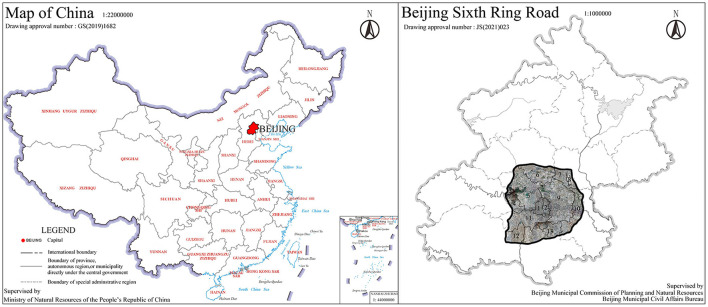
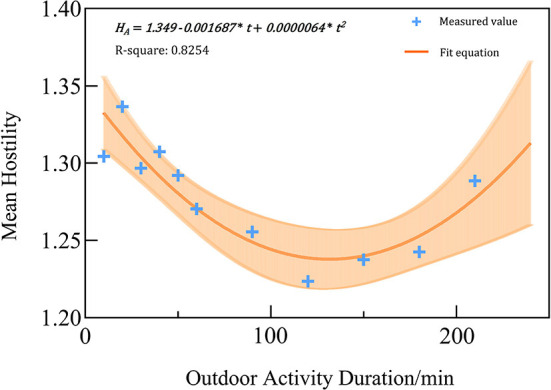
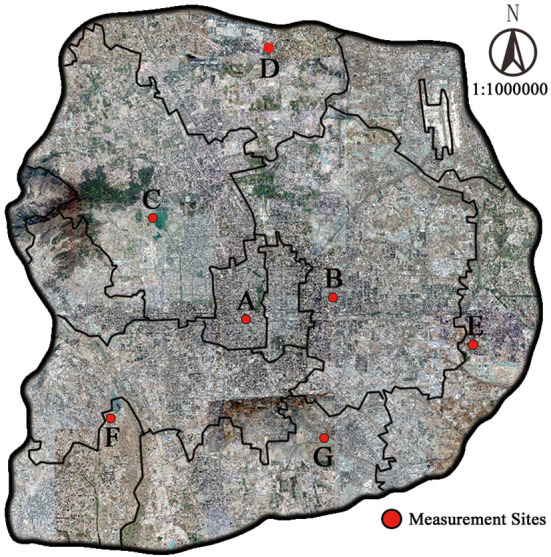
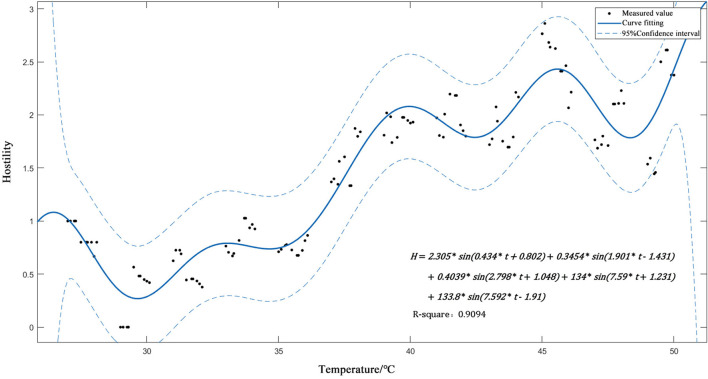
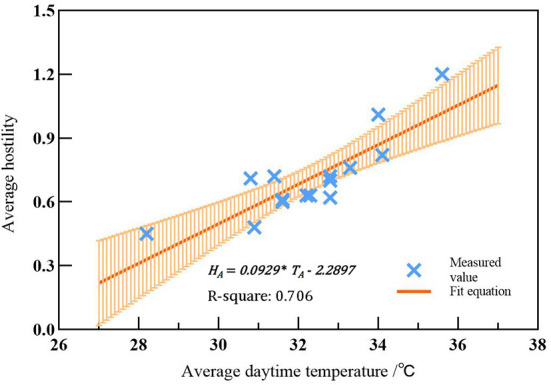
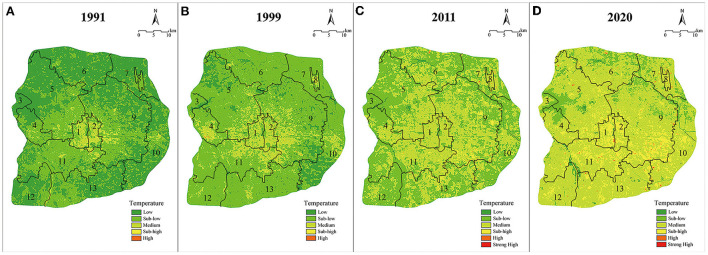
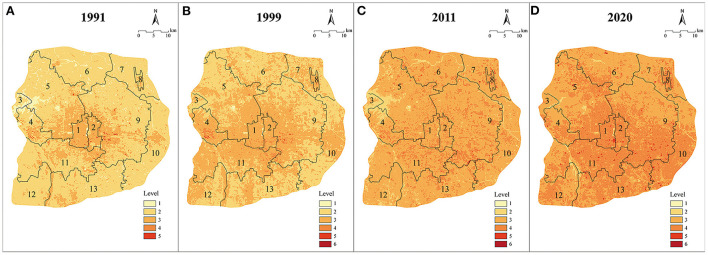
The combined effect of global warming and the heat island effect keeps the temperature of cities rising in the summer, seriously threatening the physical and mental health of urban residents. Taking the area within the Sixth Ring Road of Beijing as an example, based on Landsat remote sensing images, meteorological stations, and questionnaires, this study established a relational model between temperature and hostility and then analyzed the changes in the emotional health risk (hostility) in the study area and the mechanism of how outdoor activity duration influences hostility. Results show that: (1) the area within the Sixth Ring Road of Beijing had a higher and higher temperature from 1991 to 2020. Low-temperature areas gradually shrank, and medium- and high-temperature areas extended outwards from the center. (2) The threat of high temperature to residents' hostility gradually intensified-the sphere of influence expanded, low-risk areas quickly turned into medium-high-risk areas, and the level of hostility risk increased. Level 1 risk areas of hostility had the most obvious reduction-a 74.33% reduction in area proportion; meanwhile, Level 3 risk areas had the most significant growth-a 50.41% increase in area proportion. (3) In the first 120 min of outdoor activities under high temperature, residents' hostility was negatively correlated with outdoor activity duration; after more than 120 min, hostility became positively correlated with duration. Therefore, figuring out how temperature changes influence human emotions is of great significance to improving the living environment and health level of residents. This study attempts to (1) explore the impact of temperature changes and outdoor activity duration on hostility, (2) evaluate residents' emotional health risk levels affected by high temperature, and (3) provide a theoretical basis for the early warning mechanism of emotional health risk and the planning of healthy cities.
全球变暖与热岛效应的综合影响使城市夏季气温不断上升,严重威胁城市居民的身心健康。以北京市六环内区域为例,基于 Landsat 遥感影像、气象站和问卷调查,本研究建立了温度与敌意之间的关系模型,然后分析了研究区域内情感健康风险(敌意)的变化以及户外活动时间对敌意的影响机制。结果表明:(1)1991 年至 2020 年,北京市六环内区域的温度越来越高。低温区逐渐缩小,中高温区从中心向外扩展。(2)高温对居民敌意的威胁逐渐加剧——影响范围扩大,低风险区迅速转变为中高风险区,敌意风险水平升高。敌意一级风险区减少最明显——面积比例减少 74.33%;同时,三级风险区增长最显著——面积比例增加 50.41%。(3)在高温下进行前 120 分钟的户外活动时,居民的敌意与户外活动时间呈负相关;超过 120 分钟后,敌意与时间呈正相关。因此,了解温度变化如何影响人类情绪对改善居民生活环境和健康水平具有重要意义。本研究试图(1)探讨温度变化和户外活动时间对敌意的影响,(2)评估高温对居民情感健康风险水平的影响,(3)为情感健康风险的早期预警机制和健康城市规划提供理论依据。