Key Laboratory of Health Ministry for Congenital Malformation, Department of Pediatric Surgery, Shengjing Hospital, China Medical University, No. 36, Sanhao Street, Heping District, Shenyang, 110004, China.
Department of Ultrasound, Shengjing Hospital, China Medical University, Shenyang, China.
Stem Cell Res Ther. 2022 Aug 13;13(1):413. doi: 10.1186/s13287-022-03105-6.
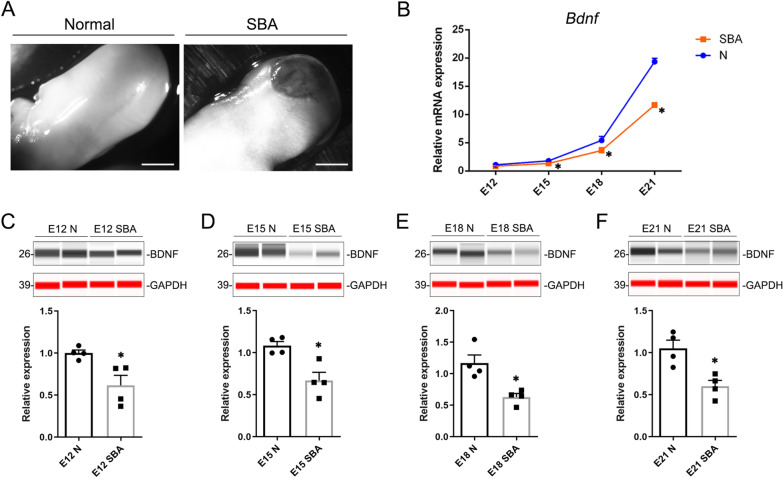
Spina bifida aperta (SBA) is a relatively common clinical type of neural tube defect. Although prenatal fetal surgery has been proven to be an effective treatment for SBA, the recovery of neurological function remains unsatisfactory due to neuron deficiencies. Our previous results demonstrated that intra-amniotic transplanted bone marrow mesenchymal stem cells (BMSCs) could preserve neural function through lesion-specific engraftment and regeneration. To further optimize the role of BMSCs and improve the environment of defective spinal cords so as to make it more conducive to nerve repair, the intra-amniotic transplanted BMSCs were modified with brain-derived neurotrophic factor (BDNF-BMSCs), and the therapeutic potential of BDNF-BMSCs was verified in this study.
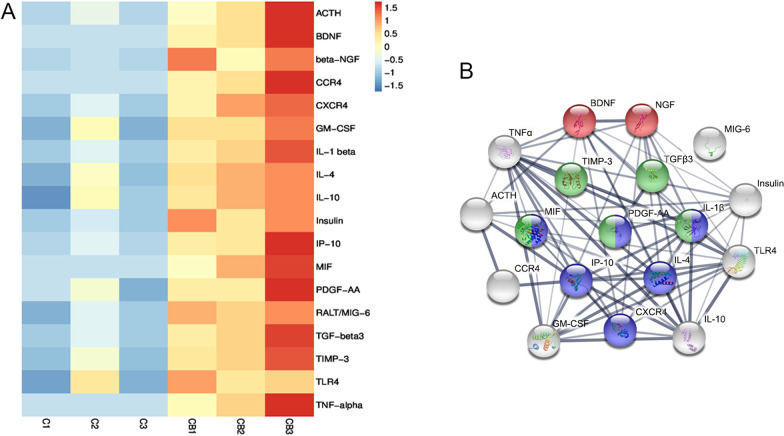
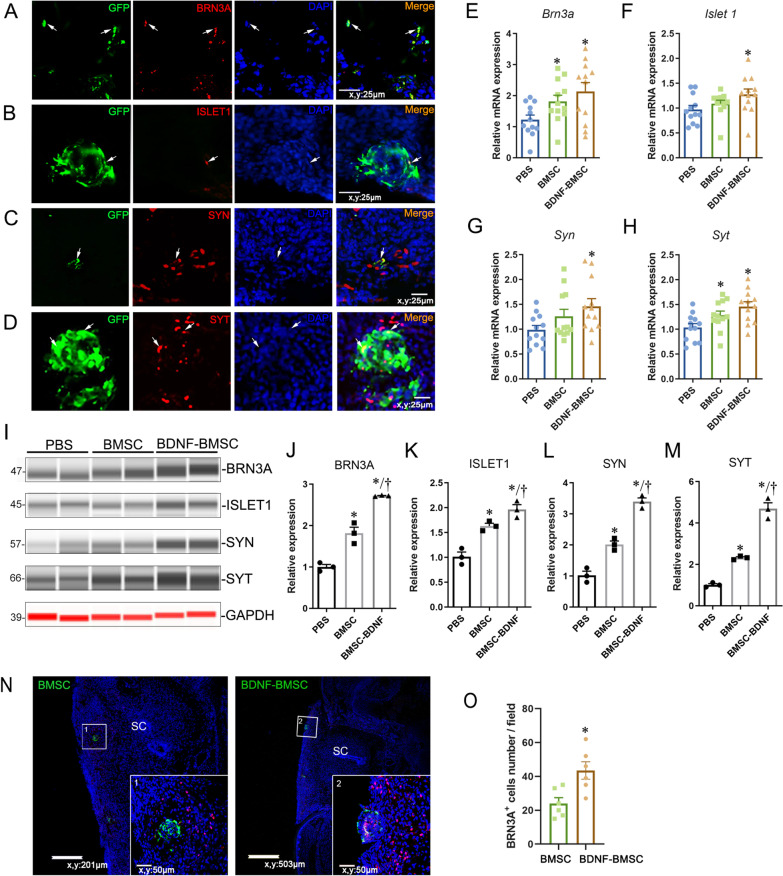
BMSCs were modified by adenovirus encoding a green fluorescent protein and brain-derived neurotrophic factor (Ad-GFP-BDNF) in vitro and then transplanted into the amniotic cavity of rat fetuses with spina bifida aperta which were induced by all-trans-retinoic acid on embryonic day 15. Immunofluorescence, western blot and real-time quantitative PCR were used to detect the expression of different neuron markers and apoptosis-related genes in the defective spinal cords. Lesion areas of the rat fetuses with spina bifida aperta were measured on embryonic day 20. The microenvironment changes after intra-amniotic BDNF-BMSCs transplantation were investigated by a protein array with 90 cytokines.
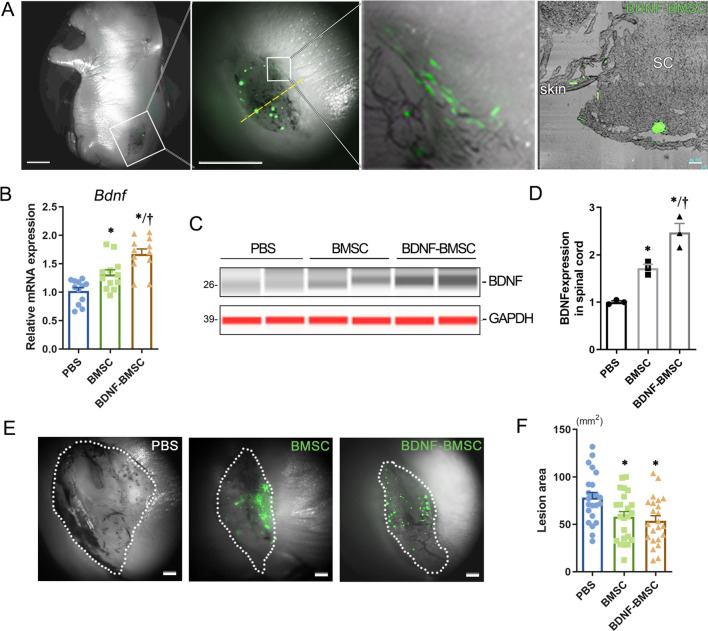
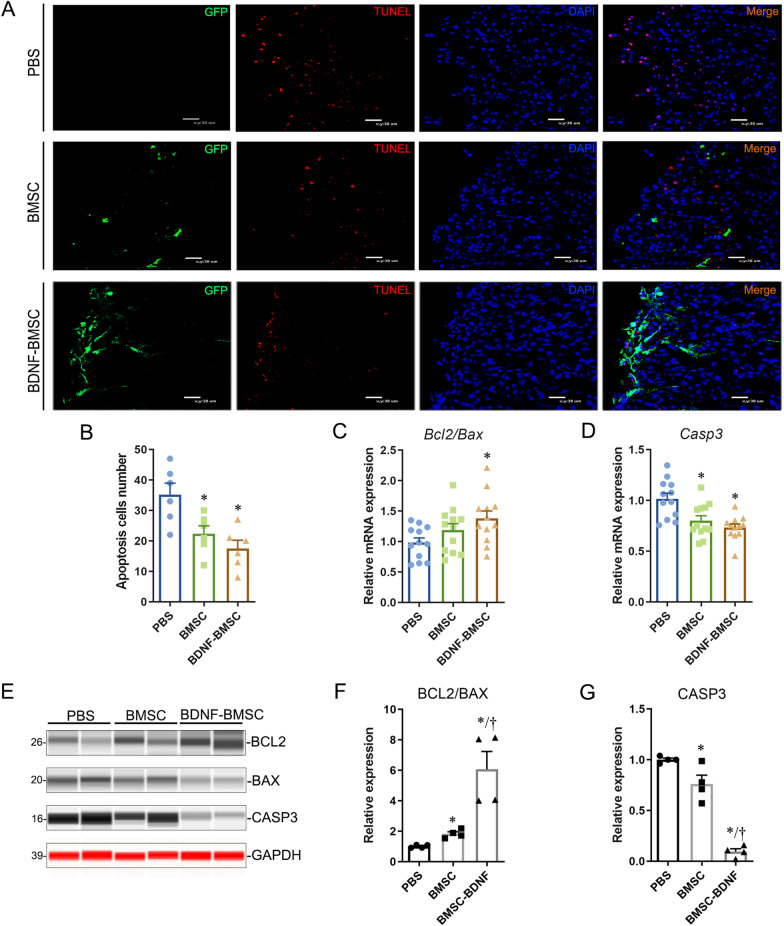
We found that BDNF-BMSCs sustained the characteristic of directional migration, engrafted at the SBA lesion area, increased the expression of BDNF in the defective spinal cords, alleviated the apoptosis of spinal cord cells, differentiated into neurons and skin-like cells, reduced the area of skin lesions, and improved the amniotic fluid microenvironment. Moreover, the BDNF-modified BMSCs showed a better effect than pure BMSCs on the inhibition of apoptosis and promotion of neural differentiation.
These findings collectively indicate that intra-amniotic transplanted BDNF-BMSCs have an advantage of promoting the recovery of defective neural tissue of SBA fetuses.
开放性脊柱裂(SBA)是一种较为常见的神经管缺陷临床类型。尽管产前胎儿手术已被证明是治疗 SBA 的有效方法,但由于神经元缺乏,神经功能的恢复仍不理想。我们之前的研究结果表明,羊膜内移植骨髓间充质干细胞(BMSCs)可以通过病灶特异性植入和再生来保护神经功能。为了进一步优化 BMSCs 的作用,改善缺陷脊髓的环境,使其更有利于神经修复,本研究中对羊膜内移植的 BMSCs 进行了脑源性神经营养因子(BDNF)修饰,并验证了 BDNF-BMSCs 的治疗潜力。
体外通过腺病毒转染绿色荧光蛋白和脑源性神经营养因子(Ad-GFP-BDNF)对 BMSCs 进行修饰,然后将其移植到全反式视黄酸诱导的 15 日龄胚胎开放性脊柱裂大鼠的羊膜腔中。免疫荧光、Western blot 和实时定量 PCR 用于检测缺陷脊髓中不同神经元标志物和凋亡相关基因的表达。在胚胎第 20 天测量开放性脊柱裂大鼠胎儿的病变面积。通过含有 90 种细胞因子的蛋白质芯片研究羊膜内 BDNF-BMSCs 移植后的微环境变化。
我们发现 BDNF-BMSCs 保持了定向迁移的特性,在 SBA 病变区域植入,增加了缺陷脊髓中 BDNF 的表达,减轻了脊髓细胞的凋亡,分化为神经元和皮肤样细胞,减少了皮肤病变面积,并改善了羊水微环境。此外,BDNF 修饰的 BMSCs 在抑制细胞凋亡和促进神经分化方面比单纯 BMSCs 效果更好。
这些发现共同表明,羊膜内移植的 BDNF-BMSCs 具有促进 SBA 胎儿缺陷神经组织恢复的优势。