Schneider Daniel, Harknett Kristen
Harvard University.
UCSF.
Soc Forces. 2021 Jun;99(4):1682-1709. doi: 10.1093/sf/soaa079. Epub 2020 Aug 11.
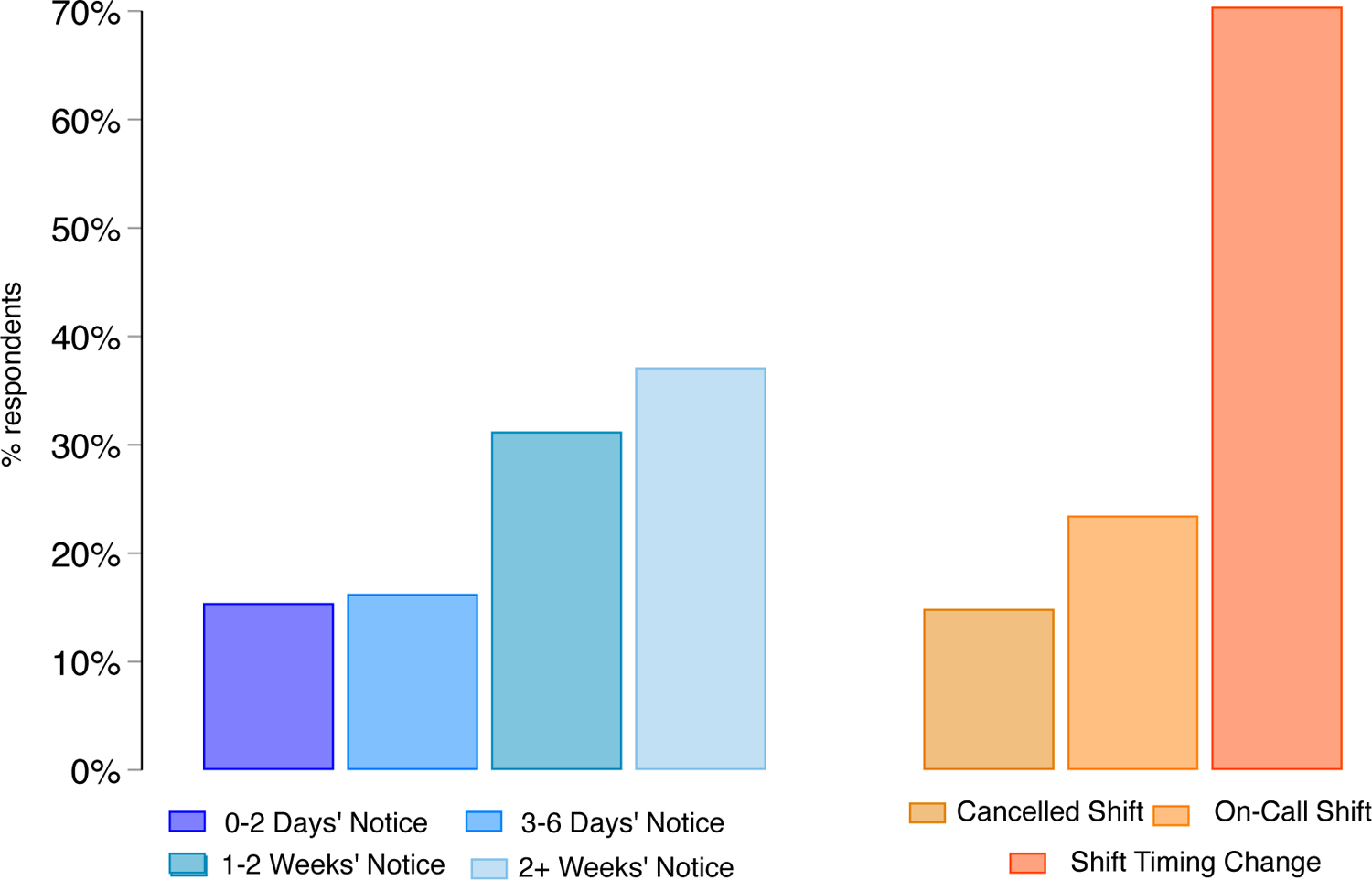
American policymakers have long focused on work as a key means to improve economic wellbeing. Yet, work has become increasingly precarious and polarized. This precarity is manifest in low wages, but also in unstable and unpredictable work schedules that often vary significantly week-to-week with little advance notice. We draw on new survey data from The Shift Project on 37,263 hourly retail and food service workers in the United States. We assess the association between routine unpredictability in work schedules and household material hardship. Using both cross-sectional models and panel models, we find that workers who receive shorter advanced notice, those who work on-call, those who experience last minute shift cancellation and timing changes, and those with more volatile work hours are more likely to experience hunger, residential, medical, and utility hardships as well as more overall hardship. Just-in-time work schedules afford employers a great deal of flexibility, but at a heavy cost to workers' economic security.
长期以来,美国政策制定者一直将工作视为改善经济福祉的关键手段。然而,工作变得越来越不稳定且两极分化。这种不稳定性不仅体现在低工资上,还体现在不稳定且不可预测的工作时间表上,这种时间表往往每周变化很大,而且几乎没有提前通知。我们利用了“转变计划”对美国37263名小时工零售和食品服务工人的新调查数据。我们评估了工作时间表的常规不可预测性与家庭物质困难之间的关联。使用横断面模型和面板模型,我们发现,提前通知时间较短的工人、随叫随到工作的工人、经历最后一刻轮班取消和时间变更的工人,以及工作时间波动较大的工人,更有可能经历饥饿、住房、医疗和水电费方面的困难,以及更多的总体困难。即时工作时间表为雇主提供了很大的灵活性,但却给工人的经济安全带来了沉重代价。